Legacy Realty
Logo
Our Journal

Blogs &
News

Stay updated with the latest trends, investment opportunities, and lifestyle insights in the heart of UAE real estate.

Investment
September 08, 2026

How to Transfer Property Ownership in Dubai: Step-by-Step Guide

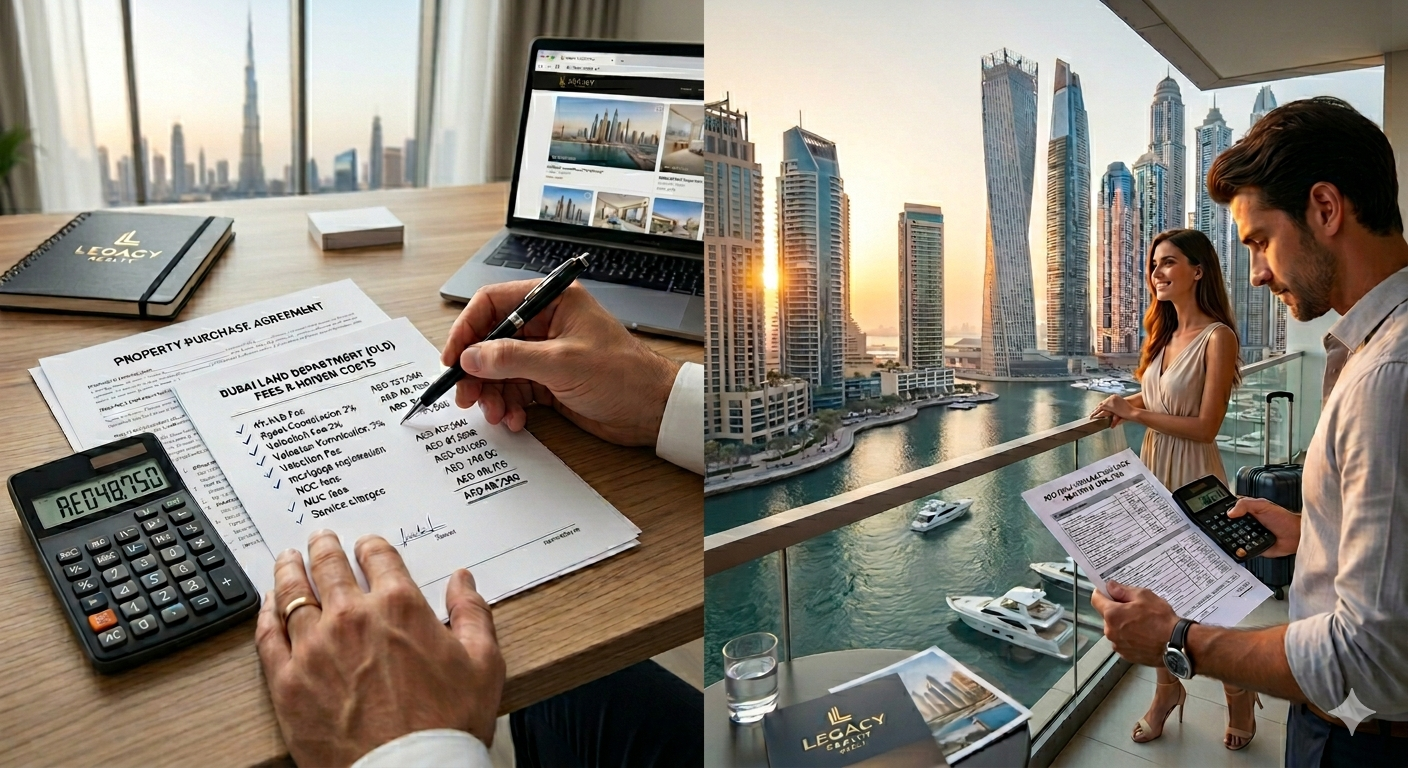
Transferring property ownership in Dubai involves more than simply handing over the keys. The ownership change must be officially registered with the Dubai Land Department (DLD), and buyers and sellers need to complete the required documentation, payments, approvals, and title deed procedures.Whether you are buying a ready property, selling an existing home, transferring ownership between parties, or completing a property transaction through a representative, understanding the Dubai property transfer process can help you avoid delays and unexpected costs.This guide explains how to transfer property ownership in Dubai, including the required documents, DLD procedures, transfer fees, NOC requirements, and title deed issuance.  What Is Property Ownership Transfer in Dubai?Property ownership transfer in Dubai is the official process of changing the registered owner of a property through the Dubai Land Department.Once the transaction is approved and registered, DLD issues an electronic title deed confirming the new ownership.A typical ownership transfer may occur when:A property is sold to a new buyerA property is transferred between eligible partiesOwnership is transferred through a legal representativeA property is transferred as part of certain inheritance or ownership arrangementsA company or entity transfers ownership according to applicable requirementsFor a standard property sale, DLD's official Property Sale Registration service records the transaction and issues an electronic title deed and property map.  Who Handles Property Ownership Transfers in Dubai?The Dubai Land Department (DLD) is the government authority responsible for registering real estate ownership and property transactions in Dubai.Depending on the transaction, the process can involve:Dubai Land DepartmentReal Estate Registration Trustee CentersProperty developersBanks, where a mortgage is involvedLegal representatives or attorneysBuyer and sellerDLD states that standard property sale registration is available through Real Estate Registration Trustee Centers, while certain digital services are also available through Dubai's digital platforms.  Dubai Property Transfer Process: Step-by-StepThe exact procedure can vary depending on the property and transaction type. However, a standard sale generally follows these steps.Step 1: Agree on the Property SaleThe buyer and seller first agree on:Property pricePayment termsCompletion dateProperty handover conditionsOther contractual termsThe parties may then proceed with the relevant sale and purchase agreement.For transactions using Dubai's digital property services, DLD describes a process that includes generating and signing the Sale and Purchase Agreement (SPA), transferring the purchase amount and service fees, and viewing the resulting title deed.  Step 2: Prepare the Required DocumentsBefore submitting the ownership transfer application, both parties should make sure the required documents are available.For a standard sale, DLD lists identification documents for the buyer and seller. UAE residents can use Emirates ID for identification, while non-resident foreign buyers or sellers may use a valid passport where applicable.Depending on the circumstances, additional documents may include:Sale and Purchase AgreementExisting title deedDeveloper NOCPower of attorney, if a representative is acting for a partyCompany documents for corporate ownershipMortgage-related documents where applicableIt is important to check the current DLD requirements for your specific transaction because documentation can vary.  Step 3: Obtain the Developer NOCFor applicable properties in Dubai's freehold areas, the seller may need to obtain a No Objection Certificate (NOC) from the developer.DLD's property sale registration service specifically lists an electronic NOC from the developer as a required document for applicable freehold transactions.The NOC confirms that the developer has no objection to the sale, subject to the developer's applicable requirements.Why Is the NOC Important?A developer NOC can help confirm that:The property can proceed through the transfer processRelevant developer requirements have been satisfiedOutstanding developer-related matters have been addressed where applicableThe exact NOC process and requirements depend on the developer and property.  Step 4: Complete the Sale RegistrationOnce the documentation is ready, the transaction can be submitted through the applicable DLD channel.At a Real Estate Registration Trustee Center, DLD describes the process as:Submit the required documents.The documents are checked for completeness.Transaction details are entered into the system.The parties pay the applicable fees.DLD processes and audits the transaction.The transaction output is delivered electronically.DLD currently lists the service time for property sale registration as approximately 25 minutes, assuming the transaction and documents are in order.  Step 5: Pay Property Transfer Fees in DubaiOne of the most important parts of the property ownership transfer Dubai process is paying the applicable registration and service charges.For a standard property sale, DLD currently lists:FeeCurrent DLD ChargeSeller's registration fee2% of sale valueBuyer's registration fee2% of sale valueTitle deed certificateAED 250Unified map under Dubai MunicipalityAED 225Map for land outside Dubai MunicipalityAED 100Villa/apartment mapAED 250Knowledge feeAED 10Innovation feeAED 10DLD also lists service partner fees of AED 4,000 + VAT for transactions of AED 500,000 or more, and AED 2,000 + VAT for transactions below AED 500,000 for the relevant service channel.Who Pays the Dubai Property Transfer Fee?For the standard sale registration service, DLD lists:2% paid by the seller2% paid by the buyerThis means the standard DLD registration component totals 4% of the sale value, divided equally between buyer and seller under the listed fee structure.However, buyers and sellers should confirm the applicable charges and their contractual responsibility before completing the transaction.  Example of Property Transfer Fees in DubaiSuppose a property is sold for AED 1,000,000.Based on DLD's standard listed registration structure:Seller's 2%: AED 20,000Buyer's 2%: AED 20,000Total registration component: AED 40,000Additional title deed, map, knowledge, innovation, and applicable service partner fees may also apply.Therefore, you should not calculate your total transaction budget using only the 4% registration component.  Step 6: DLD Reviews and Approves the TransactionAfter documents and fees have been submitted, the transaction is reviewed and processed.If the documentation is complete and the transaction meets the applicable requirements, DLD completes the registration.If there is a missing document, incorrect information, outstanding requirement, or issue with the transaction, completion may be delayed until the matter is resolved.  Step 7: Receive the New Title DeedAfter successful registration, the buyer receives the updated ownership documentation.DLD's property sale registration service states that the issued documents include:Electronic Title DeedElectronic MapThis electronic title deed serves as the official evidence of the registered ownership.DLD also separately provides a title deed issuance service, with the current listed title deed certificate issuance fee of AED 250 for that service.  Documents Required for Property Ownership Transfer in DubaiThe exact documents depend on the transaction type, but common requirements for a standard property sale include:For the BuyerEmirates ID, where applicableValid passport for non-resident foreigners, where applicableSale and Purchase AgreementOther documents requested by DLD or the relevant service providerFor the SellerEmirates ID, where applicableValid passport for non-resident foreigners, where applicableExisting property documentationDeveloper NOC where applicableOther transaction-specific documentsIf Someone Is Acting on Behalf of the OwnerA legal Power of Attorney (POA) may be required when a representative completes the transaction on behalf of a buyer or seller. DLD's sale registration requirements specifically mention a legal power of attorney where a representative is involved.For CompaniesCorporate property transactions may require company-related documentation, including a valid trade licence and other documents depending on the legal structure and transaction.  How to Transfer Title Deed in DubaiThe phrase “transfer title deed Dubai” generally refers to updating the official property ownership record after a qualifying transaction.For a standard sale:Buyer and seller agree on the transaction.Required documents are prepared.Developer NOC is obtained where applicable.Sale registration is submitted through the appropriate DLD channel.Applicable fees are paid.DLD reviews and approves the transaction.The electronic title deed is issued to reflect the new ownership.DLD's title-transfer service also provides a process for transferring a title deed from one person or entity to another according to the relevant official documentation.  Can You Transfer Dubai Property Online?Dubai has introduced digital services that allow eligible property transactions to be completed through online platforms.DLD's Buy or Sell Property via Dubai Now service is designed to facilitate real estate buying and selling transactions digitally. The listed process includes generating a sale request, signing the SPA, transferring the purchase amount and service fees, and accessing the resulting title deed.However, not every property transfer will necessarily follow the same digital process. The appropriate channel depends on the property, transaction type, parties involved, and applicable DLD requirements.  How Long Does Property Ownership Transfer Take in Dubai?For standard property sale registration, DLD currently lists an estimated service time of 25 minutes when the transaction is processed through the applicable registration service and the required documentation is complete.This does not necessarily mean the entire buying or selling process takes only 25 minutes.The overall transaction may take longer because of:Negotiating the salePreparing the SPAObtaining the developer NOCMortgage clearanceBank proceduresDocument preparationPayment arrangementsAppointment availabilityIssues identified during document verificationTherefore, buyers and sellers should plan for the entire transaction timeline rather than relying only on DLD's stated service processing time.  What Can Delay a Dubai Property Transfer?Several issues can delay the Dubai property transfer process.Incomplete DocumentsMissing identification, company documents, POA documents, or other required paperwork can prevent the transaction from being completed.Missing Developer NOCWhere an NOC is required, the sale may not proceed until the relevant developer requirement has been satisfied.Mortgage IssuesProperties subject to financing may require additional coordination with the lender before ownership can be transferred.Incorrect Property InformationErrors in the property details, ownership information, or transaction documents may require correction before registration.Outstanding Financial ObligationsOutstanding amounts owed to relevant parties can sometimes affect the transaction and should be addressed before completion.  Property Transfer for Non-Residents in DubaiYou do not necessarily need to be a UAE resident to own property in Dubai.DLD's property sale registration service lists residency status as all, and its requirements provide for valid passports for non-resident foreigners where applicable.However, non-resident buyers and sellers should make sure their identification and authorization documents satisfy the requirements for the specific transaction.If a representative is completing the transaction on behalf of a non-resident, additional legal documentation may be required.  Property Ownership Transfer Through a Power of AttorneyIf the owner cannot attend the transaction personally, a legal representative may be able to act on their behalf.In such cases, DLD's sale registration requirements include a legal power of attorney where a representative is involved.Because POA requirements can depend on where and how the document was issued, it is important to ensure that the authorization is legally valid and accepted for the intended property transaction.  Property Ownership Transfer vs Title Deed IssuanceThese terms are related but are not exactly the same.Property Ownership TransferThis is the process of legally registering the change in ownership.Title Deed IssuanceThis refers to issuing the official title deed documenting the registered ownership.For a property sale, DLD's sale registration service results in an electronic title deed being issued after successful registration.  Common Mistakes to Avoid When Transferring Property in DubaiBefore completing the transaction, buyers and sellers should avoid these common mistakes:1. Not Checking the Current DLD FeesDLD fees and service charges can vary depending on the transaction and service channel. Always verify the latest official charges before budgeting.2. Assuming Every Property Has the Same ProcessOff-plan, mortgaged, jointly owned, inherited, gifted, and standard resale properties can have different procedures.3. Delaying the NOCIf a developer NOC is required, begin the process early to reduce the risk of delays.4. Ignoring Additional ChargesThe 4% registration component is not necessarily the only transaction cost. Title deed, map, service partner, mortgage, agency, and other applicable charges may need to be considered.5. Failing to Verify the New Title DeedAfter completion, the buyer should verify that the issued ownership documentation accurately reflects the transaction.  Property Ownership Transfer Dubai ChecklistUse this checklist before completing a property transfer:Confirm the property's current ownership detailsAgree on the sale price and transaction termsPrepare the Sale and Purchase AgreementPrepare buyer and seller identificationObtain the developer NOC where applicableCheck for mortgage or financing requirementsPrepare a valid POA if a representative is involvedConfirm DLD registration feesBudget for title deed and map chargesSubmit the transaction through the correct DLD channelPay applicable feesComplete DLD verification and approvalReceive the electronic title deedVerify the new ownership information
Read Full Article
Investment
September 05, 2026

What Is an NOC in Dubai Property Sales? Complete Guide

Selling a property in Dubai involves more than finding a buyer and signing a sale agreement. One of the key steps in the property transfer process is obtaining a No Objection Certificate (NOC).If you are planning to sell an apartment, villa, townhouse, or other property in Dubai, understanding the NOC for property sale Dubai process can help you avoid unnecessary delays and prepare the required documents in advance.In this guide, we explain what a Dubai property NOC is, why it is required, who issues it, how to obtain one, what documents may be needed, and how the NOC affects the final property transfer.What Is an NOC for Property Sale in Dubai?A No Objection Certificate (NOC) is a document issued by the relevant property developer confirming that there is no objection to the transfer or sale of a property.In a typical resale transaction, the seller requests a developer NOC Dubai after agreeing to sell the property. The developer checks whether the seller has outstanding service charges, developer-related payments, or other obligations connected to the property.Once the requirements are satisfied, the developer issues the NOC, allowing the transaction to proceed toward the official transfer.What Does a Property NOC Confirm?Depending on the developer and property, the NOC may confirm that:The seller has cleared required developer payments.Outstanding service charges have been settled or addressed.There are no relevant objections from the developer to the transfer.The property can proceed to the next stage of the sale.The buyer and seller can complete the required transfer procedures.The exact requirements can vary between developers and communities.Why Is an NOC Required When Selling Property in Dubai?The NOC plays an important role in the Dubai property transfer process because it provides confirmation from the developer that the property can be transferred.Without completing the required NOC process, a property transaction may not be able to proceed to the final transfer stage.1. It Confirms the Developer Has No ObjectionThe primary purpose of the NOC is to confirm that the developer does not object to the property's transfer from the existing owner to the buyer.2. It Helps Verify Outstanding PaymentsThe developer may review the seller's account to determine whether there are unpaid service charges or other outstanding amounts.Any required payments generally need to be addressed before the NOC can be issued.3. It Supports the Property TransferThe NOC forms part of the documentation used during the resale and transfer process. Once the required conditions are fulfilled, the buyer and seller can continue with the remaining transfer formalities.4. It Reduces Transaction DelaysApplying for the NOC for selling property early can help identify outstanding payments or documentation issues before the scheduled transfer appointment.Who Issues the NOC for a Dubai Property?In most resale transactions, the property developer or the relevant developer/community management authority issues the NOC.The exact procedure depends on the project and developer.For example, if you are selling a property within a master-planned community, you may need to follow the developer's specific NOC application process and requirements.This is why sellers should confirm the procedure directly with the relevant developer before applying.When Should You Apply for a Dubai Property NOC?The NOC is generally obtained after the buyer and seller have agreed on the sale and completed the required sale documentation.However, sellers should avoid leaving the NOC application until the last minute.A better approach is to start preparing the required documents and checking outstanding payments as soon as the transaction progresses toward transfer.Why Timing MattersNOC processing can take time depending on:The developerProperty typeOutstanding service chargesRequired documentationMortgage statusDeveloper approval proceduresBuyer and seller circumstancesPlanning ahead can reduce the risk of delays to the transfer appointment.How to Get an NOC for Property Sale in DubaiThe exact process can differ between developers, but the general process typically follows several steps.Step 1: Confirm the Property SaleThe seller and buyer agree on the transaction and complete the necessary sale documentation.For many resale transactions, this includes signing the relevant sale agreement and completing the required contractual procedures.Step 2: Contact the Property DeveloperThe seller or their authorized representative contacts the developer to request the Dubai property NOC.The developer will provide instructions regarding the application process, documents, fees, and payment requirements.Step 3: Submit the Required DocumentsThe seller submits the documents requested by the developer.These may vary depending on the property and transaction.Step 4: Clear Outstanding AmountsThe developer may check the seller's account for outstanding service charges or other amounts.If anything is outstanding, the seller may need to settle those amounts before the NOC can be issued.Step 5: Developer Reviews the ApplicationThe developer reviews the application and supporting documents.If all requirements are satisfied, the developer proceeds with issuing the NOC.Step 6: Receive the NOCOnce approved, the seller receives the NOC or the relevant confirmation through the developer's process.The transaction can then move toward the property transfer stage.Documents Required for a Property NOC in DubaiThe exact documentation depends on the developer, property, and transaction structure. However, commonly requested documents may include:Emirates ID copiesPassport copiesProperty title deedSigned sale agreementBuyer and seller detailsDeveloper NOC applicationProof of payment for applicable feesService charge clearance or payment confirmationMortgage-related documents, if applicableAuthorization documents or power of attorney, where applicableDo NOC Requirements Differ Between Developers?Yes.There is no single universal document checklist that applies identically to every Dubai property.Different developers can have different application procedures, fees, processing times, and documentation requirements.For this reason, sellers should check the current requirements with the relevant developer before submitting an application.How Long Does a Dubai Property NOC Take?The processing time for a developer NOC Dubai application varies depending on the developer and whether the application is complete.Straightforward applications with complete documentation and no outstanding payments may be processed more quickly, while applications involving mortgages, unpaid charges, missing documents, or other complications can take longer.How Can You Avoid NOC Delays?You can reduce potential delays by:Preparing your documents in advance.Checking for outstanding service charges.Confirming the developer's current NOC requirements.Providing accurate buyer and seller information.Resolving mortgage-related requirements early.Applying with sufficient time before the planned transfer.Is There a Fee for a Property NOC in Dubai?Developers may charge an NOC or administrative fee, depending on the property and project.The amount and payment method can vary between developers.Therefore, sellers should confirm the applicable fee directly with the relevant developer before submitting the application.What Happens After the NOC Is Issued?Once the NOC has been issued, the property sale can proceed toward the final transfer process, assuming all other transaction requirements have been satisfied.The buyer and seller may then complete the remaining procedures required by the relevant Dubai authorities and transfer centre.The NOC itself does not replace the official property transfer. It is one component of the broader transaction process.What If the Property Has a Mortgage?Selling a mortgaged property can involve additional steps.The seller may need to coordinate with the mortgage lender, developer, buyer, and relevant authorities to arrange the mortgage settlement and transfer.Because mortgage transactions can require additional documentation and coordination, sellers should begin the process early.Can You Sell a Property With an Outstanding Mortgage?A mortgaged property can potentially be sold, but the mortgage must be dealt with as part of the transaction.The exact process depends on the seller's lender, the buyer's financing arrangements, and the transaction structure.Getting the required banking and developer requirements clarified early can help prevent delays.What Happens If There Are Outstanding Service Charges?Outstanding service charges can affect the NOC process.The developer or relevant community authority may require the seller to settle outstanding amounts before issuing the NOC.Therefore, sellers should check their account before applying.This is particularly important when the transfer date has already been scheduled.NOC vs Title Deed: What Is the Difference?A NOC and a title deed serve completely different purposes.DocumentPurposeNOCConfirms the developer has no objection to the property transferTitle DeedProvides official evidence of property ownershipSale AgreementEstablishes the agreed terms between buyer and sellerTransfer DocumentsSupport the official change of ownershipThe NOC is therefore an important transaction document, but it is not proof of ownership.Common Mistakes Sellers Make When Applying for an NOCWaiting Until the Last MinuteOne of the most common mistakes is assuming the NOC can always be obtained immediately.Start the process early to allow time for document checks and outstanding payments.Ignoring Outstanding Service ChargesUnpaid service charges can create unnecessary delays.Check your account before submitting the NOC application.Using Outdated RequirementsDeveloper procedures can change. Always confirm the latest requirements rather than relying on an old checklist.Providing Incorrect InformationErrors in names, property details, identification documents, or transaction information can result in additional processing time.Not Considering Mortgage RequirementsIf the property is mortgaged, failing to coordinate with the lender early can complicate the transaction timeline.Frequently Asked Questions About NOC for Property Sale DubaiIs an NOC mandatory for selling property in Dubai?An NOC from the relevant developer is generally required for many Dubai resale property transfers. The exact requirements can vary depending on the property, developer, and transaction.Who applies for the NOC?The seller typically initiates the NOC process with the relevant property developer, although an authorized representative or real estate professional may assist with the process.How much does a Dubai property NOC cost?The NOC fee varies by developer and property. Sellers should confirm the current applicable charges directly with the relevant developer.How long is a property NOC valid?The validity period can depend on the issuing developer and the transaction. Buyers and sellers should confirm the applicable validity period when the NOC is issued.Can a buyer apply for the NOC?The process is generally initiated by the seller or their authorized representative, although the developer may involve both parties depending on its procedures.What if the developer refuses to issue an NOC?A developer may withhold the NOC if required conditions have not been satisfied, such as outstanding payments or incomplete documentation. The specific reason should be clarified with the developer so the issue can be resolved.Is a NOC required for every property transaction in Dubai?The requirements depend on the type of transaction and property. For many developer-managed resale properties, an NOC is an important part of the transfer process.Final Checklist for Getting a Property NOC in DubaiBefore applying for your NOC, make sure you:Confirm the developer's current requirements.Prepare the required identification documents.Keep your title deed available.Complete the relevant sale documentation.Check outstanding service charges.Resolve applicable developer payments.Address mortgage requirements if applicable.Pay the applicable NOC fee.Submit the application correctly.Allow sufficient time before the planned transfer.Final ThoughtsA NOC for property sale Dubai is an important part of the resale property process. It confirms that the relevant developer has no objection to transferring the property and helps ensure that outstanding developer-related requirements have been addressed.For sellers, the best approach is to start preparing early, confirm the developer's latest requirements, clear outstanding payments, and ensure that all documents are accurate and complete.If you are selling property in Dubai, working with an experienced real estate professional can also help you coordinate the NOC, sale documentation, and transfer process more efficiently.
Read Full Article
Investment
September 03, 2026

What Is Form F in Dubai Real Estate? Complete Buyer and Seller Guide

Buying or selling a property in Dubai involves several important legal and administrative steps. One of the most important documents in a typical resale property transaction is Form F Dubai, the standard property sales contract between the buyer and seller.Also commonly referred to as the Dubai Form F, RERA Form F, or the Dubai property sale agreement, Form F records the key terms agreed between both parties before the property ownership is transferred.Understanding Form F is important because it covers essential details such as the agreed property price, payment terms, deposit, transfer timeline, responsibilities of the buyer and seller, and other conditions related to the transaction.In this guide, we explain what Form F is in Dubai real estate, when it is signed, what information it contains, buyer and seller responsibilities, and what happens after Form F is signed.What Is Form F in Dubai Real Estate?Form F is the standard property sales contract used between a buyer and seller in Dubai's secondary or resale property market. It formalizes the terms agreed for the sale before ownership is transferred through the Dubai Land Department (DLD).The official Dubai Land Department publishes a Property Sales Contract between Seller and Buyer, which sets out important contractual terms covering ownership, payment, transfer obligations, deposit arrangements, and other conditions.In simple terms, Form F turns the agreed property transaction into a documented agreement between the buyer and seller.Is Form F the Same as an MOU?Form F is commonly referred to as the MOU (Memorandum of Understanding) in Dubai's real estate market.Real estate agents, buyers and sellers may use terms such as:Form FDubai Form FRERA Form FContract FProperty MOUDubai property sale agreementUnified sale contractThe exact terminology can vary in everyday real estate conversations, but the document is used to record the agreed terms of the property sale.Why Is Form F Important in Dubai Property Transactions?Form F is important because a property sale involves more than simply agreeing on a price.A transaction may involve:Buyer and seller identificationProperty ownership informationPurchase priceSecurity depositPayment arrangementsTransfer dateMortgage arrangementsDeveloper NOC requirementsBroker informationCommission responsibilitiesAdditional conditionsResponsibilities of both partiesThe DLD's official contract includes provisions dealing with the seller's ownership and transfer obligations, the buyer's payment obligations, the deposit cheque and amendments to agreed deadlines.A properly completed Form F helps both parties understand exactly what has been agreed before proceeding with the ownership transfer.When Is Form F Signed?Form F is generally used after the buyer and seller have agreed on the major commercial terms of a resale transaction.The process commonly follows this sequence:Buyer identifies a suitable property.Buyer and seller negotiate the purchase price and terms.The parties agree on the transaction.The relevant property and party details are verified.Form F is prepared.Buyer and seller sign the agreement.The transaction proceeds toward the required NOC and ownership transfer procedures.The sale is completed through the appropriate Dubai Land Department registration process.The exact transaction process can vary depending on whether the property is mortgaged, tenanted, subject to additional conditions, or involves other circumstances.What Information Is Included in Form F?A Dubai Form F contains important information about the transaction and the parties involved.1. Buyer and Seller DetailsThe agreement identifies the parties to the transaction and their relevant identification information.Before signing, buyers and sellers should make sure their names and identification details are accurate.2. Property DetailsThe contract identifies the property being sold.Depending on the transaction, this can include details such as:Property locationBuilding or projectUnit numberPlot informationTitle deed informationProperty typeOther identifying detailsThese details should be carefully checked against the property's official documentation.3. Agreed Sale PriceForm F records the agreed purchase price of the property.The buyer and seller should ensure the amount written in the contract matches the amount they have actually agreed upon.4. Deposit or Security ChequeThe contract includes provisions concerning the buyer's deposit or security cheque.The official DLD contract states that the buyer agrees to provide a deposit cheque in favor of the seller simultaneously with signing the agreement, with the remaining purchase amount handled according to the agreed payment terms.Because deposit arrangements can have significant financial consequences, buyers should understand the relevant terms before signing.5. Transfer DateForm F can specify the deadline or agreed date for completing the property transfer.This is particularly important when the transaction involves:A buyer's mortgageA seller's existing mortgageBank settlement proceduresDeveloper NOC requirementsInternational buyers or sellersOther third-party approvals6. Payment TermsThe agreement records how and when the purchase price will be paid.The DLD contract provides for the balance of the sale price to be paid through a manager's cheque or another payment method accepted by the Dubai Land Department, according to the agreed terms.7. Additional ConditionsParties may need to include additional transaction-specific conditions.For example, these may address:Furniture included in the saleVacating requirementsHandover arrangementsMortgage-related conditionsSpecific deadlinesService-charge clearanceOther agreed obligationsAny important condition should be clearly documented rather than relying solely on verbal discussions.What Are the Buyer's Responsibilities Under Form F?A buyer should carefully review the agreement before signing and ensure they can meet the obligations specified in it.Common buyer responsibilities can include:Paying the Agreed DepositThe buyer must comply with the deposit terms specified in the agreement.Paying the Remaining Purchase PriceThe buyer must arrange the balance of the purchase price according to the agreed payment schedule and method.Meeting the Transfer DeadlineThe buyer should ensure that financing, bank approvals and other requirements are arranged early enough to meet the agreed transfer date.Providing Required DocumentsThe buyer may need to provide identification and other documentation required for the transaction and ownership transfer.Reviewing the Contract Before SigningBuyers should check the property details, purchase price, deposit, transfer date, payment terms and additional conditions before signing.What Are the Seller's Responsibilities Under Form F?The seller also has important obligations under the property sales contract.Confirming OwnershipThe official DLD contract states that the seller confirms that they are the current owner of the property or an appropriately authorized legal representative.Providing Ownership DocumentsThe seller is responsible for providing documentation proving ownership and completing the required procedures for transferring the property.Meeting the Agreed Transfer RequirementsThe seller should complete the required steps for the property transfer within the agreed timeframe.Addressing Existing Property ObligationsWhere applicable, the seller may need to resolve matters such as an existing mortgage, required clearances or developer-related requirements before the transfer can be completed.What Should Buyers Check Before Signing Form F?Signing a property sale agreement is an important step, so buyers should not rush through the document.Use this checklist before signing your Form F Dubai agreement:Check the Property DetailsMake sure the unit number, building, project and other identifying details match the property's official documentation.Check the Purchase PriceConfirm that the sale price is exactly what was negotiated.Check the DepositUnderstand the amount of the deposit and the conditions governing it.Check the Transfer DateMake sure the agreed completion date is realistic, particularly if you are using mortgage financing.Check Additional ConditionsRead every additional condition carefully.If something important was verbally promised by the seller or broker, ask for it to be properly documented where appropriate.Check Mortgage RequirementsIf either the buyer or seller has a mortgage, make sure the agreement reflects the necessary procedures and realistic timelines.Check Broker and Commission DetailsConfirm who is responsible for any applicable brokerage commission and that the agreed terms are correctly recorded.Get Professional Advice When NecessaryProperty transactions can involve substantial financial commitments. If you are uncertain about a clause or your legal obligations, consider obtaining advice from a qualified property lawyer or conveyancing professional before signing.What Happens After Signing Form F?Signing Form F does not by itself complete the transfer of property ownership.The parties generally need to complete the remaining transaction procedures before the title is transferred.Step 1: Complete the Required ConditionsThe buyer and seller work toward fulfilling the conditions specified in the agreement.This may include financing, mortgage settlement, clearances and other requirements.Step 2: Obtain the Developer NOCFor applicable properties, a developer's No Objection Certificate (NOC) may be required.The Dubai Land Department's property sale registration service lists an e-NOC from the developer among the required documents for applicable freehold-area transactions.Step 3: Prepare for the DLD TransferThe parties submit the required documentation through the relevant Real Estate Registration Trustee process.The Dubai Land Department describes the registration process as including document verification, transaction-data entry, fee payment and issuance of the electronic title deed after completion.Step 4: Pay the Required Amounts and FeesThe parties settle the purchase amount and applicable transaction fees according to their contractual responsibilities and DLD requirements.Step 5: Transfer OwnershipOnce the required conditions are satisfied and the transaction is registered, the property ownership is transferred to the buyer and the relevant title deed is issued.Can Form F Be Changed After Signing?Changes to important terms should not be handled through informal verbal agreements.The official DLD contract states that amendments or extensions to the specified deadlines must be made through mutual written agreement signed by the parties or their authorized representatives.If circumstances change after signing, both parties should document the agreed changes properly and obtain professional advice where necessary.Can a Buyer or Seller Cancel Form F?Cancellation depends on the terms of the agreement and the circumstances surrounding the transaction.A party should not assume that they can simply withdraw from the deal after signing without consequences.The consequences of failing to complete a transaction can depend on:The terms of the signed Form FThe reason for cancellationWhether one party has breached the agreementDeposit arrangementsAny additional contractual conditionsApplicable Dubai laws and proceduresBecause cancellation can involve substantial financial and legal consequences, buyers and sellers should obtain professional advice before attempting to terminate a signed agreement.Form F vs Form A vs Form BDubai's real estate transaction process uses different standard forms for different relationships.FormMain PurposeForm AAgreement between seller and real estate brokerForm BAgreement between buyer and real estate brokerForm FAgreement between buyer and seller for the property saleThe important distinction is that Form F concerns the actual sale agreement between the buyer and seller, while Forms A and B relate to brokerage relationships.Is Form F Required for Every Dubai Property Sale?The transaction requirements can vary depending on the type and structure of the property transaction.Form F is primarily associated with secondary-market/resale transactions, where a buyer purchases a property from an existing owner.Off-plan purchases from developers generally follow a different contractual and registration process.If you are unsure which contract applies to your transaction, confirm the requirements with your registered real estate broker, conveyancer or the Dubai Land Department.Common Form F Mistakes Buyers and Sellers Should AvoidEven small errors in a property contract can create unnecessary complications.Mistake 1: Signing Without Reading the ConditionsNever sign simply because the broker tells you that the form is standard.Read the commercial terms and additional conditions carefully.Mistake 2: Relying on Verbal PromisesIf an important condition matters to the transaction, make sure it is properly documented.Mistake 3: Setting an Unrealistic Transfer DateMortgage transactions can take time. Both parties should agree on a realistic completion timeline.Mistake 4: Ignoring the Deposit TermsUnderstand how the deposit is handled and what the contract says about failure to complete the transaction.Mistake 5: Failing to Verify Property DetailsAlways compare the information in the agreement with the property's official documentation.Mistake 6: Waiting Until the Last MinuteNOC applications, mortgage settlement and transfer preparation can require coordination between several parties.Starting early can help reduce delays.Frequently Asked Questions About Form F DubaiWhat is Form F in Dubai real estate?Form F is the standard property sales contract used between a buyer and seller in a Dubai resale property transaction. It records important terms such as the purchase price, payment arrangements, deposit and transfer conditions.Is Form F the same as an MOU in Dubai?Form F is commonly referred to as an MOU in Dubai's secondary real estate market because it documents the agreed terms between the buyer and seller before the final ownership transfer.Who prepares Form F in Dubai?In a typical brokered transaction, the real estate broker facilitates preparation of the required sale documentation through the applicable DLD systems and process.What does Form F include?Form F can include buyer and seller details, property information, purchase price, deposit arrangements, payment terms, transfer deadlines and other transaction-specific conditions.Is Form F legally binding?A signed property sales contract creates contractual obligations between the parties. The exact rights, obligations and consequences depend on the terms of the agreement and applicable law.What happens after Form F is signed?After signing, the buyer and seller proceed with the remaining requirements, which may include financing, mortgage settlement, developer NOC, document verification, payment of applicable fees and final ownership transfer through the Dubai Land Department.Can Form F be amended?Changes to important terms should be documented in writing and agreed by the relevant parties. The DLD's published contract specifically requires written mutual agreement for amendments or extensions to its stated deadlines.Is Form F used for off-plan property?Form F is primarily associated with resale or secondary-market property transactions. Off-plan purchases from developers generally follow different contractual and registration procedures.Final Thoughts: Why Understanding Form F MattersForm F Dubai is an important document for anyone buying or selling a resale property in Dubai. It records the core terms of the transaction and establishes the responsibilities of the buyer and seller before the final ownership transfer.Before signing, carefully review the property details, purchase price, deposit, payment terms, transfer date, mortgage requirements and additional conditions.If you are buying or selling property in Dubai and want professional guidance through the transaction, working with an experienced real estate advisor can help you understand the process and avoid common documentation mistakes.For the latest official requirements and property registration procedures, always verify the transaction requirements with the Dubai Land Department.
Read Full Article
Investment
September 02, 2026

Dubai Real Estate Investment Checklist: Everything to Review Before You Buy

Investing in Dubai real estate can offer attractive opportunities for rental income, capital appreciation, and long-term wealth creation. However, choosing the right property requires more than comparing prices and locations.A proper Dubai property investment checklist can help you evaluate the property, developer, financing, expected returns, legal documentation, ongoing costs, and potential exit strategy before committing your money.Whether you are a first-time investor or an experienced buyer, this property buying checklist Dubai investors can follow will help you conduct better real estate due diligence and make a more informed investment decision.What Should You Check Before Investing in Dubai Property?Before buying an investment property in Dubai, review these key areas:Property and ownership documentationDeveloper reputation and project historyLocation and future developmentProperty price and market valueRental income and ROIFinancing and mortgage requirementsDLD and transaction feesService charges and other hidden costsOff-plan project and escrow detailsProperty management requirementsRental demand and tenant profileResale potential and exit strategyUsing a structured checklist helps reduce avoidable risks and ensures you are evaluating the investment based on numbers rather than emotions.Dubai Property Investment Checklist1. Define Your Investment ObjectiveStart by deciding what you want the property to achieve.Your investment strategy could focus on:Monthly rental incomeLong-term capital appreciationShort-term holiday rentalsProperty resalePortfolio diversificationPersonal use combined with investmentLong-term residency eligibility, where applicableYour objective will influence the type of property, location, budget, and expected return you should target.For example, an investor primarily seeking rental income may prioritize areas with strong tenant demand, while an investor focused on capital growth may be more interested in emerging communities and future infrastructure.2. Set a Realistic Investment BudgetDo not calculate your budget based only on the property's advertised price.Your total investment may include:Property purchase priceDown paymentDubai Land Department (DLD) registration feesMortgage-related costsBank valuation feesReal estate agency feesTrustee or registration service chargesDeveloper chargesService chargesProperty management feesInsuranceMaintenance and furnishing costsThe DLD's current property sale registration information lists the buyer's share of the sale transaction fee at 2% in its Property Sale Registration service, while the legislation governing registration of a real property sale contract specifies a 4% registration fee. Investors should confirm the applicable fee structure and transaction arrangements for their specific purchase before budgeting.Create an Investment BudgetBefore making an offer, calculate:Total Investment = Purchase Price + Acquisition Costs + Initial Setup CostsThis provides a more realistic picture of how much capital you actually need.3. Research the Location CarefullyLocation is one of the most important factors in any Dubai investment guide.Do not select an area simply because property prices are low. Examine whether the location has the fundamentals to support rental demand and future appreciation.Check the Following Location FactorsAccessibility to major roadsPublic transportationProximity to metro stationsSchools and universitiesHospitals and healthcare facilitiesShopping mallsRestaurants and entertainmentBusiness districtsAirportsBeaches and tourist attractionsPlanned infrastructureNew residential and commercial developmentsYou should also determine who is most likely to rent or buy property in the area.For example, a location popular with young professionals may have stronger demand for studios and one-bedroom apartments, while family-oriented communities may have greater demand for larger apartments, villas, and townhouses.4. Analyze Current and Future Rental DemandA property is not automatically a good investment because it is located in a popular area.You need to understand the actual rental market.Check:Average annual rentOccupancy levelsRental demandTenant demographicsNumber of competing propertiesNew properties entering the marketRental price trendsFurnished versus unfurnished demandShort-term versus long-term rental demandCompare similar properties rather than relying on the rental estimate provided by a salesperson.5. Calculate the Expected ROIOne of the most important steps in your Dubai property investment checklist is calculating the expected return.Gross Rental Yield FormulaGross Rental Yield = Annual Rental Income ÷ Property Purchase Price × 100For example, if a property costs AED 1,000,000 and generates AED 70,000 in annual rent:AED 70,000 ÷ AED 1,000,000 × 100 = 7% gross rental yieldHowever, gross yield does not represent your actual profit.Calculate Net Rental YieldYour net return should account for expenses such as:Service chargesProperty managementMaintenanceVacancy periodsInsuranceFurnishingLeasing costsFinancing costsOther operating expensesNet Rental Yield = Net Annual Rental Income ÷ Total Investment Cost × 100This provides a more useful measurement when comparing different investment opportunities.6. Compare the Property Price With Comparable PropertiesNever evaluate a property's asking price in isolation.Compare it with similar properties based on:LocationBuilding or projectProperty typeSizeNumber of bedroomsFloorViewProperty conditionAmenitiesParkingCompletion statusCalculate the approximate price per square foot and compare it with similar properties in the same community.A property priced below comparable units may offer an opportunity, but it could also have disadvantages such as poor views, high service charges, lower rental demand, or an undesirable building location.7. Verify the Developer's ReputationDeveloper due diligence is particularly important when purchasing off-plan property.Research:Previous completed projectsConstruction qualityDelivery historyProject delaysCustomer reviewsAfter-sales serviceFinancial strengthPrevious buyer experiencesQuality of completed communitiesDo not evaluate a developer solely on its marketing material.A developer with a strong track record may reduce certain project-related risks, although no property investment is completely risk-free.8. Verify the Project and Real Estate PermitsBefore purchasing, verify that the relevant project and marketing activity are properly registered and permitted.The Dubai Land Department provides services for verifying real estate licenses and permits, allowing transaction or license information to be checked through its official system.This is an important part of real estate due diligence, particularly when dealing with off-plan projects or unfamiliar developers.9. Review the Sale and Purchase AgreementNever sign a property agreement without understanding its terms.Carefully review:Purchase pricePayment scheduleCompletion dateHandover conditionsCancellation termsDefault provisionsMaintenance obligationsService chargesRegistration requirementsDeveloper obligationsBuyer obligationsResale restrictionsPenaltiesIf you do not understand a clause, obtain independent legal or professional advice before signing.10. Check Off-Plan Property DetailsOff-plan property can offer payment plans and potential capital appreciation, but it also requires additional due diligence.Check:Project registrationDeveloper track recordConstruction progressExpected completion datePayment scheduleEscrow accountOqood registration requirementsHandover conditionsPost-handover paymentsService chargesExit or resale conditionsThe DLD states that its project-registration process includes opening an escrow account for off-plan sales.Why Is an Escrow Account Important?An escrow account is designed to separate project-related buyer funds from ordinary developer funds and support regulation of construction and project development.The DLD explains that amounts collected from buyers for off-plan units are deposited into the project's real estate escrow account.Therefore, investors should verify the project's official registration and escrow arrangements rather than simply relying on sales representatives.11. Understand Mortgage and Financing RequirementsIf you are financing the property, obtain a clear understanding of your borrowing capacity before committing to a purchase.Consider:Down paymentMortgage interest/profit rateLoan termMonthly paymentProcessing feesProperty valuationInsuranceEarly settlement chargesDebt-to-income considerationsMortgage registration costsThe UAE Central Bank's mortgage regulations distinguish between owner-occupied and investment properties and establish maximum LTV parameters for regulated lenders. The applicable financing terms can vary depending on the borrower, property type, and circumstances.Get Mortgage Pre-ApprovalIf you plan to use financing, obtaining pre-approval before property hunting can help establish a realistic budget.It can also prevent you from committing to a property that ultimately falls outside your financing capacity.12. Calculate All Hidden and Ongoing CostsA common mistake among new investors is focusing only on the purchase price.Your property buying checklist Dubai should include recurring and one-time costs.Potential One-Time CostsDLD registration feesTrustee service chargesAgency commissionMortgage arrangement feesBank valuationDeveloper administration chargesLegal or professional feesPotential Ongoing CostsService chargesProperty managementRepairsMaintenanceInsuranceUtilities when applicableVacancy periodsMarketing and leasing costsShort-term rental management feesAlways calculate your expected net return after these expenses.13. Investigate Service ChargesService charges can significantly affect investment returns, especially for apartments.Before buying, find out:Annual service charge per square footWhat the service charge coversHistorical increasesBuilding maintenance standardsFacilities includedCommon-area maintenanceMajor upcoming expensesA property with a high gross rental yield may become less attractive after service charges and other operating expenses are deducted.14. Inspect the Property Before BuyingFor a ready property, conduct a thorough physical inspection.Check:Walls and ceilingsFlooringWindowsDoorsPlumbingElectrical systemsAir conditioningKitchen appliancesBathroomsWater pressureParking spaceStorageBalconyBuilding facilitiesCommon areasFor new or recently completed properties, consider hiring a professional snagging or inspection company.Do not assume that a new property is automatically free from defects.15. Verify Ownership and Property DocumentsFor a ready property, confirm that the seller has the legal right to sell the property.Review the relevant:Title deedSeller identificationProperty detailsMortgage statusDeveloper NOC requirementsSale agreementOutstanding duesRegistration documentationThe DLD's property sale registration process includes verification of buyer and seller documentation and, for freehold areas, an electronic NOC from the developer.For significant transactions, independent professional advice can help identify documentation issues before completion.16. Assess Capital Appreciation PotentialRental income is only one part of property investment.You should also consider the potential for capital appreciation.Research:Historical price performanceNew infrastructureUpcoming transportation linksPopulation growthNew employment centersTourism growthCommercial developmentSupply of competing propertiesPlanned residential communitiesHowever, past price growth does not guarantee future appreciation.Your investment decision should be based on current fundamentals and realistic assumptions rather than guaranteed returns.17. Study Supply and CompetitionHigh demand does not always mean high returns.If hundreds of similar apartments are scheduled for completion in the same area, landlords may face increased competition.Check:Number of available propertiesNew project launchesUpcoming handoversSimilar rental listingsAverage time to rentRental discountsDeveloper payment plansUnderstanding future supply can help you estimate how easily your property may attract tenants or buyers.18. Consider Property ManagementIf you live outside the UAE or do not want to manage tenants yourself, property management can be an important part of your investment strategy.A property manager may handle:Tenant communicationMarketingProperty viewingsLease administrationRent collectionMaintenanceInspectionsTenant turnoverCompare management fees before calculating your final ROI.19. Choose Between Long-Term and Short-Term RentalsDubai offers different rental strategies.Long-Term RentalLong-term rentals can provide:More predictable occupancyLower management intensityLonger tenant agreementsMore stable cash flowShort-Term RentalShort-term rentals may offer:Higher potential revenue in strong locationsGreater flexibilityExposure to tourism demandHowever, they can also involve:Higher management costsMore frequent vacanciesFurnishing expensesGreater operational requirementsRegulatory and licensing considerationsChoose the strategy based on your property type, location, budget, and risk tolerance.20. Plan Your Exit Strategy Before BuyingA strong investment strategy includes an exit plan.Ask yourself:Who will buy this property from me in the future?Potential exit strategies include:Selling after capital appreciationSelling after a specific holding periodRefinancingKeeping the property for rental incomeSelling before or after handoverBuilding a long-term property portfolioConsider the property's liquidity, buyer demand, location, unit size, service charges, and resale competition.A property that looks attractive at purchase may be difficult to sell if demand is limited.21. Compare Multiple PropertiesDo not make a decision after viewing only one property.Create a simple comparison table covering:FactorProperty AProperty BProperty CPurchase Price   Location   Size   Price per sq. ft.   Expected Rent   Gross Yield   Service Charges   Net Yield   Developer   Completion Status   Payment Plan   Resale Potential   Main Risks   This makes it easier to compare investments objectively.22. Dubai Property Investment Checklist: Final ReviewBefore signing or transferring funds, use this final checklist:Financial ChecklistPurchase price reviewedTotal acquisition costs calculatedDown payment confirmedMortgage eligibility checkedMonthly payment calculatedService charges reviewedExpected rental income verifiedGross ROI calculatedNet ROI calculatedEmergency funds availableLegal ChecklistSeller/developer verifiedProperty documents reviewedTitle deed checked where applicableProject registration verifiedRequired permits checkedSale agreement reviewedNOC requirements confirmedOutstanding payments checkedRegistration process understoodProperty ChecklistProperty inspectedLocation analyzedRental demand researchedComparable properties reviewedService charges checkedBuilding quality assessedParking and amenities confirmedFuture supply analyzedInvestment ChecklistInvestment objective definedExpected appreciation consideredRental strategy selectedProperty management costs consideredVacancy risk estimatedExit strategy establishedAlternative properties comparedWorst-case scenario consideredCommon Mistakes to Avoid When Investing in Dubai PropertyChoosing Based Only on PriceA cheap property is not necessarily a good investment. Low prices can sometimes reflect weak rental demand, poor accessibility, high service charges, or limited resale demand.Focusing Only on Gross Rental YieldA high advertised yield may not account for service charges, vacancies, maintenance, management, and other expenses.Always calculate your net rental yield.Ignoring Future SupplyLarge numbers of new units entering the market can increase competition among landlords and sellers.Relying Completely on the Seller's ROI ProjectionTreat projected returns as estimates rather than guarantees. Conduct your own market research and use conservative assumptions.Skipping Legal Due DiligenceDo not transfer substantial funds or sign important documents without verifying the relevant property, project, and transaction information.Ignoring the Exit StrategyBefore buying, understand your likely resale market and potential buyers.Frequently Asked Questions About Dubai Property InvestmentIs Dubai property a good investment?Dubai property can be an attractive investment for buyers seeking rental income, capital appreciation, or portfolio diversification. However, returns vary significantly by property type, location, purchase price, financing, operating expenses, and market conditions.How much money do I need to invest in Dubai property?There is no single investment amount that applies to every buyer. The required capital depends on the property price, down payment, financing structure, transaction costs, and ongoing expenses.What should I check before buying property in Dubai?You should check the property's legal documentation, developer or seller, location, market value, rental demand, expected ROI, service charges, financing requirements, transaction costs, project status, and potential exit strategy.What is real estate due diligence?Real estate due diligence is the process of investigating a property and transaction before purchase. It can include checking ownership, documentation, developer reputation, permits, financial projections, physical condition, market demand, expenses, and potential risks.Should I buy off-plan or ready property in Dubai?The right choice depends on your investment objective and risk tolerance. Off-plan properties may offer payment plans and potential appreciation, while ready properties allow investors to inspect the actual asset and potentially generate rental income sooner.How do I calculate rental ROI in Dubai?Start by calculating gross rental yield using annual rental income divided by the property purchase price. Then subtract relevant operating expenses to estimate net rental yield.What are the biggest costs when buying property in Dubai?Depending on the transaction, buyers may need to account for DLD registration charges, agency fees, trustee or registration charges, mortgage-related expenses, developer charges, service charges, maintenance, furnishing, and property management costs.Final Thoughts: Use a Checklist Before You InvestBuying property in Dubai should be treated as an investment decision rather than simply a property purchase.A comprehensive Dubai property investment checklist helps you evaluate the opportunity from multiple perspectives, including legal compliance, financing, location, rental demand, ROI, developer reputation, hidden costs, and exit potential.The most attractive property on paper is not always the best investment. The goal is to find a property where the purchase price, rental potential, location, costs, risks, and long-term strategy work together.Before committing your capital, conduct thorough real estate due diligence, verify the relevant information with official authorities and qualified professionals, and base your decision on realistic financial calculations rather than promises of guaranteed returns.Quick Dubai Property Investment ChecklistBefore you buy, ask:Is the property legally verified?Is the developer or seller reputable?Is the asking price competitive?Is there strong rental demand?What is the expected net ROI?What are the total purchase costs?What are the annual service charges?Is financing affordable?What are the major investment risks?Who is likely to buy or rent the property from me in the future?If you can answer all ten questions with confidence, you are in a much stronger position to make an informed Dubai real estate investment decision.
Read Full Article
Investment
August 29, 2026

Emerging Areas in Dubai with High Investment Potential

Dubai’s real estate market continues to expand beyond its traditional hotspots, creating attractive opportunities for investors looking for emerging areas in Dubai property. While established locations such as Downtown Dubai, Dubai Marina, and Palm Jumeirah remain highly popular, newer and rapidly developing communities are gaining attention due to competitive property prices, infrastructure development, increasing amenities, and long-term growth potential.For investors willing to look beyond established locations, identifying the right future investment areas can provide an opportunity to enter the market before a community reaches full maturity.This guide explores some of the most promising Dubai growth locations, the factors driving their development, and what investors should consider before buying.Why Invest in Emerging Areas in Dubai?Emerging communities can offer investors a different opportunity compared with mature neighborhoods. Instead of paying a premium for an established location, buyers may enter a developing area at a comparatively lower price.Some potential advantages include:More affordable property pricesNew residential developmentsModern infrastructure and amenitiesPotential for capital appreciationGrowing rental demandNew transportation connectionsExpanding retail and leisure facilitiesFlexible developer payment plansHowever, emerging areas can also involve greater risk. Investors should carefully evaluate infrastructure timelines, property supply, rental demand, developers, and expected community development before making a purchase.Top Emerging Areas in Dubai PropertySeveral new communities in Dubai are attracting investors because of their strategic locations, planned infrastructure, residential development, and long-term potential.Dubai Creek HarbourDubai Creek Harbour is a major waterfront master-planned community located along Dubai Creek. The area combines residential properties, waterfront destinations, retail, dining, leisure facilities, and public spaces.Its location and large-scale development plans make it an interesting option for investors looking for long-term opportunities.Key investment factors include:Waterfront locationModern residential developmentsProximity to Dubai International AirportLarge-scale master planningGrowing lifestyle amenitiesPotential long-term capital appreciationDubai Creek Harbour is therefore one of the future investment areas in Dubai worth monitoring.Dubai SouthDubai South is one of Dubai’s major emerging development zones and is strategically positioned around Al Maktoum International Airport and the wider aviation and logistics ecosystem.The area includes residential, commercial, logistics, aviation, and business developments.Why investors are considering Dubai South:Proximity to Al Maktoum International AirportMajor infrastructure developmentExpanding residential communitiesGrowing business and logistics activityCompetitive property prices compared with central DubaiAs infrastructure and employment centers continue expanding, Dubai South could become an increasingly important part of Dubai's real estate market.Dubai IslandsDubai Islands is a large waterfront development located along Dubai’s northern coastline.The development focuses on residential properties, hospitality, retail, leisure, and waterfront experiences.Its coastal location gives it a different investment proposition compared with inland communities.Potential advantages include:Waterfront propertiesTourism potentialHospitality developmentBeach-oriented lifestyleNew residential projectsLong-term infrastructure improvementsAs more projects become operational, demand for residential and hospitality properties in the area could increase.Dubai Hills EstateDubai Hills Estate is no longer a completely new community, but it remains an important Dubai growth location because of continued development and strong residential demand.The master-planned community offers apartments, villas, townhouses, green spaces, retail facilities, schools, healthcare services, and golf-related amenities.Why investors consider Dubai Hills Estate:Strong residential demandModern community infrastructureFamily-friendly environmentVariety of property typesEstablished lifestyle amenitiesContinued developmentFor investors looking for a growing community with relatively mature infrastructure, Dubai Hills Estate can be an attractive option.Jumeirah Village Circle (JVC)Jumeirah Village Circle is an established affordable residential community that continues to experience significant development and investment activity.Its relatively accessible property prices and large tenant base have made it popular among investors and residents.Key investment factors include:Strong rental marketComparatively affordable apartmentsLarge residential populationNumerous new developmentsConvenient access to major roadsDemand from young professionals and familiesJVC can be particularly suitable for investors focused on rental income and affordability.Dubai Silicon OasisDubai Silicon Oasis has developed from a technology-focused district into a broader residential and commercial community.The area combines residential properties, offices, educational institutions, retail facilities, and business infrastructure.Potential investment advantages include:Relatively accessible property pricesExisting residential demandBusiness and technology ecosystemEducational facilitiesAccess to major highwaysPotential rental opportunitiesIts existing infrastructure makes Dubai Silicon Oasis different from completely new communities where development is still in its early stages.ArjanArjan has become an increasingly popular residential destination, particularly among buyers seeking comparatively affordable apartments in newer buildings.The area benefits from access to major roads and proximity to popular attractions such as Dubai Miracle Garden.Why investors are watching Arjan:Newer residential buildingsCompetitive entry pricesGrowing amenitiesRental demandConvenient road connectivityIncreasing development activityFor investors seeking affordable entry points in developing communities, Arjan is worth considering.What Makes an Area an Emerging Investment Location?Not every new development automatically becomes a successful investment destination. Investors should evaluate the fundamentals that can support long-term property demand.Infrastructure DevelopmentInfrastructure is one of the most important factors influencing the future growth of a community.New roads, public transportation, schools, healthcare facilities, retail destinations, airports, and leisure facilities can make developing areas more attractive to residents and businesses.ConnectivityAccessibility can have a significant impact on property demand.When evaluating Dubai growth locations, investors should consider access to:Downtown DubaiDubai MarinaDubai International AirportMajor business districtsSchools and universitiesShopping centersMajor highwaysBetter connectivity can increase both residential and rental demand.Property PricesEmerging communities often attract investors because their property prices can be lower than those in established prime locations.However, low prices alone should not determine an investment decision.A cheaper property in an area with weak rental demand may perform worse than a more expensive property in a community with stronger fundamentals.Rental DemandRental demand is particularly important for investors targeting regular income.Before buying, consider:Average rental pricesOccupancy levelsTenant demographicsDemand for different property typesCompeting rental supplyExpected future developmentsDeveloper ReputationThe developer behind a project can significantly influence construction quality, project delivery, amenities, and resale potential.Investors should research the developer’s previous projects, delivery record, reputation, and regulatory compliance before purchasing.Infrastructure Projects Driving Dubai's GrowthDubai's expansion is closely connected to continued investment in transportation, aviation, tourism, business districts, and residential infrastructure.Large-scale infrastructure projects can create employment centers, improve connectivity, attract new residents, and increase demand for nearby properties.This is why infrastructure should be a major consideration when evaluating future investment areas in Dubai.However, investors should distinguish between:Infrastructure that is already operationalProjects currently under constructionOfficially planned projectsSpeculative projects without confirmed timelinesThe more an investment strategy depends on an unconfirmed project, the greater the potential risk.Affordable Investment Opportunities in DubaiOne of the biggest attractions of new communities in Dubai is the availability of comparatively affordable properties and developer payment plans.Potential advantages include:Lower initial capital requirementsFlexible payment plansNew constructionModern amenitiesPotential capital appreciationEarly entry into developing communitiesOff-plan properties can be particularly attractive to investors, but they require careful due diligence.Before purchasing an off-plan property, buyers should evaluate the developer, escrow arrangements, construction progress, expected completion date, service charges, payment schedule, and potential resale options.Emerging Areas vs. Established Dubai LocationsThe choice between an emerging and established location depends on the investor's objectives, budget, and risk tolerance.FactorEmerging AreasEstablished AreasEntry PriceOften lowerUsually higherDevelopmentOngoingMatureGrowth PotentialPotentially higherMore establishedRental DemandDevelopingEstablishedInfrastructureExpandingMatureInvestment RiskGenerally higherGenerally lowerProperty SelectionIncreasingBroadLong-Term PotentialPotentially strongMore predictableEmerging communities may suit investors with a longer investment horizon and a higher tolerance for development-related risks.Established areas may be better suited to investors prioritizing mature infrastructure and established rental demand.How to Choose the Best Future Investment Area in DubaiInvestors should follow a structured process when evaluating an emerging community.1. Compare Property PricesCompare the price per square foot with similar properties in nearby established communities.This can help determine whether a property is genuinely competitively priced.2. Analyze Rental YieldsCalculate potential rental income against the total acquisition cost.Do not rely solely on advertised rental yield figures.3. Study Future Property SupplyCheck how many new residential units are expected to enter the market.A significant increase in supply can create greater competition between landlords.4. Research Infrastructure PlansDetermine whether planned roads, transportation links, schools, retail centers, and other facilities are officially confirmed.5. Evaluate the DeveloperReview the developer's previous projects, delivery record, construction quality, and reputation.6. Consider Your Exit StrategyThink about who is likely to purchase the property from you in the future.A property with strong end-user and investor demand can provide greater flexibility when you decide to sell.Risks of Investing in Emerging Areas in DubaiAlthough emerging communities can offer attractive opportunities, investors should understand the potential risks.Development DelaysLarge master-planned communities can take years to become fully established. Delays in infrastructure or individual projects can affect expected investment returns.OversupplyIf many similar properties enter the market at the same time, landlords may face increased competition and slower rental growth.Lower Initial Rental DemandNew communities may initially have fewer residents, businesses, schools, retail facilities, and other amenities.Market FluctuationsDubai's real estate market can be affected by economic conditions, interest rates, supply and demand, and broader investor sentiment.Off-Plan RisksOff-plan properties can provide attractive payment plans and potential appreciation, but they also carry construction, completion, and market risks.Is Investing in Emerging Areas in Dubai Worth It?For investors with a long-term investment horizon, emerging communities can provide opportunities to enter Dubai's property market before an area reaches full maturity.The best opportunity is not necessarily the cheapest property. Instead, investors should look for a combination of:Strategic locationInfrastructure investmentPopulation growthEmployment opportunitiesRental demandReputable developersManageable future supplyCompetitive property pricesDubai Creek Harbour, Dubai South, Dubai Islands, Dubai Hills Estate, JVC, Dubai Silicon Oasis, and Arjan represent different stages of Dubai's continued expansion.Final ThoughtsFinding the right emerging areas in Dubai property requires more than simply looking for low property prices. Investors need to evaluate infrastructure, connectivity, rental demand, future supply, developer reputation, property prices, and long-term market fundamentals.Dubai's continued development is creating new future investment areas across the city, giving investors more choices beyond traditional hotspots.If you are planning to invest in Dubai property, comparing emerging communities with established locations can help you identify opportunities that align with your budget, investment strategy, risk tolerance, and long-term goals.
Read Full Article
Investment
August 27, 2026

Why Dubai Real Estate Continues to Attract Global Investors

Dubai has become one of the world’s most closely watched real estate investment destinations, attracting investors from Europe, Asia, the Middle East, Africa, and beyond. From luxury apartments and waterfront residences to commercial properties and off-plan developments, the city offers a diverse range of Dubai real estate investment opportunities.But what makes Dubai property so attractive to international investors?The answer goes beyond luxury developments. Dubai combines a business-friendly economy, strategic global location, modern infrastructure, strong tourism, population growth, and an investor-friendly property ownership framework. In addition, the UAE’s tax environment and long-term economic development plans continue to support its appeal as an international investment hub.This guide explores the key reasons investors choose to invest in Dubai and what makes the Dubai property market worth considering for long-term investment.Why Invest in Dubai Real Estate?Dubai's real estate sector has developed into a major component of the city's economy. International buyers can access residential, commercial, luxury, and off-plan properties across established and emerging communities.Several factors contribute to Dubai's investment appeal:Strong economic diversificationInternational population growthMajor infrastructure developmentGlobal tourism demandBusiness-friendly environmentTax advantages for investorsWide range of property optionsPotential rental income and capital appreciationStrategic location between major global marketsThese factors make Dubai real estate particularly interesting for investors looking to diversify their portfolios internationally.Dubai Real Estate Investment Opportunities for Global BuyersOne of the biggest advantages of the Dubai property market is the variety of investment opportunities available.Investors can choose from different property types depending on their budget, investment strategy, and expected returns.Residential PropertiesApartments, villas, townhouses, and luxury residences remain popular among local and international buyers.Residential properties can appeal to investors seeking rental income, long-term appreciation, or a combination of both.Off-Plan PropertiesOff-plan developments are another important part of Dubai's real estate sector. Developers often provide structured payment plans, allowing buyers to spread payments throughout different construction stages.For investors comfortable with development-stage risk, off-plan properties can provide access to new projects and potentially attractive entry prices.Luxury Real EstateDubai has established itself as a global luxury property market, with premium residences attracting high-net-worth individuals from around the world.Waterfront communities, branded residences, penthouses, and villas can appeal to investors targeting the luxury rental and resale markets.Commercial Real EstateDubai's position as an international business hub also creates opportunities in offices, retail spaces, warehouses, and other commercial properties.Commercial real estate can provide investors with exposure to business activity and demand generated by companies operating in the UAE.Tax Benefits Make Dubai Attractive to InvestorsThe UAE's tax environment is one of the factors that can make Dubai attractive to international investors.The absence of a traditional personal income tax on individuals means property investors generally do not pay personal income tax on their salary or personal investment income in the way investors may in some other jurisdictions.However, investors should understand that the UAE does have other taxes and fees, including VAT in applicable situations and corporate tax rules for qualifying businesses.Property-related transaction costs, registration fees, service charges, and other expenses should also be considered before making an investment decision.For international investors, the overall tax structure can still make Dubai an attractive destination for wealth diversification.Economic Growth Supports the Dubai Property MarketDubai has steadily diversified its economy beyond oil-related activities. Tourism, aviation, logistics, financial services, technology, trade, real estate, and professional services all contribute to the city's economic activity.This diversification is important for real estate because property demand is closely connected to employment, business formation, population growth, and economic confidence.As Dubai continues developing as a global business and investment hub, demand for residential and commercial property can benefit from the expansion of these sectors.Population Growth Creates Housing DemandPopulation growth is another major factor supporting Dubai's property market.Dubai attracts professionals, entrepreneurs, business owners, investors, and skilled workers from around the world. New residents require housing, whether they choose to rent apartments, purchase homes, or live in premium communities.Population expansion can therefore contribute to sustained demand for residential property.For investors, this creates opportunities in areas where infrastructure, employment, amenities, and transportation are developing alongside population growth.World-Class Infrastructure Strengthens Property DemandInfrastructure plays an important role in determining the long-term attractiveness of a real estate market.Dubai has invested heavily in roads, public transportation, airports, residential communities, business districts, entertainment destinations, and tourism infrastructure.The city's connectivity also makes it attractive to international residents and businesses.Properties located near major transportation networks, business centers, schools, retail destinations, and lifestyle facilities can benefit from accessibility and convenience.Tourism Continues to Drive Real Estate DemandDubai is one of the world's major tourism and hospitality destinations.Millions of international visitors travel to the city for holidays, business events, shopping, entertainment, conferences, and major international events.Tourism can influence real estate demand in several ways.It supports hotels, serviced residences, holiday homes, restaurants, retail businesses, and short-term accommodation. This creates opportunities for property investors who understand the regulations and economics of short-term rental strategies.Investors should, however, carefully evaluate licensing requirements, management costs, occupancy rates, and operating expenses before choosing a short-term rental strategy.Dubai's Strategic Global LocationDubai's geographic position is another reason international investors consider the city.It sits between major markets across Europe, Asia, Africa, and the Middle East, while Dubai International Airport provides extensive international connectivity.For global businesses and internationally mobile professionals, this connectivity makes Dubai an attractive base.Real estate markets can benefit when a city attracts businesses, residents, tourists, and international capital simultaneously.Foreign Investors Can Access Dubai PropertyDubai offers opportunities for international investors to purchase property in designated freehold areas.This has helped make the city's property market accessible to buyers from many different countries.International investors can therefore explore residential and investment properties without necessarily being UAE nationals.However, ownership rules, property eligibility, transaction costs, financing requirements, and applicable regulations should always be verified before purchasing.Rental Income Is a Major Investment ConsiderationFor many investors, rental income is an important part of the Dubai property investment equation.Properties in areas with strong tenant demand may generate recurring rental income while potentially benefiting from long-term capital appreciation.However, rental returns vary significantly depending on:Property typeLocationPurchase priceProperty sizeBuilding qualityTenant demandOccupancyService chargesProperty management costsMarket conditionsInvestors should calculate the net rental yield, rather than focusing only on advertised rental income.Long-Term Capital Appreciation PotentialReal estate investors generally look at two major components of returns: income and appreciation.Rental income can provide ongoing cash flow, while capital appreciation may increase the property's value over time.Dubai's continued infrastructure investment, economic expansion, population growth, and international appeal can support long-term property demand.Nevertheless, property prices do not always rise continuously. Investors should consider market cycles, supply levels, interest rates, financing costs, and individual property fundamentals before purchasing.Dubai's Growing Business Ecosystem Supports Real EstateDubai has positioned itself as a major destination for entrepreneurs, multinational companies, startups, and investors.Business districts and economic zones attract companies from numerous industries, increasing demand for offices, employee accommodation, retail, hospitality, and supporting services.This relationship between business growth and property demand is one reason investors continue to monitor the Dubai real estate sector.What Makes Dubai Different From Other Global Property Markets?Dubai competes with established international real estate destinations such as London, Singapore, New York, and other major global cities.Its appeal comes from a combination of factors rather than one single advantage.Key Advantages of Dubai Real EstateFactorWhy It Matters to InvestorsTax environmentCan improve the overall investment propositionPopulation growthSupports housing demandTourismCreates hospitality and short-term rental opportunitiesInfrastructureImproves accessibility and community developmentEconomic diversificationReduces reliance on a single economic sectorGlobal connectivityAttracts businesses and international residentsProperty varietyOffers options across different budgets and strategiesBusiness environmentSupports continued commercial activityHow to Choose the Right Dubai Property InvestmentNot every property represents the same investment opportunity.Before investing, buyers should evaluate the property based on their specific investment objectives.Define Your Investment GoalFirst determine whether your priority is:Rental incomeCapital appreciationLong-term wealth buildingPortfolio diversificationPersonal useLuxury investmentCommercial incomeYour objective will influence the type and location of property you should consider.Research the LocationLocation remains one of the most important factors in real estate.Consider proximity to:Metro stationsMajor highwaysBusiness districtsSchoolsHospitalsShopping centersBeachesTourist attractionsAirportsEntertainment destinationsA property in a strong location can have better prospects for tenant demand and resale liquidity.Compare Total Investment CostsThe purchase price is only one part of the total cost.Investors should account for applicable registration and transaction fees, agency fees, mortgage costs, service charges, maintenance, property management, and other expenses.Calculating the complete investment cost provides a more realistic picture of potential returns.Evaluate Developer and Property QualityFor off-plan investments, researching the developer is particularly important.Review the developer's track record, completed projects, delivery history, project approvals, payment structure, and contractual terms before committing funds.For completed properties, investors should inspect the building, maintenance standards, service charges, rental demand, and resale history.Risks Investors Should ConsiderAlthough Dubai offers significant opportunities, real estate investment is never risk-free.Investors should consider:Property price fluctuationsOversupply in specific locationsChanges in rental demandFinancing and interest costsService chargesConstruction delays for off-plan projectsCurrency exchange riskRegulatory changesLiquidity and resale timelinesA strong investment strategy should consider both potential returns and potential risks.Is Dubai Real Estate a Good Long-Term Investment?For investors with a suitable risk profile and a long-term strategy, Dubai real estate can offer an attractive combination of rental income, potential capital appreciation, portfolio diversification, and exposure to a growing global city.However, the best opportunity depends on the property, location, purchase price, financing structure, and investment objective.Rather than investing simply because the market is popular, investors should conduct proper due diligence and compare the expected return against the total cost and risk involved.Final Thoughts on Dubai Real Estate Investment OpportunitiesDubai continues to attract global investors because it combines economic growth, international connectivity, population expansion, tourism, modern infrastructure, and an investor-friendly environment.The range of Dubai real estate investment opportunities also allows investors to choose between apartments, villas, luxury properties, off-plan developments, and commercial real estate.For anyone considering whether to invest in Dubai, the key is not simply finding a property—it is identifying the right property, location, investment strategy, and financial structure.With proper research and due diligence, Dubai's property market can remain an important option for investors seeking international real estate exposure and long-term wealth-building opportunities.Frequently Asked Questions About Dubai Real Estate InvestmentIs Dubai real estate a good investment for foreigners?Yes. Dubai provides property ownership opportunities for international buyers in designated areas. Foreign investors should review the applicable ownership rules, costs, financing requirements, and regulations before purchasing.Why do investors choose to invest in Dubai?Investors are attracted by factors such as Dubai's economic growth, global connectivity, tourism industry, population growth, infrastructure, property variety, and relatively favorable tax environment.What are the best Dubai real estate investment opportunities?The best opportunity depends on the investor's objectives. Residential apartments, villas, off-plan developments, luxury properties, and commercial real estate can all offer different investment characteristics.Can foreigners buy property in Dubai?Foreigners can purchase property in designated freehold areas. The specific ownership structure and applicable requirements should be confirmed before completing a transaction.Is Dubai property suitable for long-term investment?Dubai property can be suitable for long-term investors who carefully evaluate location, property quality, rental demand, purchase price, expenses, and market conditions.What should I consider before buying property in Dubai?Investors should consider the property's location, total acquisition cost, rental potential, service charges, developer reputation, financing, market conditions, resale potential, and their own investment goals.
Read Full Article
Investment
August 24, 2026

Escrow Accounts in Dubai Real Estate: How They Protect Buyers

Buying an off-plan property in Dubai can offer attractive prices, flexible payment plans, and the opportunity to invest in a new development before completion. However, buyers naturally have concerns about where their money goes and what happens if a project is delayed or cancelled.This is where a Dubai property escrow account plays an important role.Dubai has established a regulated escrow system for off-plan real estate projects to help ensure that buyer and investor funds are handled specifically for the development they were paid for. The system is governed by Dubai's real estate regulations and overseen by the Dubai Land Department (DLD) and its Real Estate Regulatory Agency (RERA).In this guide, we explain how an escrow account in Dubai works, why it matters to off-plan buyers, what developers are required to do, and how buyers can verify the financial and construction status of a project.What Is a Dubai Property Escrow Account?A Dubai property escrow account is a dedicated bank account established for a specific real estate development project.When a developer sells units off-plan, payments received from purchasers and certain project financing amounts are deposited into the project's escrow account. The account is intended to regulate construction and development payments and protect the interests of investors.Unlike a normal company bank account, the escrow account is linked specifically to the real estate project. Dubai's regulations also require separate escrow accounts for separate projects.Why Was the Escrow System Introduced?The escrow system was established to address one of the biggest concerns associated with off-plan property: payment security.Before buying an off-plan property, a buyer may pay substantial amounts while construction is still underway. The escrow framework helps ensure that funds collected for the project are managed under regulatory controls rather than being treated simply as unrestricted company funds.The overall objective is to regulate construction and off-plan sales while securing buyers' and investors' rights.How Does an Escrow Account in Dubai Work?The process can be simplified into several stages:1. The Developer Registers the ProjectA developer must register the real estate project through the relevant Dubai Land Department procedures before proceeding with regulated off-plan sales.DLD's project-registration service specifically provides for registering a project and opening an escrow account for off-plan sales.2. A Separate Escrow Account Is EstablishedThe escrow account is opened in the name of the specific real estate development project.If a developer has several projects, each project must have its own escrow account rather than combining funds from multiple developments.3. Buyer Payments Are DepositedAmounts received from purchasers for off-plan units are deposited into the project's escrow account.This includes payments made by buyers as well as relevant financing amounts associated with the project.4. Construction Progress Is MonitoredMoney is not simply available for unrestricted use by the developer.The escrow system involves construction milestones, technical verification, and oversight by the relevant parties. Payments from the escrow account can be released when the required construction stages have been verified.5. Funds Are Used for Approved Project ExpensesAs a general rule, escrow funds are intended for expenses connected with the relevant development, including payments to contractors, consultants, and certain marketing expenses.DLD states that not every developer expense can be paid from the escrow account.  Why Is Escrow Important for Off-Plan Buyers?An escrow account provides an important layer of off-plan security for property buyers.Protects Buyer PaymentsOne of the biggest benefits is that money paid for an off-plan project is placed into a dedicated project account rather than simply being held in the developer's general funds.This creates greater financial control over how buyer payments are handled.Links Payments to Project DevelopmentThe escrow framework connects the project's financial resources with its construction progress.DLD explains that payments from the escrow account are linked to major construction stages and verified before funds are disbursed to service providers.Provides Regulatory OversightEscrow accounts are managed by approved account trustees, while the Dubai Land Department's regulatory processes monitor project and account activity.DLD states that an escrow account trustee must be a licensed bank or financial institution approved by the relevant authority.Adds Buyer Protection in Case of Project ProblemsIf a project is cancelled, Dubai's regulatory framework includes procedures for dealing with the project's escrow funds and distributing available amounts to beneficiaries according to the applicable rules.This does not mean that every buyer is automatically guaranteed a full and immediate refund in every situation. The amount and timing can depend on the project's circumstances and the applicable legal procedures.  What Are Developers Required to Do?Developers selling off-plan properties in Dubai have specific obligations under the escrow framework.Open a Project-Specific Escrow AccountA developer selling off-plan units must establish the appropriate escrow arrangement for the project.DLD confirms that the escrow account law applies to developers in Dubai who sell units off-plan and receive payments from purchasers, investors, or project financiers.Deposit Buyer Payments Into the AccountPayments received from buyers for off-plan units must be deposited into the project's escrow account.DLD also states that payments received before an escrow account is opened must subsequently be deposited into the account.Use Funds for the Relevant ProjectThe escrow account is dedicated to the particular development for which it was established.This prevents funds for one project from simply being treated as general-purpose funds for unrelated developments.Meet Construction and Financial RequirementsDevelopers must comply with applicable financial and construction requirements when seeking disbursement or activating certain escrow mechanisms.For example, DLD's current escrow-account procedures require developers to meet financial-risk standards and provide recent technical reporting in relevant applications.  How Does Escrow Protect Buyers if a Project Is Delayed?Project delays are one of the major concerns for off-plan investors.The escrow system does not guarantee that a project will never be delayed. However, it provides regulatory mechanisms for monitoring construction progress and managing project funds.DLD states that investors can track project completion percentages and, in certain circumstances, request information about a project's completion status.Importantly, DLD also explains that when payment schedules are based on construction completion, investors have the right to know the applicable completion percentage. If the developer requests payment without the required confirmation of the relevant completion stage, the investor may not be obligated to make that payment unless the required stage has been reached under the agreed payment schedule.This makes checking the project's actual construction progress an important part of buyer protection in the UAE.  What Happens to Escrow Funds When a Project Is Completed?Escrow arrangements continue to have relevance even after construction reaches completion.Dubai's regulations provide for retaining 5% of the total amount paid into the escrow account for one year after project completion as a guarantee related to certain defects that may become apparent after handover.Current DLD procedures also refer to maintaining an amount equivalent to 5% of net collections in the project completion escrow account under applicable conditions.This provides an additional layer of protection around post-completion obligations.  How Can Buyers Verify an Escrow Account in Dubai?Before making a significant payment for an off-plan property, buyers should carry out their own verification.Check the Project RegistrationConfirm that the project is properly registered with the Dubai Land Department.Verify the Project's Escrow InformationAsk the developer for the project's official escrow account details and verify them through the appropriate DLD channels.Do not rely solely on account information provided through informal communication.Check the Developer's RegistrationConfirm that the developer is properly registered and authorized to conduct the relevant real estate activity.Track Construction ProgressUse DLD's available project-tracking services to review the project's development status and completion information. DLD specifically directs investors to its project-status tracking service for this purpose.Review the Sale AgreementBefore signing, carefully review:Payment scheduleConstruction milestonesHandover conditionsCancellation provisionsRefund provisionsDeveloper obligationsRegistration detailsEscrow-related informationFor significant investments, professional legal or real estate advice can also help you understand the contract before committing funds.  Is an Escrow Account a Guarantee That You Won't Lose Money?No.This is an important distinction.An escrow account significantly strengthens the regulatory framework surrounding off-plan investments, but it should not be interpreted as an unconditional guarantee against every possible financial loss.Project cancellation, disputes, delays, insolvency, contractual issues, and other circumstances may involve specific legal procedures.The escrow system is designed to protect and regulate project funds, not to eliminate every risk associated with property investment.Therefore, buyers should still evaluate the developer, project, payment plan, location, market conditions, and contractual terms before purchasing.  Escrow Account vs Regular Developer Bank AccountUnderstanding the difference is useful for anyone considering an off-plan purchase.FeatureProject Escrow AccountRegular Developer AccountPurposeSpecific real estate projectGeneral company/business activitiesBuyer off-plan paymentsDeposited into project escrow under applicable rulesNot the normal destination for regulated off-plan buyer fundsProject-specificYesNot necessarilyRegulatory oversightSubject to Dubai's escrow frameworkDepends on the nature of the accountConstruction-related disbursement controlsYesNot the same escrow mechanismBuyer protectionProvides an important regulatory safeguardDoes not provide the same escrow protectionThe key takeaway is that an escrow account creates a dedicated financial structure around an off-plan development.  What Buyers Should Check Before Paying for an Off-Plan PropertyBefore transferring money, consider this practical checklist:Verify the DeveloperResearch the developer's track record, previous projects, registrations, and reputation.Verify the ProjectConfirm that the project is properly registered and check its current development status.Confirm the Escrow AccountMake sure the payment destination corresponds to the project's official escrow arrangement.Check Construction ProgressCompare the developer's payment request with the project's actual completion status and the payment schedule in your agreement.Review the ContractDo not focus only on the advertised price or payment plan. Read the complete sale agreement and understand your obligations.Keep All Payment RecordsMaintain copies of contracts, receipts, bank transfers, payment schedules, correspondence, and other transaction documents.  Frequently Asked Questions About Dubai Property Escrow AccountsWhat is a Dubai property escrow account?A Dubai property escrow account is a dedicated account established for a specific real estate development, particularly for off-plan projects. Payments collected from off-plan purchasers and relevant project financing are deposited into the account under Dubai's regulatory framework.Is an escrow account mandatory for off-plan property in Dubai?Dubai's escrow regulations apply to developers selling real estate units off-plan and receiving payments from purchasers or project financiers. Developers must comply with the applicable escrow requirements.Who manages an escrow account in Dubai?An approved account trustee, such as a licensed bank or financial institution meeting the applicable requirements, manages the escrow account.Can a developer use escrow money for any purpose?No. Escrow funds are intended for approved purposes connected with the relevant real estate project. DLD states that payments are generally made for project-related contractors, consultants, marketing and other permitted purposes under the applicable rules.Does escrow protect buyers from delayed projects?Escrow provides financial and regulatory safeguards, but it does not guarantee that a project will never be delayed. Buyers should also monitor construction progress and understand the terms of their sale agreement.How can I check the progress of an off-plan project?Buyers can use Dubai Land Department's project-tracking services to check available information about project completion status.Is escrow protection available for ready properties?The escrow framework discussed in this article is primarily relevant to off-plan real estate development projects where developers collect payments before completion. Ready-property transactions have different payment and transaction structures.  Final Thoughts: Why Escrow Matters When Buying Property in DubaiA Dubai property escrow account is one of the most important safeguards for buyers considering an off-plan investment.By placing buyer payments into a project-specific account, regulating how funds can be used, monitoring construction progress, and involving approved escrow trustees and regulatory authorities, Dubai's system provides greater financial transparency and buyer protection in the UAE.However, escrow should be viewed as one part of your overall due diligence, not as a substitute for researching the developer and project.Before buying an off-plan property, verify the developer, project registration, escrow details, construction progress, payment schedule, and contractual terms. Taking these steps can help you make a more informed and secure Dubai real estate investment.
Read Full Article
Investment
August 21, 2026

RERA Explained: Why It Matters When Buying Property in Dubai

Buying property in Dubai can be an exciting investment, but understanding the rules that govern the real estate market is essential before making a financial commitment. One of the most important names buyers should know is RERA.RERA plays a central role in regulating Dubai's real estate sector and helps establish a more transparent and structured property market. From regulating real estate professionals and developers to overseeing certain buyer protections and dispute processes, RERA is an important part of the property-buying process.In this guide, we explain RERA Dubai real estate regulations, what RERA does, how its rules affect buyers, and what you should check before purchasing property in Dubai.What Is RERA in Dubai?RERA stands for the Real Estate Regulatory Agency. It was established as the regulatory arm of the Dubai Land Department (DLD) to oversee and regulate Dubai's real estate sector.RERA's framework covers important areas of the property market, including real estate brokers, developers, property advertising, tenancy matters, and certain real estate projects.For property buyers, understanding RERA can help reduce risks and make it easier to identify properly regulated developers, brokers, and property transactions.RERA vs Dubai Land DepartmentRERA and the Dubai Land Department are closely connected, but they are not exactly the same thing.The Dubai Land Department (DLD) is the government authority responsible for overseeing land and real estate registration in Dubai. RERA operates under the DLD and focuses heavily on regulating and organizing the real estate sector.This distinction is useful when researching Dubai property regulations, because buyers may encounter both DLD and RERA throughout the property-buying process.Why Does RERA Matter When Buying Property in Dubai?RERA matters because Dubai's property market includes thousands of developers, brokers, investors, landlords, and buyers.A regulated framework helps create greater transparency and accountability across the industry.For buyers, RERA-related regulations can help with:Checking whether real estate professionals are properly licensedUnderstanding rules surrounding property advertisingVerifying certain project and developer informationUnderstanding regulations for off-plan propertyProviding mechanisms for resolving certain real estate disputesCreating greater transparency between market participantsFollowing RERA rules does not eliminate every possible risk, but it gives buyers an important regulatory framework to work within.What Does RERA Regulate?RERA has an important role in several areas of Dubai's real estate industry.Real Estate Brokers and AgentsOne of the most important considerations for buyers is the real estate agent they choose to work with.Real estate brokers operating in Dubai are subject to licensing and regulatory requirements. Buyers should verify that the agent or brokerage they are dealing with is properly authorized.Before sharing documents, paying fees, or signing agreements, confirm the credentials of the real estate professional involved in the transaction.Property AdvertisingDubai has rules governing how real estate properties can be advertised.Property advertisements should comply with applicable regulations and accurately represent the property being offered. This is particularly important because misleading property advertisements can create significant problems for buyers.If an agent makes claims about a property's price, availability, specifications, or investment returns, buyers should independently verify important information before making a decision.Off-Plan PropertyRERA regulations are particularly relevant to Dubai's off-plan property market.Off-plan buyers are purchasing a property before construction is completed, which means they need to consider additional factors compared with buyers purchasing completed properties.Before investing in an off-plan development, buyers should investigate:Whether the project is properly registeredThe developer's track recordProject approvalsThe project's construction statusThe applicable payment planThe contractual termsThe arrangements for buyer paymentsThe expected completion and handover conditionsDue diligence is especially important when purchasing an off-plan property because the property does not yet exist in its completed form.How RERA Helps Protect Property BuyersOne of the biggest benefits of Dubai's regulatory framework is that it provides mechanisms intended to increase transparency and protect participants in the real estate market.Developer and Project RegulationBuyers should verify the regulatory status of a development before committing to an off-plan purchase.Dubai has established procedures for registering and regulating real estate projects, helping buyers access information about developments through official channels.Regulated Real Estate ProfessionalsWorking with a properly licensed broker can reduce the risk of dealing with unauthorized individuals.Buyers should avoid relying solely on an agent's claims and should verify their credentials through official Dubai real estate channels.Greater Transaction TransparencyRERA-related regulations establish requirements covering different parts of the real estate industry. This can make transactions more structured and give buyers clearer expectations regarding the responsibilities of different parties.However, buyers should still carefully review contracts and obtain professional advice where necessary.What Are the Key RERA Rules Buyers Should Know?While the regulations applicable to a transaction depend on the property type and circumstances, buyers should understand several important principles.Verify the Broker's LicenseBefore working with a real estate agent, check whether the agent and brokerage are properly licensed.Do not assume that someone offering property through social media, messaging apps, or online advertisements is automatically authorized to conduct real estate transactions.Verify the Property and ProjectFor off-plan purchases, investigate the project's registration and regulatory status before making payments.For completed properties, verify ownership and property details through the appropriate official channels.Review the Sale Agreement CarefullyNever sign a property agreement without understanding its terms.Pay close attention to:Purchase pricePayment scheduleDeposit requirementsHandover dateCancellation conditionsDefault clausesService chargesRegistration costsResponsibilities of the buyer and sellerFor significant transactions, professional legal advice can be worthwhile.Keep Records of Payments and CommunicationMaintain copies of contracts, receipts, payment confirmations, emails, messages, and other transaction documents.These records can become important if a disagreement develops later.RERA and Real Estate Dispute ResolutionProperty transactions can sometimes lead to disagreements between buyers, sellers, developers, brokers, landlords, or tenants.Dubai has dedicated mechanisms for handling different types of real estate disputes.Depending on the nature of the dispute, the appropriate authority or dispute-resolution process may vary. For example, tenancy disputes can fall under Dubai's specialized rental dispute system, while other real estate matters may involve different procedures.If you have a property dispute, identify the correct authority and procedure rather than assuming every issue is handled through the same channel.What Should You Check Before Buying a Property in Dubai?Understanding RERA Dubai real estate regulations is only one part of proper property due diligence.Before purchasing, consider the following:1. Verify the DeveloperResearch the developer's history, completed projects, reputation, and current developments.For off-plan purchases, investigate the specific project rather than relying only on the developer's general reputation.2. Check the BrokerConfirm that the broker or agency is properly licensed before proceeding with the transaction.3. Verify the PropertyCheck the property's ownership, registration, location, size, status, and other relevant details through official channels.4. Understand All CostsThe purchase price is not necessarily the total cost of buying property in Dubai.Depending on the transaction, buyers may need to account for registration fees, agency commissions, mortgage-related expenses, service charges, and other costs.5. Read the ContractDo not rely only on verbal promises.Make sure important commitments are included in the written agreement.6. Investigate the ProjectIf you are buying off-plan, research the development's registration, construction progress, developer, payment plan, and expected handover.Is RERA the Same as a Property License?No. RERA is a regulatory body within Dubai's real estate regulatory framework, while different licenses and approvals apply to real estate professionals, developers, projects, and other activities.For example, a real estate broker must meet applicable licensing requirements to legally conduct brokerage activities.Therefore, when someone says a property or agent is "RERA approved," buyers should clarify exactly what is being referred to and verify the relevant information through official sources.Common Mistakes Buyers MakeEven with strong Dubai property regulations, buyers can still make costly mistakes if they do not perform their own due diligence.Common mistakes include:Choosing an agent without verifying their credentialsMaking payments without confirming the transaction detailsRelying entirely on online advertisementsIgnoring the terms of the sale agreementFailing to investigate an off-plan developmentUnderestimating additional purchase costsAssuming every property investment is automatically protectedNot keeping documentation and payment recordsUnderstanding the regulatory framework is helpful, but it should complement—not replace—independent due diligence.RERA and Foreign Property Buyers in DubaiDubai attracts buyers from around the world, including international investors and expatriates.Foreign buyers should understand the rules governing property ownership in the specific area where they intend to purchase. Dubai allows foreign ownership in designated areas, but the applicable ownership structure and transaction requirements should be verified before proceeding.International buyers should also consider currency exchange, financing, taxation in their home country, inheritance planning, and legal documentation.Frequently Asked Questions About RERA Dubai Real EstateWhat does RERA stand for in Dubai?RERA stands for the Real Estate Regulatory Agency. It operates under the Dubai Land Department and plays an important role in regulating Dubai's real estate sector.Is RERA part of the Dubai Land Department?Yes. RERA operates under the Dubai Land Department and focuses on regulating various aspects of Dubai's real estate market.Can I check whether a Dubai real estate agent is licensed?Yes. Buyers can use official Dubai real estate channels to verify relevant broker and agency information before working with them.Does RERA protect buyers from every property dispute?No. RERA's regulatory framework provides important protections and mechanisms, but not every dispute is automatically resolved in favor of a buyer. The appropriate dispute-resolution process depends on the type of issue.Is RERA important for off-plan property?Yes. RERA's regulatory framework is particularly relevant to Dubai's off-plan market, where project registration, developer compliance, payment arrangements, and other requirements are important considerations.Should I verify a developer before buying property in Dubai?Absolutely. Buyers should investigate the developer, project, contractual terms, approvals, payment structure, and relevant registration information before committing to a purchase.Final ThoughtsUnderstanding RERA Dubai real estate regulations is an important step for anyone planning to buy property in Dubai. RERA's regulatory framework helps establish standards for real estate professionals, developers, advertising, projects, and other parts of the property market.However, regulation should not replace personal due diligence. Before buying, verify the developer or broker, research the property, review the contract carefully, understand the complete costs, and use official Dubai property resources whenever possible.For buyers, the basic rule is simple: verify before you pay. A better understanding of RERA and Dubai property regulations can help you make a more informed and confident property investment decision. 
Read Full Article
Investment
August 19, 2026

How to Verify a Real Estate Developer in Dubai Before Buying

How to Verify a Real Estate Developer in Dubai Before BuyingBuying property in Dubai can be a significant financial decision, particularly when purchasing an off-plan property. While Dubai has a well-regulated real estate market, buyers should still conduct proper due diligence before paying a booking amount or signing a sales agreement.Knowing how to verify a Dubai property developer can help you identify legitimate companies, confirm project registration, review development history, and reduce the risk of costly mistakes.The good news is that Dubai provides official systems and regulatory checks that buyers can use to verify developers and projects. The Dubai Land Department (DLD) maintains a list of licensed developers, while its systems also provide information related to registered projects and escrow accounts.Why You Should Verify a Dubai Property DeveloperBefore buying a property, it is important to verify both the developer and the specific project.A developer may have an attractive website, impressive marketing materials, and multiple projects advertised online, but these factors alone do not prove that the company or project is properly registered.Developer verification can help you:Confirm that the developer is licensedVerify that the project is officially registeredCheck whether an off-plan project has an escrow accountReview the developer's previous projectsInvestigate delivery and completion historyIdentify customer complaints and recurring issuesConfirm important contractual and legal informationReduce the risk of dealing with an unauthorized developerFor off-plan purchases, this process is particularly important because construction is still underway and the property you are buying may not yet physically exist.How to Verify a Dubai Property DeveloperThere are several important checks you should complete before making a purchase.1. Check the Developer's RERA and DLD RegistrationOne of the first steps in a RERA developer check is to verify whether the developer appears in Dubai's official list of licensed real estate developers.The Dubai Land Department provides a Licensed Developers service that allows customers to view developers approved by the Land Department.When checking the developer, compare the official information with the details provided by the developer or sales agent.Look for:Exact company nameDeveloper registration informationProject nameProject registration detailsContact informationAny differences between the legal entity and marketing brand2. Verify the Project SeparatelyChecking the developer alone is not enough.A legitimate developer can have multiple projects, and the registration status of one project does not automatically establish the status of another.For an off-plan purchase, verify that the specific project has been registered through the appropriate Dubai Land Department systems.DLD's project-registration service states that registering a real estate development project is connected with opening an escrow account for off-plan sales.Ask the developer or broker for the project's official details and cross-check them through DLD rather than relying solely on marketing documents.3. Verify the Project's Escrow AccountAn escrow account is one of the most important protections to understand when buying an off-plan property in Dubai.According to Dubai Land Department, the escrow account is a bank account associated with a real estate project where payments from off-plan purchasers or project financiers are deposited. The system is designed to help regulate construction and protect investors' interests.Dubai's escrow legislation also provides that the escrow account is opened in the name of the project and dedicated to the construction of that specific real estate development. Where a developer has multiple projects, each project must have a separate escrow account.This means you should not simply ask:"Does this developer have an escrow account?"Instead, ask:"Does this specific project have an official escrow account?"That distinction is important.4. Check the Project's Construction ProgressIf you are buying an off-plan property, investigate the actual construction progress rather than relying exclusively on the developer's estimated completion date.Dubai Land Department states that buyers can check the latest approved technical audit and project status through its project-status tracking service.Compare:Promised completion dateCurrent construction progressLatest project statusPrevious construction milestonesAny reported delaysA substantial difference between the advertised timeline and actual progress should prompt further investigation.5. Research the Developer's Previous ProjectsA developer's track record can provide valuable insight into what you might expect from a new project.Search for the developer's completed and ongoing developments and investigate:Number of completed projectsProject locationsProperty typesDelivery historyConstruction qualityHandover timelinesPost-handover serviceCommunity managementRecurring buyer complaintsDo not judge a developer solely by the number of projects it advertises. Focus on evidence of completed deliveries and buyer experiences.How to Check Whether a Dubai Developer Is TrustworthyThere is no single online rating that can guarantee that a developer is completely risk-free. Instead, combine regulatory verification with independent research.Review Customer ExperiencesSearch for reviews from actual buyers and residents.Useful sources can include:Google reviewsProperty forumsReddit discussionsReal estate communitiesIndependent property websitesResident groupsSocial media discussionsLook for patterns rather than isolated negative comments.For example, one complaint about a developer may not mean much. However, repeated complaints about delayed handovers, poor construction quality, maintenance problems, or unexpected charges deserve closer attention.Investigate Delivery HistoryOne of the strongest indicators of a developer's track record is its history of delivering projects.Ask:Were previous projects delivered on time?Were there significant delays?Were buyers satisfied with the final product?Did the delivered property match the original specifications?How did the developer handle delays or defects?Past performance does not guarantee future performance, but it can help you make a more informed decision.6. Verify the Developer's Legal Company DetailsMarketing brands and legal company names are not always identical.Before signing anything, make sure you know the exact legal entity that will appear in your agreement.Check:Legal company nameTrade license informationDeveloper registrationAuthorized representativesProject ownership/development structureSales agent's authority to represent the developerDubai Land Department's company-registration information shows that companies dealing with real estate transactions are subject to registration requirements and documentation.If the name on the booking form, sales agreement, payment instructions, and official developer documentation does not match, ask for clarification before proceeding.7. Verify the Real Estate Agent as WellEven when dealing with a reputable developer, you should verify the broker or sales agent handling your transaction.A buyer may communicate with a third-party brokerage rather than directly with the developer.Check whether the agent or brokerage is properly licensed and authorized to conduct the transaction.You should be cautious if an agent:Pressures you to make an immediate paymentRefuses to provide official project informationRequests payment to a personal bank accountProvides documents that cannot be independently verifiedAvoids answering questions about registration or escrowMakes guarantees that are not included in the contract8. Never Send Money Without Verifying Payment DetailsPayment verification is an essential part of developer verification UAE procedures.Before transferring money, confirm:Who is receiving the payment?What company name appears on the payment instructions?Is the payment related to the correct project?Is the account information consistent with the official documentation?Is the payment being made through the appropriate project or developer channel?For off-plan purchases, understand how the project's escrow structure works before transferring funds.DLD's official information explains that amounts received from buyers for off-plan units are deposited into the project's escrow account.Never rely on verbal instructions from an unknown intermediary when dealing with a large property payment.9. Review the Sales Agreement CarefullyDeveloper verification should not stop after checking registration.Read the sales and purchase agreement carefully before signing.Pay particular attention to:Purchase pricePayment scheduleCompletion dateHandover conditionsCancellation provisionsDefault clausesService chargesSize and specificationsParking allocationMaintenance obligationsRegistration requirementsRefund provisionsDeveloper's rightsBuyer's obligationsIf you do not understand a legal clause, consider having the agreement reviewed by an independent UAE property lawyer before signing.10. Compare the Developer's Claims With Official InformationOne of the simplest ways to perform due diligence is to compare what the developer says with what official sources show.For example:InformationDeveloper SaysOfficial InformationDeveloper licensedYesVerify through DLDProject registeredYesVerify through DLDEscrow accountYesVerify project detailsCompletion dateDecember 2028Check project statusConstruction progress50%Compare with official informationPrevious projects20 deliveredIndependently researchThe objective is not to assume that a developer is providing false information. It is to independently verify important claims before committing your money.RERA Developer Check: What Should You Verify?A practical RERA developer check should cover several areas rather than just one registration search.Developer Verification ChecklistConfirm the developer appears on the official DLD licensed developer list.Confirm the legal company name.Verify the specific project.Check the project's registration status.Verify the applicable escrow account.Check project construction progress.Research completed projects.Review independent customer feedback.Verify the broker or sales agent.Review the sales agreement.Confirm payment instructions.Obtain independent legal advice for significant or complex transactions.Red Flags When Buying From a Dubai DeveloperBe especially careful if you encounter several of the following warning signs:Pressure to Pay ImmediatelyA salesperson who insists that you transfer money immediately because "the price expires today" should not replace proper due diligence.Unclear Escrow InformationIf an off-plan developer cannot clearly explain the project's escrow arrangements, investigate before making any payment.Unverifiable Project ClaimsStatements about construction progress, completion dates, approvals, or previous developments should be independently verified.Inconsistent Company InformationDifferent names appearing across contracts, websites, bank details, and registration documents should be investigated.Unusually Aggressive PromisesBe cautious about guaranteed rental returns, guaranteed appreciation, or unusually high returns unless the terms are clearly documented and independently assessed.Refusal to Provide DocumentsA legitimate transaction should involve appropriate documentation. If the seller or intermediary repeatedly avoids providing information needed for due diligence, consider it a warning sign.Are All Dubai Property Developers Safe?No verification process can eliminate every investment risk.A developer being licensed does not mean that every project will deliver the returns you expect. Similarly, a developer with a strong history may still experience delays or market-related challenges.The purpose of verification is to establish whether the developer and project are legitimate, properly registered, and supported by verifiable information.You should still evaluate:Property locationPurchase priceRental demandExpected rental yieldService chargesFinancing costsMarket conditionsExit strategyDeveloper-specific risksTrusted Developers in Dubai: How Should You Choose One?Instead of relying on a generic list of trusted developers in Dubai, evaluate developers based on objective criteria.A stronger developer-selection process considers:Regulatory registrationProject registrationEscrow arrangementsDelivery recordConstruction qualityFinancial and operational reputationCustomer reviewsContract termsAfter-sales serviceTransparency of informationA well-known name can be a useful starting point, but it should not replace project-specific due diligence.What to Do Before Buying an Off-Plan Property in DubaiBefore committing to an off-plan property, follow this sequence:Step 1: Research the DeveloperStart with the developer's legal identity, DLD licensing, completed projects, and reputation.Step 2: Verify the ProjectConfirm that the specific development is registered and obtain the relevant project details.Step 3: Check the Escrow ArrangementUnderstand where buyer payments are supposed to be deposited and verify the project-specific escrow structure.Step 4: Check Construction ProgressUse official project-status information where available and compare it with the developer's claims.Step 5: Research Previous BuyersLook for independent reviews and recurring complaints.Step 6: Review the ContractUnderstand the payment schedule, completion terms, cancellation clauses, service charges, and buyer obligations.Step 7: Verify Payment InstructionsMake sure payment details are consistent with the official transaction documentation.Step 8: Get Independent AdviceFor a high-value transaction, consider obtaining independent legal and financial advice before signing.Frequently Asked Questions About Verifying Dubai Property DevelopersHow can I verify a Dubai property developer?You can start by checking the Dubai Land Department's official list of licensed developers. You should then verify the specific project's registration, escrow arrangements, construction status, and the developer's previous projects.How do I perform a RERA developer check?Use Dubai Land Department's official licensed-developer service to confirm whether the developer is approved. Then conduct additional checks on the specific project, escrow account, construction progress, and contractual documentation.Is an escrow account important when buying off-plan in Dubai?Yes. Dubai's escrow framework requires funds collected from off-plan purchasers to be deposited into project escrow accounts, helping regulate project construction and protect purchaser interests.Can I check whether a Dubai project is registered?Yes. Dubai Land Department provides services for registering and managing real estate development projects, including the registration process associated with off-plan projects and escrow accounts.Should I check the developer or the property first?You should check both. A developer may be licensed while an individual project still requires separate verification. Always conduct project-level due diligence before buying an off-plan property.Are online reviews enough to verify a developer?No. Reviews are useful for understanding customer experiences, but they should be combined with official regulatory information, project verification, construction records, legal documents, and independent due diligence.Final ThoughtsLearning how to verify a Dubai property developer is one of the most important steps you can take before purchasing real estate in the emirate.Start with official verification through the Dubai Land Department, then move beyond registration by checking the specific project, escrow account, construction progress, previous delivery record, customer experiences, legal documents, and payment instructions.The safest approach is not simply to ask whether a developer is "trusted." Instead, ask whether you can independently verify every important claim being made about the developer and project.By combining a proper RERA developer check, project verification, escrow verification, legal review, and independent research, buyers can make more informed decisions and significantly reduce avoidable risks when purchasing property in Dubai.
Read Full Article
Investment
July 31, 2026

How Much Down Payment Do You Need to Buy Property in Dubai?

Buying property in Dubai is an attractive option for both UAE residents and international investors. However, one of the most important questions buyers ask before starting their property search is: How much down payment do you need to buy property in Dubai?The answer depends on several factors, including whether you are a UAE national or expatriate, whether you are purchasing your first home or an investment property, the property's value, and whether you are buying an off-plan or ready property.Understanding the Dubai property down payment requirements can help you plan your budget, compare mortgage options, and avoid unexpected costs.In this guide, we explain the typical down payment requirements for UAE nationals and expats, how mortgage financing works, off-plan payment plans, and practical tips for financing your Dubai property purchase.What Is a Down Payment When Buying Property in Dubai?A down payment is the portion of the property's purchase price that you pay upfront from your own funds. The remaining amount may be financed through a mortgage or home loan, depending on your eligibility and the lender's approval.For example, if you purchase a property worth AED 1,000,000 and your lender finances 80% of the property value, you may need to provide AED 200,000 as a down payment.However, buyers should remember that the down payment is not the only upfront cost. You may also need to budget for property registration fees, mortgage registration fees, agency commissions, valuation charges, and other transaction-related expenses.How Much Down Payment Do You Need to Buy Property in Dubai?The amount you need depends primarily on your residency status, the property's value, and whether you are purchasing a first home or an investment property.In general, buyers should expect to contribute a percentage of the property's value themselves, while the remaining amount can potentially be financed through a mortgage.Typical Dubai Property Down Payment RequirementsBuyer TypeProperty ValueTypical Maximum FinancingPotential Minimum Down PaymentUAE NationalUp to AED 5 millionUp to 85%Around 15%UAE NationalAbove AED 5 millionUp to 75%Around 25%ExpatriateUp to AED 5 millionUp to 80%Around 20%ExpatriateAbove AED 5 millionUp to 70%Around 30%Second Home / InvestmentVariesOften lower financingOften 30% or moreThese are general guidelines based on UAE mortgage regulations and lender policies. Actual financing can vary depending on the bank, buyer's income, credit profile, property type, and other factors.Buyers should also consider that lenders may apply different requirements to completed properties, off-plan properties, investment properties, and properties purchased for personal use.Dubai Property Down Payment for UAE NationalsUAE nationals may have access to higher mortgage financing limits than expatriate buyers, subject to the applicable regulations and the bank's lending criteria.For certain residential purchases, eligible UAE nationals may be able to finance a higher percentage of the property's value, reducing the amount required as a down payment.For example, if a UAE national purchases a qualifying property worth AED 1 million and obtains 85% financing, the buyer may need to contribute approximately AED 150,000 toward the purchase price.However, the exact amount depends on the lender, property value, buyer's financial circumstances, and whether the property is being purchased as a first home or for investment.Factors That Can Affect a UAE National's Down PaymentBanks may consider:Monthly salary and total incomeExisting loans and financial obligationsCredit historyAge of the borrowerProperty valueProperty typeWhether the property is a first home or additional propertyThe purpose of the purchaseTherefore, buyers should obtain a mortgage pre-approval before making a final purchasing decision.Dubai Property Down Payment for ExpatsExpatriates living in the UAE can also purchase property in designated freehold areas of Dubai and may qualify for mortgage financing from UAE banks and financial institutions.For many expatriate buyers, a typical minimum down payment for a first residential property can be around 20% when financing is available at up to 80% of the property's value, subject to applicable regulations and lender approval.For example, if you purchase a Dubai property worth AED 1,500,000 and receive 80% mortgage financing, you may need to provide:Property price: AED 1,500,000Mortgage financing: AED 1,200,000Down payment: AED 300,000However, you should also have additional savings available for transaction costs and other upfront expenses.Do Expats Need a Larger Down Payment for Investment Properties?In some cases, yes.Banks may apply stricter financing conditions to second homes and investment properties compared with a buyer's primary residence. As a result, an investor may need to contribute a larger percentage of the purchase price.If you are purchasing multiple properties or buying a property primarily for rental income, your financing terms may differ from those available to an owner-occupier.This is why investors should compare mortgage products from multiple lenders before committing to a property.What Is the Mortgage Down Payment in Dubai?The mortgage down payment in Dubai is generally the buyer's contribution toward the property purchase price that is not covered by the mortgage.The amount depends on factors such as:UAE nationality or expatriate statusProperty valueFirst home versus investment propertyReady versus off-plan propertyIncome levelExisting debtsCredit historyBank lending policiesA buyer should not assume that every bank will offer the maximum financing permitted under UAE regulations. Banks conduct their own affordability and risk assessments before approving a mortgage.Example of Mortgage Financing in DubaiSuppose you are an expatriate purchasing a ready property for AED 2 million.If your lender approves 80% financing:Property price: AED 2,000,000Mortgage: AED 1,600,000Down payment: AED 400,000The buyer would then need additional funds to cover transaction costs.This means that having AED 400,000 available may not be enough to complete the purchase. You should maintain a separate budget for fees and other expenses.How Much Cash Do You Need to Buy Property in Dubai?Your total cash requirement will usually be higher than the down payment alone.Before buying a property, consider budgeting for:1. Property Down PaymentThis is the largest upfront expense and is usually a percentage of the purchase price.2. Dubai Land Department FeesProperty registration and transfer-related charges can add a significant amount to your upfront costs. Buyers should confirm the applicable fees with the Dubai Land Department or their property professional before completing the transaction.3. Real Estate Agency CommissionIf you purchase through a real estate agent, an agency commission may apply. The exact amount and payment terms should be confirmed before signing an agreement.4. Mortgage Arrangement FeesIf you finance the property through a bank, you may have to pay mortgage processing or arrangement fees.5. Property Valuation FeeBanks may require an independent valuation of the property before approving the mortgage.6. Mortgage Registration FeesMortgage buyers may also need to pay fees related to registering the mortgage.7. Other CostsDepending on the transaction, you may also need to consider:Conveyancing or legal feesInsuranceBank chargesDeveloper administration feesService chargesMoving costsProperty maintenance expensesFor this reason, it is wise to keep a financial buffer in addition to your Dubai property down payment.Down Payment Requirements for Off-Plan Property in DubaiBuying an off-plan property is different from purchasing a completed property with a traditional mortgage.Instead of paying the entire down payment upfront and financing the remaining amount immediately, developers often offer structured payment plans.A typical off-plan payment plan might include:Initial booking amountFirst installmentPayments during constructionFinal payment upon completionFor example, a developer might offer a 20/80, 30/70, or 50/50 payment structure, although the exact plan depends on the developer and project.How Do Off-Plan Payment Plans Work?Suppose you purchase an off-plan property for AED 1 million under a 20/80 payment plan.You might pay:20% during the initial stages80% through installments or upon completionThe exact schedule will depend on the developer's terms.One major advantage of off-plan properties is that buyers may not need the full cash amount required to purchase a ready property immediately. However, buyers must carefully assess whether they can meet future installments.Is an Off-Plan Payment Plan Better Than a Mortgage?It depends on your financial goals.Off-plan payment plans may be attractive for buyers who:Want to spread payments over timePrefer newly developed propertiesHave future income they can allocate toward installmentsWant to invest before project completionA mortgage may be more suitable for buyers who:Want to purchase a completed propertyNeed long-term financingWant to move into the property immediatelyPrefer predictable monthly repaymentsBefore choosing either option, compare the total cost, payment schedule, financing terms, and potential risks.Can You Buy Property in Dubai Without a Mortgage?Yes, buyers can purchase property in Dubai entirely with cash.Cash buyers do not need to meet mortgage eligibility requirements, and the transaction may be simpler because there is no need for mortgage approval.However, cash buyers still need to pay applicable transaction fees and other purchase costs.Cash purchases can also provide negotiating advantages in some situations, particularly when sellers or developers prefer a faster transaction.Can You Get a Home Loan in the UAE as an Expat?Yes, eligible expatriates can apply for a home loan in the UAE through participating banks and financial institutions.However, approval is not automatic.Banks typically evaluate:Monthly incomeEmployment statusLength of employmentEmployer profileCredit historyExisting debtAgeResidency statusProperty valueLoan-to-value ratioSome banks may also have different requirements for UAE residents and non-resident investors.Can Non-Residents Get a Mortgage to Buy Property in Dubai?Some UAE banks offer mortgage products to eligible non-resident buyers, although financing conditions may be more restrictive than those available to UAE residents.Non-resident buyers may face:Higher down payment requirementsLower maximum loan-to-value ratiosDifferent interest ratesAdditional documentationMore stringent income verificationIf you live outside the UAE, compare lenders carefully and obtain financing approval before finalizing your property purchase.What Is the Maximum Mortgage You Can Get in Dubai?The maximum mortgage amount depends on the property's value, the buyer's financial profile, residency status, and applicable lending regulations.Even when regulations allow a certain maximum loan-to-value ratio, the bank may approve a lower amount based on affordability.For example, a buyer may technically qualify for 80% financing based on the property's value but receive a lower loan amount because of existing debts or insufficient income.Therefore, the maximum mortgage available to you is not determined by property value alone.How Does Your Salary Affect Your Property Financing in Dubai?Your income plays an important role in determining how much you can borrow.Banks typically assess your debt burden and monthly repayment capacity before approving a mortgage.For example, if you already have:Personal loansCar financeCredit card balancesExisting mortgagesyour borrowing capacity may be reduced.A higher salary does not automatically guarantee a larger mortgage, but stable and sufficient income can improve your chances of qualifying for financing.How to Reduce the Down Payment BurdenIf you are concerned about the upfront cost of buying property, there are several strategies to consider.Choose a More Affordable PropertyThe simplest way to reduce your required down payment is to purchase a lower-priced property.For example, a 20% down payment on a AED 1 million property is AED 200,000, while a 20% down payment on a AED 2 million property is AED 400,000.Exploring affordable communities in Dubai can help first-time buyers enter the market with a lower initial investment.Consider an Off-Plan Payment PlanOff-plan projects may offer installment-based payment structures that allow buyers to spread payments over the construction period.However, always review the complete payment schedule before signing the purchase agreement.Improve Your Credit ProfileA strong credit history can help you access better financing opportunities.Before applying for a mortgage:Pay existing debts on timeReduce unnecessary credit card balancesAvoid taking on new loansReview your credit reportMaintain stable employment and income recordsSave More Than the MinimumAlthough it may be tempting to save only the minimum required down payment, having additional funds can make the purchase easier.Ideally, your savings should cover:Down paymentTransaction feesMortgage-related costsMoving expensesEmergency savingsThis can reduce financial pressure after purchasing the property.What Documents Do You Need for Property Financing in Dubai?Mortgage applicants generally need to provide documentation that proves their identity, income, and financial position.Common documents may include:PassportEmirates IDUAE residency visaSalary certificateBank statementsEmployment documentsProof of addressExisting loan informationProperty documentsSelf-employed applicants may need to provide additional business and financial documents.Requirements vary between lenders, so it is best to confirm the exact documentation required before submitting your application.Common Mistakes to Avoid When Planning Your Dubai Property Down PaymentMistake 1: Saving Only for the Down PaymentMany buyers forget to budget for fees and other upfront costs.Always calculate your total cash requirement, not just the down payment.Mistake 2: Assuming You Will Get Maximum FinancingRegulatory limits do not guarantee that a bank will approve the maximum loan-to-value ratio.Get mortgage pre-approval before making financial commitments.Mistake 3: Ignoring Interest RatesA mortgage is a long-term financial commitment. Even a small difference in interest rates can significantly affect your total repayment cost.Compare fixed and variable-rate options carefully.Mistake 4: Choosing a Property Based Only on the Down PaymentA low initial payment does not necessarily mean the property is affordable.Consider:Monthly mortgage paymentsService chargesMaintenanceInsuranceRental income potentialFuture installmentsMistake 5: Not Checking the Payment PlanIf you are purchasing an off-plan property, understand exactly when each installment is due.Missing a future payment can create serious financial problems.Tips for Financing Your Dubai Property PurchaseIf you are planning to buy property in Dubai, these financing tips can help you make a more informed decision:Get mortgage pre-approval before property hunting.Compare financing options from multiple lenders.Calculate your total upfront costs.Keep an emergency fund after paying your down payment.Review interest rates and loan terms carefully.Check whether the property qualifies for mortgage financing.Understand all off-plan payment deadlines.Avoid borrowing more than you can comfortably repay.Consider your long-term investment or residential goals.Work with qualified property and mortgage professionals when necessary.Frequently Asked Questions About Dubai Property Down PaymentHow much down payment is required to buy property in Dubai?The required down payment varies based on the buyer's nationality, residency status, property value, property type, and financing arrangement. For many financed purchases, buyers may need to contribute around 20% or more of the property's value, while specific cases can require higher or lower amounts.Can I buy property in Dubai with a 10% down payment?A 10% down payment may be possible in certain developer payment plans or specific financing arrangements, but it is not a universal mortgage requirement. Buyers should distinguish between a developer's initial payment and the minimum equity contribution required by a mortgage lender.How much deposit do I need to buy a house in Dubai as an expat?For many expatriate buyers purchasing a qualifying residential property with mortgage financing, the down payment may start around 20%, subject to applicable regulations and lender approval. Investment properties and higher-value purchases may require a larger contribution.Can foreigners buy property in Dubai?Yes. Foreign nationals can purchase property in designated freehold areas of Dubai. Financing options depend on whether the buyer is a UAE resident or non-resident and on the lender's eligibility requirements.Is it better to pay cash or get a mortgage in Dubai?The best option depends on your financial position and investment goals. Cash purchases avoid mortgage interest and financing requirements, while mortgages allow buyers to preserve capital and potentially leverage their investment. You should compare the total financing cost with your expected investment returns.Can I use a personal loan for my property down payment?Using a personal loan to fund a property down payment may affect your mortgage affordability assessment because the additional debt increases your financial obligations. Buyers should check with their lender before relying on borrowed funds for the down payment.Do I need mortgage pre-approval before buying property in Dubai?Mortgage pre-approval is not always legally required, but it is highly recommended if you plan to finance your purchase. It helps you understand your approximate borrowing capacity and property budget before making an offer.Final Thoughts: Plan Your Dubai Property Down Payment CarefullyThe amount you need for a Dubai property down payment depends on several factors, including your residency status, nationality, property value, property type, and financing arrangement.For many expatriate buyers, a down payment of around 20% may be a starting point for certain qualifying residential purchases, while UAE nationals may have access to higher financing limits in eligible cases. However, investment properties, second homes, higher-value properties, and non-resident purchases can require a larger upfront contribution.Remember that your down payment is only one part of the total cost of buying property in Dubai. You should also budget for registration fees, agency commissions, mortgage costs, valuation charges, and other expenses.Whether you are considering a ready home, an off-plan investment, or a rental property, careful financial planning is essential. Compare your mortgage down payment in Dubai options, understand your home loan UAE eligibility, and evaluate the complete cost of property financing in Dubai before making your decision.With the right preparation and a realistic budget, buying property in Dubai can become a more manageable and potentially rewarding long-term investment.
Read Full Article
Investment
July 24, 2026

Minimum Investment Required to Buy Property in Dubai: A Complete 2026 Guide

If you're wondering about the minimum investment required to buy property in Dubai, the good news is that you don't necessarily need millions of dirhams to enter the Dubai real estate market. Depending on the property type, location, payment plan, and whether you're buying with cash or financing, investors can explore opportunities at different price points.For many international buyers, Dubai offers an attractive combination of property ownership opportunities, rental demand, and potential capital appreciation. However, the actual amount you need goes beyond the advertised property price. Buyers should also consider the down payment, Dubai Land Department (DLD) fees, mortgage costs, registration charges, and other transaction expenses.This guide explains the minimum investment Dubai property buyers should consider, including entry-level budgets, financing options, additional fees, affordable areas, and the relationship between property investment and UAE residency.  What Is the Minimum Investment Required to Buy Property in Dubai?There is no single fixed minimum investment required to buy property in Dubai. The amount depends primarily on the type and location of the property you choose.At the entry level, buyers may find smaller apartments in developing or affordable communities for a relatively lower investment than premium areas such as Downtown Dubai, Dubai Marina, or Palm Jumeirah.As a general guide, your buy property Dubai budget could fall into the following ranges:Investment BudgetWhat You May FindAED 300,000–500,000Entry-level studios or smaller units in affordable areasAED 500,000–800,000Studios and 1-bedroom apartments in several communitiesAED 800,000–1.5 millionLarger apartments and better-located propertiesAED 1.5 million+Premium apartments, larger residences, and selected villasAED 2 million+High-value properties and potential Golden Visa eligibility, subject to current rulesThese are broad market ranges rather than guaranteed prices. Dubai property prices vary significantly based on location, developer, property size, project quality, construction stage, and market conditions.  Can You Buy Property in Dubai With AED 300,000?Yes, it may be possible to find properties around AED 300,000, particularly in some affordable or emerging communities and depending on current market inventory.However, buyers should understand that the purchase price is not the same as the total investment required.If you purchase a property for AED 300,000, you may also need to budget for:Dubai Land Department-related feesRegistration chargesReal estate agency commission, if applicableMortgage-related costs, if financing the purchaseDeveloper administration fees, where applicableService chargesProperty maintenance costsInitial furnishing costs for certain propertiesTherefore, if you're planning an affordable investment Dubai strategy, it's important to keep additional cash available rather than spending your entire budget on the property's purchase price.  What Is the Minimum Budget to Buy Property in Dubai?The minimum budget depends on your investment strategy.Budget of AED 300,000–500,000This can be considered an entry-level range for investors searching for smaller units, particularly studios and compact apartments in more affordable areas.This budget may be suitable for:First-time investorsBuyers seeking rental incomeInvestors interested in off-plan projectsInternational buyers entering the Dubai marketBuyers with a limited initial capitalHowever, investors should carefully compare service charges, expected rental income, developer reputation, and location before making a decision.Budget of AED 500,000–800,000This budget provides access to a wider selection of apartments and may offer more flexibility in choosing the location and property type.Depending on market conditions, you may find:Studios1-bedroom apartmentsOff-plan propertiesInvestment-focused residential unitsInvestors in this range should focus on the relationship between purchase price and potential rental yield rather than simply choosing the cheapest available property.Budget of AED 800,000–1.5 MillionAt this level, buyers generally have more options and may be able to consider larger apartments or properties in communities with stronger amenities and established infrastructure.This budget can be suitable for:Long-term rental investmentBuy-to-let strategiesFamily residencesInvestors seeking a balance between affordability and locationBudget Above AED 1.5 MillionWith a larger budget, investors can explore more established communities and potentially higher-quality properties.The available options may include:Premium apartmentsLarger 1-bedroom and 2-bedroom unitsTownhouses in selected communitiesProperties in established investment locationsAt this level, investors should consider not only the purchase price but also the property's long-term rental demand, resale potential, service charges, and expected capital appreciation.  How Much Down Payment Do You Need to Buy Property in Dubai?The required down payment depends on whether you're buying with cash or using mortgage financing.Cash BuyersIf you are purchasing the property entirely with cash, you generally need to have enough funds to cover:The full property purchase priceApplicable DLD and registration costsAgency fees, if applicableOther transaction and administrative chargesFor example, if a property costs AED 500,000, your total cash requirement may be higher than AED 500,000 once all associated purchase expenses are included.Mortgage BuyersIf you're taking out a mortgage, you generally need to provide a down payment and meet the lender's eligibility requirements.The required down payment can vary based on factors such as:Whether you are a UAE resident or non-residentWhether the property is your first homeThe property's valueWhether the property is completed or off-planThe lender's policiesYour income and financial profileFor this reason, buyers should speak with banks or mortgage brokers before finalizing their buy property Dubai budget.  What Additional Costs Should You Consider?One of the most common mistakes first-time investors make is calculating only the property price.Your actual investment should include the purchase price plus transaction and ownership costs.Dubai Land Department FeesProperty transactions in Dubai typically involve DLD-related fees. The exact amount and structure can depend on the transaction and applicable regulations.Real Estate Agency CommissionIf you purchase through a real estate agent, you may need to pay an agency commission. The amount depends on the agreement and transaction.Mortgage CostsMortgage buyers may have additional expenses, including:Bank processing feesProperty valuation feesMortgage registration costsInterest or profit paymentsInsurance requirementsService ChargesApartment and community properties may have annual service charges covering shared facilities and building maintenance.These costs can vary significantly between properties, so investors should check them before purchasing.Maintenance and Property ManagementIf you're buying an investment property, you may also need to account for:RepairsMaintenanceProperty managementTenant-related costsVacanciesFurnishing and replacement expensesA property with a low purchase price isn't necessarily the best investment if its ongoing expenses are high.  Can Foreigners Buy Property in Dubai?Yes. Foreign nationals can purchase property in designated freehold areas of Dubai, subject to applicable laws and regulations.This has made Dubai a popular destination for international property investors from regions including:PakistanIndiaUnited KingdomEuropeChinaRussiaThe Middle EastAfricaInternational buyers should work with reputable real estate professionals and verify the property's ownership structure, developer credentials, payment terms, and transaction documentation before investing.  Which Are the Most Affordable Areas to Buy Property in Dubai?Investors looking for an affordable investment Dubai opportunity may consider communities where property prices are generally lower than prime central locations.Potential areas to research include:Dubai International CityInternational City has historically attracted budget-conscious buyers because of its comparatively accessible apartment prices.It can be considered by investors looking for entry-level residential properties and rental demand.Dubai Sports CityDubai Sports City offers apartments across different price points and may appeal to investors searching for relatively affordable properties with rental potential.Dubai Production CityDubai Production City is another area that investors may explore when searching for lower-cost apartments and potential rental opportunities.Jumeirah Village Circle (JVC)JVC is one of the more popular residential communities among investors and tenants. The area offers a broad selection of apartments and has attracted significant residential demand.Dubai Silicon OasisDubai Silicon Oasis is another established community that can be considered by investors seeking apartments with access to residential amenities and business infrastructure.Dubai SouthDubai South is an emerging area that may interest investors looking for long-term growth potential. However, investors should carefully evaluate infrastructure development, current rental demand, and the investment horizon.Important: Property prices and availability change regularly. Always check current listings and recent transaction data before making an investment decision.  What Is the Minimum Investment for a Dubai Golden Visa?The Dubai Golden Visa is a long-term UAE residency program available to eligible individuals under specific categories.Real estate investors may qualify based on the value of their property investment, subject to the current UAE government eligibility rules and conditions.A commonly referenced threshold for real estate investors is AED 2 million, but buyers should not assume that simply purchasing any property worth AED 2 million automatically guarantees a Golden Visa.Eligibility can depend on factors such as:Property ownership statusProperty valueWhether the property is mortgagedApproved financing arrangementsRequired documentationCurrent government regulationsTherefore, if your main goal is residency, you should verify the latest requirements with the relevant UAE government authorities before purchasing.  Is AED 500,000 Enough to Invest in Dubai Property?For some investors, AED 500,000 can be enough to enter the Dubai property market, particularly when looking at smaller apartments or certain off-plan developments.However, your investment strategy matters.With AED 500,000, you could potentially consider:A smaller studioAn affordable apartmentAn off-plan property with a payment planA property in an emerging communityThe key is to avoid focusing exclusively on the lowest purchase price.Instead, compare:Expected rental incomeRental yieldService chargesLocationTenant demandDeveloper reputationResale liquidityPayment planExpected completion date for off-plan propertiesA slightly more expensive property in a high-demand location may sometimes provide a better investment opportunity than the cheapest property available.  Is It Better to Buy Off-Plan or Ready Property With a Small Budget?Investors with a limited budget often compare off-plan vs. ready properties.Off-Plan PropertyAdvantages may include:Lower initial payment requirementsDeveloper payment plansPotential early-buyer pricingAccess to new developmentsHowever, off-plan investments also carry considerations such as:Construction timelinesMarket fluctuationsDeveloper riskDelayed completionFuture resale conditionsReady PropertyAdvantages may include:Immediate ownershipPotential immediate rental incomeAbility to inspect the actual propertyExisting rental market dataBetter visibility into service chargesThe best choice depends on your financial situation and investment goals.If your priority is immediate rental income, a ready property may be more suitable. If your priority is flexible payments and long-term appreciation potential, an off-plan property may be worth considering.  What Is the Best Property Type for a Low-Budget Investor?For investors with a limited buy property Dubai budget, studios and 1-bedroom apartments are often the most accessible options.Studio ApartmentsStudios typically have lower purchase prices and can appeal to:Single professionalsStudentsYoung workersShort-term tenantsThey may also offer a lower entry point for investors.1-Bedroom ApartmentsA 1-bedroom apartment can provide a larger tenant pool and may be attractive to both individuals and couples.However, the higher purchase price should be compared against expected rental income.Off-Plan ApartmentsOff-plan apartments can provide flexible payment plans, allowing investors to spread payments over time.However, investors should conduct proper due diligence before committing.  How to Calculate Your Real Property Investment BudgetInstead of asking only, "How much does a property cost in Dubai?" investors should calculate their total investment budget.Use this simple formula:Total Investment Budget = Property Price + Purchase Costs + Initial Setup Costs + Emergency ReserveFor example:Property Price: AED 500,000 Purchase Costs: Variable Furnishing: Variable Initial Maintenance: Variable Emergency Reserve: RecommendedThis approach ensures that you don't use all your available capital to purchase the property and then struggle with unexpected expenses.  Common Mistakes First-Time Dubai Property Investors Make1. Focusing Only on the Property PriceThe cheapest property isn't always the best investment.2. Ignoring Service ChargesHigh annual service charges can reduce your net rental returns.3. Not Researching Rental DemandA property may look affordable but have weak tenant demand.4. Buying Based on Promised ROI AloneAlways independently evaluate rental assumptions and market data.5. Ignoring LocationLocation can significantly affect rental demand, resale value, and long-term appreciation.6. Not Checking the DeveloperFor off-plan investments, research the developer's track record, project history, and delivery record.7. Using All Available CashKeep a financial reserve for unexpected costs and market changes.  How Much Money Should You Have Before Buying Property in Dubai?Your ideal investment budget should include more than the property's advertised price.As a general approach, investors should have enough capital to cover:The down payment or full purchase priceGovernment and registration feesAgency costs, where applicableMortgage expenses, if relevantFurnishing costsService chargesMaintenance expensesEmergency reservesFor example, someone with AED 500,000 in total savings should not automatically assume that they can spend the entire AED 500,000 on a property.A better strategy is to determine your maximum property purchase price after reserving funds for transaction costs and emergencies.  Is Dubai Property a Good Investment for Beginners?Dubai property can be an attractive investment option for beginners, but success depends heavily on selecting the right property and understanding the numbers.Before investing, consider:Your investment timelineAvailable capitalFinancing optionsExpected rental yieldCapital appreciation potentialService chargesLocationTenant demandExit strategyFor first-time investors, a smaller property in an established community with strong rental demand may be easier to understand and manage than a high-value luxury property.  Frequently Asked Questions About Minimum Investment in Dubai PropertyWhat is the cheapest property I can buy in Dubai?The cheapest available property depends on current market listings, location, property type, and whether the unit is off-plan or ready. Entry-level studios and apartments in affordable communities are generally among the lower-cost options.Can I buy property in Dubai with AED 300,000?Yes, depending on current market availability, you may find entry-level properties around this price range. However, you should budget separately for transaction and ownership costs.Can I buy property in Dubai with AED 500,000?Yes. AED 500,000 can provide access to certain studios, apartments, and off-plan opportunities, depending on the location and project.How much deposit do I need to buy property in Dubai?The required deposit depends on whether you are paying cash or using financing, as well as your residency status, property type, property value, and lender requirements.Can I get a Golden Visa by buying property in Dubai?Real estate investors may qualify for a UAE Golden Visa if they meet the applicable eligibility requirements. A commonly referenced property investment threshold is AED 2 million, but current government requirements should always be verified before making an investment decision.Is Dubai property affordable for first-time investors?Dubai offers properties across a wide range of prices. First-time investors can explore affordable communities, smaller apartments, and off-plan payment plans depending on their budget.  Final Thoughts: How Much Do You Really Need to Invest in Dubai Property?The minimum investment Dubai property buyers need depends on their preferred location, property type, financing strategy, and investment objectives.For budget-conscious investors, entry-level opportunities may be available from around AED 300,000, while a budget of AED 500,000 to AED 800,000 can potentially provide access to a broader range of apartments. Investors targeting premium properties or exploring potential real estate-based Golden Visa eligibility may require a significantly higher investment.The most important factor is not simply finding the cheapest property. A successful investment strategy should consider Dubai property prices, rental demand, expected ROI, service charges, location, financing costs, and long-term growth potential.Before purchasing, compare multiple properties, calculate your complete costs, conduct due diligence, and seek professional financial and legal advice where appropriate. This can help you make a more informed decision and choose a Dubai property that aligns with your investment goals and budget.
Read Full Article
Investment
July 20, 2026

Is Dubai Real Estate a Good Investment for Beginners?

Dubai has become one of the world's most attractive real estate markets for first-time investors. With tax-friendly policies, strong rental demand, transparent regulations, and the opportunity to own freehold properties in designated areas, many beginners are considering entering the market.If you're looking into beginner property investment Dubai, understanding the basics before making your first purchase can help you avoid costly mistakes and maximize long-term returns. This guide explains everything beginners need to know—from budgeting and financing to choosing the right location and investment strategy.  Why Dubai Is Attractive for Beginner Property InvestorsDubai offers several advantages that make it an excellent destination for new investors.Tax-Free Investment EnvironmentOne of the biggest benefits is that Dubai has:No annual property taxNo capital gains tax on property salesNo inheritance tax on real estateThis allows investors to retain more of their profits compared to many international markets.Strong Rental DemandDubai continues to attract:Skilled professionalsEntrepreneursInternational studentsRemote workersTouristsThe growing population creates consistent demand for both long-term and short-term rental properties.Transparent Legal FrameworkThe Dubai Land Department (DLD) and the Real Estate Regulatory Agency (RERA) regulate property transactions, making the buying process transparent and secure for local and international investors.Multiple Property ChoicesBeginners can choose from:ApartmentsStudiosTownhousesVillasOff-plan propertiesReady-to-move propertiesThis flexibility allows investors with different budgets to enter the market.  Is Beginner Property Investment Dubai Worth It?For many first-time investors, the answer is yes—provided you buy strategically.Dubai offers:Competitive rental yieldsCapital appreciation potentialGrowing infrastructureInvestor-friendly regulationsDiverse property optionsUnlike many mature real estate markets where entry prices are extremely high, Dubai still provides affordable opportunities for beginners.  How Much Money Do You Need to Start Investing?One of the biggest questions beginners ask is:What Is the Minimum Budget?The actual investment depends on:Property typeCommunityDeveloperFinancing methodTypical investment budgets include:Investment LevelEstimated BudgetEntry-Level StudioAED 500,000–750,000One-Bedroom ApartmentAED 700,000–1.2 MillionFamily ApartmentAED 1.2 Million+Besides the purchase price, investors should budget for:Dubai Land Department feesRegistration costsAgency commissionMortgage fees (if applicable)Service chargesMaintenance expensesPlanning for these additional costs prevents financial surprises after purchase.  Financing Options for First-Time BuyersMany beginners assume they need to pay the entire property price upfront.That isn't always the case.Mortgage FinancingBanks in the UAE offer mortgage solutions for eligible buyers.Common benefits include:Lower upfront investmentFlexible repayment periodsCompetitive interest ratesFixed and variable rate optionsMortgage approval depends on:IncomeEmployment statusCredit historyResidency status  Developer Payment PlansMany off-plan developments offer flexible payment schedules.Examples include:60/40 plans70/30 plansPost-handover payment optionsThese plans make first investment Dubai opportunities more accessible for beginners.  Best Property Types for BeginnersNot every property is suitable for first-time investors.Studio ApartmentsIdeal for:Lower investment budgetsHigh rental demandEasier maintenanceBetter occupancy  One-Bedroom ApartmentsSuitable for:Young professionalsCouplesLong-term rental incomeStrong resale demand  Off-Plan PropertiesAdvantages include:Lower initial investmentFlexible payment plansPotential capital appreciationBrand-new developmentsHowever, investors should choose reputable developers with proven delivery records.  Beginner-Friendly Locations in DubaiLocation is one of the most important investment decisions.Dubai SouthIdeal for:Affordable pricesFuture growthExpo legacy developmentsAirport expansion  Jumeirah Village Circle (JVC)Popular because of:Affordable apartmentsStrong rental demandFamily-friendly environmentExcellent amenities  Dubai Silicon OasisA good choice for beginners due to:Technology-focused communityAffordable property pricesConsistent tenant demandEducational institutions nearby  ArjanGrowing quickly thanks to:Competitive pricingNew developmentsHealthcare facilitiesEasy road connectivity  Town Square DubaiPerfect for first-time investors seeking:Affordable apartmentsCommunity lifestyleParksRetail outletsLong-term appreciation potential  Common Mistakes First-Time Investors MakeAvoiding these mistakes can significantly improve investment returns.Buying Based Only on PriceA cheaper property isn't always a better investment.Consider:Rental demandOccupancy ratesCommunity developmentFuture infrastructure  Ignoring Service ChargesSome properties have high annual maintenance fees that reduce overall profitability.Always calculate:Annual service chargesNet rental incomeMaintenance expenses  Not Researching the DeveloperBefore purchasing off-plan property:Review previous projectsCheck delivery timelinesVerify construction qualityResearch customer feedback  Expecting Instant ProfitsReal estate should be viewed as a medium- to long-term investment.Property values fluctuate depending on:Market conditionsInterest ratesSupplyDemandPatience generally produces stronger returns.  Skipping Financial PlanningAlways maintain an emergency fund for:VacanciesRepairsUnexpected maintenanceMarket fluctuations  Should Beginners Buy Off-Plan or Ready Property?Both options have advantages.Off-Plan PropertiesProsLower entry pricesFlexible payment plansHigh appreciation potentialNew constructionConsConstruction delaysRental income starts after completion  Ready PropertiesProsImmediate rental incomeExisting market valueLower delivery riskConsHigher upfront paymentLess flexible financingYour decision should depend on investment goals, budget, and cash flow requirements.  How to Evaluate Your First InvestmentBefore buying, ask yourself:What rental yield is expected?Is the location growing?What are the annual service charges?Is there strong tenant demand?What are future infrastructure plans?Is the developer reputable?Can I comfortably afford mortgage payments if applicable?A careful evaluation reduces investment risk.  Tips for Beginner Investor UAE SuccessIf you're a beginner investor UAE, follow these practical strategies:Start SmallBuying one well-performing property is often better than stretching your budget for a larger investment.  Focus on Rental DemandProperties with consistent tenant demand usually generate more stable returns.  Diversify LaterRather than purchasing multiple properties immediately, build experience with your first investment before expanding your portfolio.  Think Long-TermReal estate generally performs best when held over several years rather than treated as a short-term investment.  Work With Qualified ProfessionalsExperienced real estate advisors, mortgage specialists, and legal professionals can simplify the buying process and reduce costly mistakes.  Beginner Property Investment ChecklistBefore purchasing, ensure you have:Defined your investment goalsCalculated your total budgetCompared mortgage optionsResearched neighborhoodsReviewed rental demandVerified developer credibilityCalculated expected ROIBudgeted for additional feesPlanned for ongoing maintenanceUnderstood exit strategies  Frequently Asked QuestionsIs Dubai a good place for first-time property investors?Yes. Dubai offers tax advantages, high rental demand, transparent regulations, and a wide range of investment opportunities suitable for beginners.What is the minimum investment required?Many entry-level apartments start from around AED 500,000, although prices vary depending on the location and developer.Can foreigners buy property in Dubai?Yes. Foreign nationals can purchase freehold properties in designated areas across Dubai.Is financing available for beginners?Yes. UAE banks provide mortgage options for eligible buyers, while many developers offer flexible payment plans for off-plan projects.Which areas are best for beginner investors?Popular beginner-friendly communities include Jumeirah Village Circle, Dubai South, Dubai Silicon Oasis, Arjan, and Town Square Dubai.  Final ThoughtsEntering the Dubai property market for the first time can feel overwhelming, but the city's investor-friendly environment makes it one of the best places to begin your real estate journey. With careful planning, realistic budgeting, and thorough market research, beginner property investment Dubai can become a valuable long-term wealth-building strategy.Whether your goal is earning passive rental income, achieving long-term capital appreciation, or building a diversified investment portfolio, starting with the right property in a high-demand location lays the foundation for future success. By understanding financing options, avoiding common mistakes, and following this Dubai property guide, beginners can make informed decisions and confidently take their first step into Dubai's thriving real estate market.
Read Full Article
Investment
July 17, 2026

Long-Term vs Short-Term Rental Dubai: Which Investment Strategy Is More Profitable?

Dubai has become one of the world's most attractive real estate investment destinations due to its tax-free rental income, high demand from international residents, booming tourism sector, and investor-friendly regulations. One of the biggest decisions property investors face is choosing between long-term vs short-term rental Dubai strategies.Should you lease your apartment on an annual contract to a resident, or maximize income through Airbnb and holiday home platforms?The answer depends on several factors, including occupancy rates, operating costs, location, regulations, and your investment goals.This guide compares both rental models in detail so you can determine which option offers the highest returns for your property.  Understanding Long-Term Rentals in DubaiA long-term rental refers to leasing a property under an annual tenancy agreement, usually for 12 months, with payments made through one or more cheques.This is the traditional investment strategy followed by most property owners.Benefits of Long-Term RentalsStable monthly rental incomeLower management effortPredictable cash flowReduced vacancy riskLower operational costsEasier mortgage planningLong-term rentals are especially popular in residential communities where families and professionals seek permanent accommodation.  Understanding Short-Term Rentals (Holiday Homes)Short-term rentals involve renting properties on a daily, weekly, or monthly basis through platforms like Airbnb and Booking.com.Dubai's tourism industry attracts millions of visitors every year, creating strong demand for holiday homes.These rentals are often fully furnished and professionally managed.  What Are Holiday Homes in Dubai?Holiday homes are furnished apartments or villas licensed for short-term accommodation.Owners can either:Manage bookings themselvesHire licensed holiday home operatorsUse Airbnb management companiesPopular areas include:Downtown DubaiDubai MarinaPalm JumeirahJBRBusiness BayBluewaters IslandThese prime tourist locations often achieve premium nightly rates.  Rental Yield Comparison DubaiOne of the biggest differences between both strategies is rental yield.Long-Term Rental YieldTypical gross rental yields range from:5% to 8% annuallyConsistent rental paymentsLower operating expensesBest suited for investors seeking steady passive income.Short-Term Rental YieldShort-term rentals may generate:8% to 12% gross yields in prime locationsHigher seasonal incomeBetter flexibility for ownersHowever, profitability depends heavily on occupancy and management efficiency.  Airbnb Dubai ROI Compared with Long-Term RentalsMany investors choose Airbnb because of the potential for higher returns.Why Airbnb Can Produce Higher ROIHigher nightly ratesPremium pricing during:Expo eventsShopping FestivalNew Year celebrationsConferencesPeak tourist seasonsFlexible pricing adjustmentsAbility to block dates for personal useProfessional listing optimization increases occupancy.  Occupancy Rates: The Biggest Profit FactorRevenue isn't determined only by nightly price.Occupancy plays an even larger role.Long-Term Rental OccupancyNearly 100% during leaseMinimal vacancyPredictable incomeShort-Term Rental OccupancyOccupancy varies depending on:SeasonProperty qualityReviewsMarketingPricingLocationPrime Dubai locations often achieve occupancy rates between 65% and 85%, while less desirable areas may experience lower performance.  Expenses: Long-Term vs Short-Term Rental DubaiMany investors focus only on rental income while ignoring expenses.Long-Term Rental ExpensesMaintenanceService chargesOccasional repairsAgent commission (if applicable)Overall operating costs remain relatively low.Short-Term Rental ExpensesAdditional costs include:Professional cleaningLinen replacementUtility billsInternetHoliday home licenseBooking platform commissionsGuest communicationMaintenanceProperty management feesPhotographyMarketingThese recurring expenses can significantly reduce net profits.  Dubai Holiday Home RegulationsOperating a holiday home requires compliance with Dubai regulations.Property owners typically need:Holiday home registrationRequired permits and licensingCompliance with safety standardsGuest registration proceduresTax and fee obligations where applicableInvestors should always ensure they meet the latest regulatory requirements before listing a property for short-term stays.  Which Dubai Areas Work Best for Short-Term Rentals?Certain communities consistently outperform others.Best Areas for Holiday Homes DubaiDowntown DubaiBurj Khalifa viewsLuxury touristsStrong occupancyDubai MarinaBeach lifestyleHigh tourist demandPremium nightly ratesPalm JumeirahLuxury travelersWaterfront villasExceptional ADRBusiness BayCorporate travelersBusiness eventsYear-round demandJumeirah Beach Residence (JBR)Beachfront tourismFamily visitorsHigh seasonal occupancy  Which Areas Are Better for Long-Term Rentals?Long-term tenants generally prioritize schools, workplaces, and community amenities.Popular communities include:Dubai Hills EstateArabian RanchesJumeirah Village Circle (JVC)MirdifAl FurjanTown SquareThese areas attract families and working professionals seeking long-term accommodation.  Income Stability ComparisonLong-Term RentalsAdvantages include:Guaranteed annual contractStable incomeLower vacancyEasier budgetingDisadvantages:Limited rent increases during tenancyLess flexibility  Short-Term RentalsAdvantages:Higher revenue potentialDynamic pricingFlexible owner usageIncreased earning during peak seasonsDisadvantages:Income fluctuationsSeasonal demandMore operational workHigher management costs  Property Management RequirementsManagement responsibilities differ significantly.Long-Term RentalTypical tasks include:Tenant screeningLease agreementsAnnual inspectionsMaintenance coordinationMinimal day-to-day involvement.  Short-Term RentalRequires:Guest communicationCheck-insCleaning coordinationPricing optimizationReview managementListing updatesMaintenance between bookingsMany investors hire professional Airbnb management companies.  Investor SuitabilityLong-Term Rentals Are Ideal ForFirst-time investorsPassive income seekersMortgage holdersLow-risk investorsOverseas investors wanting minimal involvement  Short-Term Rentals Are Ideal ForExperienced investorsPremium property ownersLuxury apartment investorsActive investorsThose seeking maximum cash flow  Profitability ExampleConsider a one-bedroom apartment in Dubai Marina.Long-Term RentalAnnual rent:AED 110,000Operating costs:Relatively lowIncome:Stable throughout the year.  Short-Term RentalAverage nightly rate:AED 700Occupancy:75%Gross annual revenue:Potentially exceeds long-term rental income.However, cleaning, utilities, platform commissions, and management fees reduce the final net profit.  Risks to ConsiderLong-Term Rental RisksDifficult tenantsRental disputesLimited rental revisionsVacancy between contracts  Short-Term Rental RisksSeasonal demand fluctuationsIncreased competitionRegulatory updatesGuest damagesHigher operating expensesPlatform policy changesProper planning and professional management help minimize these risks.  Long-Term vs Short-Term Rental Dubai: Side-by-Side ComparisonFactorLong-Term RentalShort-Term RentalIncome StabilityExcellentModerateRental YieldModerateHigh PotentialManagementLowHighOperating CostsLowHighVacancy RiskLowMediumFlexibilityLowHighGuest TurnoverMinimalFrequentSuitable for BeginnersYesModeratePotential ROIStableHigher Potential  Which Rental Strategy Makes More Money?There is no universal answer.Short-term rentals generally produce higher gross revenue in tourist hotspots like Downtown Dubai, Dubai Marina, and Palm Jumeirah. Investors who optimize pricing, maintain high occupancy, and manage operating costs effectively can achieve impressive Airbnb Dubai ROI.Long-term rentals, however, provide predictable income, lower expenses, and less operational complexity. They are ideal for investors seeking stable cash flow and minimal day-to-day management.The best choice depends on your property location, budget, available time, and risk tolerance. For many investors, selecting the right strategy based on market demand and professional advice can maximize long-term returns.  Frequently Asked QuestionsIs Airbnb more profitable than long-term rental in Dubai?In prime tourist locations, Airbnb can generate higher gross income, but profitability depends on occupancy rates, seasonal demand, and operating expenses.What is the average rental yield in Dubai?Residential properties commonly achieve gross rental yields between 5% and 8%, while well-managed short-term rentals in high-demand areas may exceed these figures.Do I need a license for holiday homes in Dubai?Yes. Short-term rentals generally require registration and compliance with Dubai's holiday home regulations.Which Dubai areas are best for Airbnb investments?Downtown Dubai, Dubai Marina, Palm Jumeirah, Business Bay, and JBR are among the strongest-performing locations for holiday home rentals.Which rental strategy is better for beginners?Long-term rentals are generally easier to manage, making them suitable for first-time investors seeking consistent income with lower operational requirements.  ConclusionChoosing between long term vs short term rental Dubai depends on your investment objectives. If your goal is predictable, hassle-free income, long-term leasing remains a dependable option. If you own a property in a high-demand tourist area and are prepared for more active management, short-term rentals can unlock higher earning potential.Evaluate your property's location, expected occupancy, operating costs, and desired level of involvement before making a decision. A well-informed strategy can help maximize both rental income and long-term property value while adapting to Dubai's dynamic real estate market.
Read Full Article
Investment
July 13, 2026

Buy-to-Let Property in Dubai: Is It Worth the Investment?

Dubai has become one of the world's most attractive destinations for real estate investors, thanks to its tax-friendly environment, growing population, high rental demand, and strong infrastructure. Among the most popular investment strategies is buy to let Dubai, where investors purchase residential properties specifically to generate rental income and benefit from long-term capital appreciation.Whether you're a first-time investor or looking to diversify your property portfolio, understanding how the Dubai buy-to-let market works can help you make informed investment decisions. This guide explains everything you need to know about rental yields, financing, tenant demand, costs, risks, and profitability.  What Is Buy-to-Let Property in Dubai?Buy-to-let refers to purchasing a property with the primary intention of renting it out rather than living in it yourself.Investors earn returns through two main income sources:Monthly or annual rental incomeProperty value appreciation over timeDubai's growing expatriate population and continuous economic development create strong rental demand, making this strategy attractive for both local and international investors.  Why Dubai Is One of the Best Buy-to-Let MarketsSeveral factors make Dubai stand out among global property investment destinations.High Rental YieldsDubai consistently offers rental yields ranging between 5% and 9%, significantly higher than many mature property markets like London, New York, or Singapore.Higher rental returns improve overall investment performance and shorten the time required to recover your investment.Zero Annual Property TaxUnlike many countries, Dubai does not charge annual property taxes on residential real estate.This allows landlords to retain a larger portion of their rental income.Growing PopulationDubai continues attracting:Skilled professionalsEntrepreneursDigital nomadsInternational investorsFamilies relocating to the UAEPopulation growth directly supports long-term rental demand.Stable EconomyDubai's economy is diversified across:TourismFinanceTechnologyTradeLogisticsReal estateEconomic stability helps maintain consistent housing demand.Investor-Friendly RegulationsForeign investors can purchase freehold properties in designated areas with full ownership rights.Government initiatives continue making property investment easier and more transparent.  Why Investors Choose Buy to Let DubaiThe buy to let Dubai model offers several financial advantages over traditional investments.Passive IncomeRental properties generate regular monthly cash flow that can supplement other income sources.Long-Term Wealth BuildingProperty values in prime Dubai communities have shown strong appreciation over the years.Investors benefit from both rental income and capital growth.Portfolio DiversificationReal estate reduces dependence on stock markets and adds stability to investment portfolios.Hedge Against InflationRental prices often increase alongside inflation, helping landlords preserve purchasing power.  Types of Buy-to-Let Properties in DubaiDifferent property types produce different rental returns.ApartmentsIdeal for:Young professionalsCouplesExpatsFirst-time investorsAdvantages include:Lower purchase priceEasier maintenanceStrong rental demandHigher occupancyPopular choices:Studio apartmentsOne-bedroom unitsTwo-bedroom apartments  VillasSuitable for:FamiliesLong-term tenantsPremium investorsBenefits include:Larger rental incomeStable tenantsHigher property appreciation  TownhousesTownhouses combine affordability with family-friendly living.Demand continues increasing in suburban communities offering schools, parks, and amenities.  Holiday Rental PropertiesShort-term rentals through licensed vacation home operators can generate higher returns in tourist hotspots.However, they require:More active managementFurnishingFrequent maintenanceRegulatory compliance  Best Areas for Rental Investment DubaiLocation remains the biggest factor influencing rental income.Dubai MarinaIdeal for:ProfessionalsExpatsYoung couplesBenefits include:Waterfront lifestyleMetro accessHigh rental demandStrong occupancy rates  Downtown DubaiOne of the city's premium investment locations.Suitable for luxury apartments attracting executives and international tenants.  Business BayOffers:Modern apartmentsExcellent connectivityHigh rental demandCompetitive prices  Jumeirah Village Circle (JVC)Popular among investors seeking affordable entry prices with attractive rental yields.  Dubai Hills EstateIdeal for families looking for:SchoolsGreen spacesModern communitiesLong-term rentals  Dubai SouthAn emerging investment hotspot benefiting from:Expo legacy developmentsAirport expansionInfrastructure growth  Understanding Dubai Rental Property ReturnsRental yield measures annual rental income compared to property purchase price.Gross Rental Yield FormulaAnnual Rental Income ÷ Property Price × 100Example:Property Price:AED 1,000,000Annual Rent:AED 75,000Rental Yield:7.5%Higher rental yields generally indicate stronger investment performance.  Factors Affecting Rental ProfitabilitySeveral variables determine whether a property becomes a successful investment.Property LocationPrime areas typically deliver:Better occupancyHigher rentsBetter resale value  Property QualityModern apartments with quality finishes attract better tenants and reduce vacancy.  Community FacilitiesProperties close to:Metro stationsSchoolsShopping mallsParksHealthcareusually experience stronger rental demand.  Market ConditionsRental rates fluctuate based on:SupplyDemandPopulation growthEconomic conditions  Tenant QualityReliable long-term tenants reduce:Vacancy periodsMaintenance issuesLegal disputes  Financing a Buy-to-Let PropertyMany investors purchase rental properties using mortgages.Typical financing options include:UAE bank mortgagesIslamic home financeDeveloper payment plansCash purchasesBanks evaluate:IncomeCredit historyEmploymentDown paymentMortgage financing can improve investment returns through leverage when managed responsibly.  Costs Every Landlord Should ConsiderRental income is only part of the financial picture.Investors should budget for:Property Purchase CostsDown paymentRegistration feesAgency commissionMortgage fees  Annual MaintenanceRoutine maintenance may include:Air conditioning servicingPlumbing repairsPaintingElectrical work  Service ChargesApartment owners pay annual community service charges covering maintenance of common facilities.  InsuranceProperty insurance protects against unforeseen damage.  Vacancy CostsEvery month without a tenant reduces annual profitability.Choosing high-demand locations minimizes vacancy risk.  Tenant Demand Across DubaiStrong tenant demand is driven by:Growing workforceInternational businessesTourism sectorRemote workersNew residents relocating annuallyApartments remain particularly popular because of affordability and convenience.  Long-Term Profitability of Landlord Investment UAESuccessful landlords benefit from several income streams.Rental IncomeProvides predictable monthly cash flow.Property AppreciationWell-located properties often increase in value over time.Refinancing OpportunitiesIncreasing property value can improve borrowing capacity for future investments.Portfolio ExpansionRental income can help finance additional investment properties.  Risks of Buy-to-Let InvestmentsEvery investment carries some level of risk.Potential challenges include:Vacancy PeriodsEmpty properties generate no rental income.Choosing high-demand communities reduces this risk.  Market FluctuationsProperty prices may rise or fall depending on economic conditions.Long-term investors generally experience lower volatility.  Unexpected RepairsMaintenance expenses should always be included in financial planning.  Interest Rate ChangesMortgage payments may increase if borrowing costs rise.  Tips for Maximizing Rental ReturnsInvestors can improve profitability by following proven strategies.Choose High-Demand CommunitiesAreas with excellent infrastructure maintain stronger occupancy.Buy Near Public TransportMetro access significantly improves rental appeal.Invest in Quality InteriorsModern finishes justify higher rental prices.Screen Tenants CarefullyReliable tenants reduce payment risks.Perform Regular MaintenanceWell-maintained properties retain value and attract quality renters.Review Market Rental RatesAdjust rental pricing based on current market conditions.  Buy-to-Let vs Short-Term RentalBuy-to-LetAdvantages:Stable incomeLong-term tenantsLower managementPredictable cash flowSuitable for investors seeking passive income.  Short-Term RentalAdvantages:Higher nightly ratesBetter seasonal returnsGreater flexibilityChallenges include:Frequent guest turnoverHigher maintenanceLicensing requirementsActive property management  Is Buy to Let Dubai Suitable for Foreign Investors?Yes.Foreign investors can legally purchase freehold properties in designated communities and rent them out.Benefits include:Full ownership rightsAttractive rental yieldsStable legal frameworkInternational property marketPotential eligibility for long-term residency through qualifying property investments under current UAE regulations  Common Mistakes Investors Should AvoidAvoid these common pitfalls when investing in Dubai rental property.Buying based solely on low pricesIgnoring service chargesOverestimating rental incomeChoosing poor locationsSkipping tenant screeningUnderestimating maintenance costsNot researching future community developments  Frequently Asked QuestionsIs buy to let Dubai profitable?Yes. Many properties generate rental yields between 5% and 9%, depending on the location, property type, and market conditions.Can foreigners buy rental property in Dubai?Yes. Foreign nationals can purchase freehold properties in designated areas and legally rent them to tenants.Which property type offers the best rental return?Studios and one-bedroom apartments often provide higher rental yields because of lower purchase prices and strong tenant demand.Is mortgage financing available for overseas investors?Many UAE banks provide mortgage options for eligible international buyers, subject to lending criteria and required down payments.Which area has the highest rental demand?Communities such as Dubai Marina, Downtown Dubai, Business Bay, JVC, and Dubai Hills Estate consistently attract strong tenant demand.What expenses should landlords expect?Common costs include registration fees, maintenance, service charges, insurance, mortgage repayments (if applicable), and occasional vacancy periods.  ConclusionThe buy to let Dubai market continues to offer compelling opportunities for investors seeking reliable rental income and long-term capital growth. With attractive rental yields, no annual property tax, a growing population, and investor-friendly regulations, Dubai remains one of the strongest global destinations for real estate investment.Success depends on choosing the right location, understanding financing options, budgeting for ownership costs, and maintaining your property to attract quality tenants. By conducting thorough market research and adopting a long-term investment strategy, landlords can build a profitable portfolio and benefit from Dubai's evolving property market.
Read Full Article
Investment
July 11, 2026

How Much Rental Income Can You Earn from Dubai Property in 2026?

Dubai property investors can generally expect a gross rental yield of approximately 6% to 8% in 2026, although the actual income depends on the community, unit type, purchase price, service charges and occupancy rate.As of April 2026, the average gross rental yield across Dubai was approximately 6.68%. Apartments produced a higher average yield of 7.15%, compared with approximately 4.98% for villas and townhouses. practical terms, a property purchased for AED 1 million could generate approximately:AED 71,500 per year at a 7.15% apartment yieldAED 66,800 per year at the citywide 6.68% averageAED 49,800 per year at a 4.98% villa or townhouse yieldThese figures represent gross Dubai rental income before expenses. Your net income will be lower after deducting service charges, maintenance, property management, vacancy periods and financing costs.What Is the Average Dubai Rental Income in 2026?Dubai continues to have an active and relatively stable rental market. During the first quarter of 2026, registered rental contracts reached a total value of AED 32.2 billion. Dubai Land Department recorded 118,385 new contracts and 135,607 renewal contracts during the quarter. investors, the most useful benchmark is rental yield rather than rent alone.Average Gross Rental Yields by Property TypeProperty typeAverage gross yieldEstimated annual income on AED 1 millionApartments7.15%AED 71,500Villas and townhouses4.98%AED 49,800Dubai overall6.68%AED 66,800The 2026 averages indicate that apartments generally provide stronger immediate cash flow. Villas may produce lower percentage yields because their purchase prices are higher, although selected villa communities can offer tenant stability and stronger long-term capital appreciation. Estimated Apartment Income at Different Purchase PricesThe following examples use Dubai’s 7.15% average apartment yield:Apartment purchase priceEstimated annual rentEstimated monthly equivalentAED 750,000AED 53,625AED 4,469AED 1,000,000AED 71,500AED 5,958AED 1,500,000AED 107,250AED 8,938AED 2,000,000AED 143,000AED 11,917These are market-level illustrations rather than guaranteed returns. Two apartments with the same purchase price can generate very different results because of their building quality, floor level, layout, condition and location.Which Dubai Communities Offer the Highest Rental Returns?Affordable and mid-market communities frequently produce higher rental yields than premium waterfront or central districts. This happens because the purchase price is lower relative to the annual rent tenants are prepared to pay.The following community averages were reported for April 2026. Apartment Rental Yields by Dubai CommunityCommunityAverage gross yieldIncome per AED 1 million investedDubai Investments Park8.53%AED 85,300Dubai Sports City8.23%AED 82,300Dubai Silicon Oasis7.62%AED 76,200Jumeirah Village Circle7.43%AED 74,300Discovery Gardens7.41%AED 74,100Jumeirah Lake Towers7.17%AED 71,700Business Bay6.77%AED 67,700Dubai Hills Estate6.35%AED 63,500Dubai Marina6.18%AED 61,800Downtown Dubai5.73%AED 57,300Individual studios can produce returns above community averages. For example, recent Property Finder data placed gross yields for selected studios in Dubai Investments Park at 9.59%, while studios and one-bedroom apartments in Dubai Sports City reached approximately 8.86% and 8.80%, respectively. Dubai Investments ParkDubai Investments Park is one of the stronger options for investors prioritising yield. Its comparatively affordable apartments, employment zones and proximity to Al Maktoum International Airport support rental demand.An average yield of 8.53% would generate approximately AED 85,300 in annual gross rent for every AED 1 million invested.The trade-off is that returns can vary significantly between buildings. Investors should check building occupancy, service charges, maintenance history and the amount of competing rental stock.Dubai Sports CityDubai Sports City combines competitive purchase prices with access to sports facilities, schools, shops and major roads. Its average apartment yield of approximately 8.23% places it above the Dubai citywide average.Studios and one-bedroom apartments often perform particularly well because they appeal to professionals, couples and price-conscious tenants.Dubai Silicon OasisDubai Silicon Oasis attracts professionals and families seeking comparatively affordable accommodation near technology, education and employment centres.Its average apartment yield of approximately 7.62% could produce AED 76,200 annually on a property worth AED 1 million, before operating costs.Jumeirah Village CircleJumeirah Village Circle remains popular with buy-to-let investors because it offers a broad range of studios, one-bedroom apartments and family properties.Its average apartment yield was approximately 7.43% in April 2026. However, investors need to assess each building separately because supply levels, service charges and construction quality differ considerably across JVC.Business Bay, Dubai Marina and Downtown DubaiPrime communities usually generate lower percentage yields because acquisition prices are higher.Business Bay averaged approximately 6.77%, Dubai Marina 6.18% and Downtown Dubai 5.73%. These locations may still suit investors targeting:Premium tenantsCorporate leasing demandFurnished accommodationShort-term rental potentialBetter resale liquidityLong-term capital appreciationA lower rental yield does not automatically mean a weaker investment. The correct choice depends on whether the investor prioritises monthly cash flow, capital growth or a balance of both.How Much Rental Income Do Dubai Villas Generate?Villas and townhouses usually produce lower yields than apartments, but they may attract families who remain in the property for longer periods.Villa and Townhouse Rental Yields by CommunityCommunityAverage gross yieldJumeirah Golf Estates5.66%DAMAC Hills5.38%Mohammed Bin Rashid City5.19%Villanova5.04%Dubai Hills Estate4.98%Town Square4.97%Al Furjan4.86%Jumeirah Village Circle4.79%Victory Heights4.28%Emirates Living4.16%Arabian Ranches3.99%These April 2026 figures demonstrate the difference between apartment and villa income. Villa yields are generally lower, but well-located family homes can experience fewer tenant changes and potentially lower vacancy. example, an AED 3 million villa earning a 4.98% gross yield could produce approximately:AED 3,000,000 × 4.98% = AED 149,400 per yearThat equals an average of AED 12,450 per month before expenses.Are Apartments or Villas Better for Dubai Rental ROI?Apartments are generally better for investors focused primarily on rental yield and affordable market entry.Property Finder reported that studios represented 25% of Dubai apartment transactions in 2025. Studios produced approximately 6% rental yields in its dataset, compared with around 4% to 5% for larger apartments. Apartments May Be Better When You WantA lower initial purchase priceHigher gross rental yieldA larger pool of professional tenantsEasier access to central or metro-connected locationsStrong demand for studios and one-bedroom unitsVillas May Be Better When You WantLonger family tenanciesLower tenant turnoverExposure to land and family-community demandPotentially stronger capital appreciationA higher absolute annual rental amountThe best property type is therefore not determined by rent alone. Investors should compare the complete return profile, including cash flow, appreciation potential, vacancy risk and resale demand.How to Calculate Dubai Rental ROIThere are two important calculations: gross rental yield and net rental yield.Gross Rental Yield FormulaGross rental yield = Annual rent ÷ Property purchase price × 100For example:Purchase price: AED 1,200,000Annual rent: AED 96,000AED 96,000 ÷ AED 1,200,000 × 100 = 8% gross yieldGross yield is useful for comparing listings quickly, but it does not show how much money the owner will actually retain.Net Rental Yield FormulaNet rental yield = Annual rent minus annual property expenses ÷ total investment cost × 100A more realistic example might look like this:Calculation itemAmountProperty priceAED 1,200,000Annual rentAED 96,000Service chargesAED 14,000Maintenance allowanceAED 4,000Property managementAED 4,800Vacancy allowanceAED 3,840Estimated net incomeAED 69,360Using only the purchase price:AED 69,360 ÷ AED 1,200,000 × 100 = 5.78% net yieldThis example is illustrative. Actual expenses depend on the building, management agreement, property condition and occupancy.Include Acquisition Costs in Your ROIInvestors should not calculate returns using the advertised property price alone.Dubai Land Department property registration fees are generally calculated at 4% of the property value, with additional trustee, title deed, mortgage and administration costs potentially applying. r total investment calculation should therefore include:Purchase priceDLD registration feeTrustee or registration centre feesAgency commissionMortgage registration and valuation feesInitial repairs or furnishingOngoing service chargesProperty management costsIncluding these costs produces a more accurate view of the investment’s real return.What Factors Affect Rental Income from Dubai Property?1. Community and Micro-LocationProperties near metro stations, business districts, schools, shopping centres and major roads typically attract stronger tenant demand.Micro-location also matters. A well-positioned building within a community may outperform another building only a few streets away.2. Unit Size and LayoutStudios and one-bedroom apartments often achieve higher percentage yields because their purchase prices are lower and the tenant pool is larger.An efficient layout can also outperform a larger but poorly designed apartment.3. Building QualityTenants consider more than the community name. Building management, lifts, parking, security, cleanliness, noise and maintenance all influence achievable rent.A cheaper unit with recurring building problems may generate weaker long-term returns despite appearing attractive initially.4. Service ChargesHigh service charges can reduce net Dubai rental income substantially.Before purchasing, investors should compare the annual service charge with similar buildings and confirm what the charge covers. Luxury facilities may support higher rent, but only when tenants value those facilities enough to justify the additional operating cost.5. New Lease Versus RenewalNew rental contracts are usually closer to the current market rate, while renewed contracts may be affected by rent-increase controls.In April 2026, average yields based on new contracts were approximately 6.98%, compared with 6.40% for renewed contracts. estors buying a vacant property should therefore verify achievable market rent rather than relying only on the rent paid under an older tenancy.6. Vacancy PeriodsA property does not need to remain empty for several months to damage annual returns.At AED 8,000 per month, one vacant month reduces annual income by AED 8,000. Investors should include a vacancy allowance in every buy-to-let Dubai calculation.7. Furnishing StrategyFurnished apartments may command higher rents in areas popular with professionals, corporate tenants and short-term residents. However, investors must account for furniture replacement, damage and more frequent tenant turnover.Unfurnished units may provide more stable income from tenants planning to remain for several years.8. Short-Term Versus Long-Term LettingShort-term accommodation can generate higher gross revenue in tourism and business districts, but it also involves:Licensing requirementsPlatform commissionsUtilitiesCleaningLinen and consumablesFurnishing costsSeasonal occupancyActive guest managementInvestors should compare net annual profit rather than assuming that a higher nightly rate automatically produces a better return.Is Dubai Rental Income Tax-Free?For a natural person investing in UAE real estate in a personal capacity, qualifying real estate investment income is generally not treated as business income for UAE Corporate Tax purposes. ever, the treatment can differ when the property activity is conducted through a company, under a commercial licence or as a regulated holiday-home business.International investors may also have reporting or tax obligations in their country of residence. Personal tax advice should therefore be obtained before making an investment decision.How to Increase Rental Income from a Dubai PropertyBuy at the Correct Entry PriceRental yield is determined by both rent and acquisition cost. Overpaying for a property can permanently weaken returns even when the unit remains occupied.Compare recent registered transactions instead of relying only on advertised asking prices.Target Units with Broad Tenant DemandStudios and one-bedroom apartments near employment centres, universities, transport links and lifestyle amenities usually attract a wider tenant pool.Control Service ChargesA building offering an 8% gross yield may be less profitable than one offering 7% if its annual service charges are significantly higher.Reduce VacancyBegin marketing before the current tenant leaves, use professional photography, respond quickly to enquiries and price the unit according to current market evidence.Maintain the Property ProactivelyPreventive maintenance protects rent, tenant retention and resale value. Small unresolved issues can lead to longer vacancies and more expensive repairs.Review Long-Term and Short-Term StrategiesSome properties generate better net income through annual contracts, while others suit holiday-home or corporate accommodation. The appropriate strategy depends on location, furnishing cost, regulations and realistic occupancy.Is Buy-to-Let Property in Dubai Worth It in 2026?A buy-to-let Dubai property can be attractive in 2026 when the investor purchases at a sustainable price, selects a community with genuine tenant demand and calculates net returns accurately.Dubai’s average apartment yield of approximately 7.15% remains appealing, while selected affordable communities can produce gross yields above 8%. However, the highest advertised yield is not always the best investment. trong rental investment should combine:Competitive purchase priceSustainable tenant demandManageable service chargesGood building qualityLow vacancy riskResale liquidityRealistic capital-growth potentialInvestors should review actual transaction data, current rental contracts, building expenses and comparable listings before purchasing.Frequently Asked QuestionsWhat is a good rental yield in Dubai in 2026?A gross rental yield of approximately 6% to 8% is generally considered competitive in Dubai. Selected studios and apartments in affordable communities may produce more than 8%, while premium properties and villas often provide lower percentage yields.How much rent can I earn from a AED 1 million Dubai property?At Dubai’s 2026 citywide average yield of 6.68%, an AED 1 million property could generate approximately AED 66,800 in annual gross rent. An apartment performing at the 7.15% average could generate approximately AED 71,500. Which areas offer the highest Dubai rental ROI?Dubai Investments Park, Dubai Sports City, Dubai Silicon Oasis, Jumeirah Village Circle and Discovery Gardens are among the higher-yield apartment communities in current market data. Returns vary by building and unit. Do apartments or villas generate more rental income?Villas may generate a higher total annual rent because they cost more, but apartments generally provide a higher percentage rental yield. Dubai apartments averaged 7.15% in April 2026, compared with 4.98% for villas and townhouses. What costs reduce Dubai property rental income?The main deductions include service charges, maintenance, property management, vacancy, leasing commission, furnishing, insurance and mortgage costs. Investors should calculate net yield after all recurring expenses.Final ThoughtsDubai rental income in 2026 can range from approximately 5% for many villas and premium properties to more than 8% for selected apartments in affordable, high-demand communities.For most income-focused investors, studios and one-bedroom apartments offer the strongest combination of accessible purchase prices, tenant demand and rental yield. Investors seeking family tenants and long-term appreciation may prefer villas despite their lower percentage returns.Before purchasing, calculate the expected annual rent, deduct every recurring expense and compare the resulting net yield with alternative properties. This provides a much more reliable investment decision than relying on advertised gross ROI alone.Suggested CTA:Looking for a high-yield Dubai investment property? Request a personalised rental-income analysis based on your budget, preferred community and investment goals. 
Read Full Article
Investment
July 09, 2026

Dubai Real Estate FAQs: Answers to the 25 Most Common Buyer Questions

Dubai has established itself as one of the world's most attractive destinations for real estate investment. Investors from across the globe are drawn by tax-free rental income, high rental yields, modern infrastructure, and a stable economy. Whether you're buying your first home, purchasing a holiday property, or building an investment portfolio, understanding the buying process is essential.This comprehensive Dubai real estate FAQ answers the 25 most common buyer questions, covering everything from ownership rules and financing to residency visas, legal requirements, and investment returns. By the end of this guide, you'll have a clear understanding of what to expect when purchasing property in Dubai.  Buying Property in Dubai FAQs1. Can foreigners buy property in Dubai?Yes. Foreign nationals can legally purchase freehold properties in designated areas across Dubai. Freehold ownership allows buyers to own the property outright, sell it, rent it, or pass it on to their heirs. This investor-friendly approach has made Dubai one of the most popular real estate markets for international buyers.  2. What is a freehold property?A freehold property gives buyers complete ownership of both the property and the land on which it stands. Unlike leasehold ownership, freehold ownership has no expiration period, making it an attractive option for long-term investors.  3. Which areas allow foreigners to buy property?Several of Dubai's most desirable communities are designated as freehold areas. Popular choices include:Dubai MarinaDowntown DubaiBusiness BayPalm JumeirahDubai Hills EstateDubai Creek HarbourJumeirah Village Circle (JVC)Arabian RanchesDubai SouthMohammed Bin Rashid CityEach community offers different advantages depending on your investment goals, lifestyle preferences, and budget.  4. Is buying property in Dubai safe?Yes. Dubai has one of the most transparent and regulated real estate markets in the Middle East. Property transactions are overseen by the Dubai Land Department (DLD) and the Real Estate Regulatory Agency (RERA), ensuring legal protection for buyers and investors.  5. Can I buy property in Dubai without visiting the UAE?Yes. Many international buyers purchase Dubai property remotely. Developers and licensed real estate agencies facilitate digital documentation, virtual property tours, and secure payment methods. Buyers can also appoint a Power of Attorney to complete transactions on their behalf.  Property Costs and Fees6. What additional costs should I budget for?Besides the purchase price, buyers should plan for several additional expenses, including:Dubai Land Department registration feeRegistration and administrative feesReal estate agency commissionMortgage processing fees (if applicable)Property valuation chargesAnnual service chargesUnderstanding these costs helps avoid unexpected expenses during the buying process.  7. Does Dubai charge annual property tax?No. One of Dubai's biggest advantages is the absence of annual property tax. Investors can earn rental income without paying yearly property taxes, making Dubai highly attractive compared to many global markets.  8. What are service charges?Service charges are annual maintenance fees paid by property owners to maintain shared facilities such as:SecurityElevatorsSwimming poolsGymsLandscapingParking areasBuilding maintenanceThe amount varies depending on the property's location, size, and community.  Mortgage and Financing FAQs9. Can foreigners get a mortgage in Dubai?Yes. Both UAE residents and non-residents can apply for mortgages through local banks and financial institutions. Eligibility depends on income, employment status, nationality, credit history, and the lender's policies.  10. How much down payment is required?The required down payment generally depends on residency status and property value.Typical requirements include:UAE Residents: 20%–25%Non-Residents: 30%–40%Banks may have different lending criteria, so it's worth comparing multiple mortgage providers.  11. What documents are required for a mortgage?Most lenders require:Passport copyUAE Visa (if applicable)Emirates IDSalary certificateRecent bank statementsEmployment verificationCredit historyProof of incomePreparing these documents in advance can speed up mortgage approval.  Residency Visa FAQs12. Does buying property in Dubai give me residency?Yes. Property investors who meet the government's investment requirements may qualify for a UAE property-linked residency visa. The type and duration of the visa depend on the property's value and current immigration regulations.  13. What property value qualifies for a residency visa?The minimum investment amount required for visa eligibility is determined by UAE government regulations and may change over time. Buyers should always confirm the latest requirements before making a purchase.  14. Can my family receive residency as well?In many cases, eligible property owners can sponsor their spouse and children under UAE residency regulations, provided all visa requirements are met.  Investment FAQs15. Is Dubai real estate a good investment?Dubai continues to attract investors due to several advantages, including:Tax-free rental incomeStrong rental demandHigh rental yieldsModern infrastructureStable economyBusiness-friendly environmentGrowing populationGlobal connectivityThese factors contribute to Dubai's reputation as a leading real estate investment destination.  16. What rental ROI can I expect?Rental yields in Dubai typically range between 5% and 9%, depending on the property's location, size, amenities, and market demand. Certain communities consistently outperform others due to higher occupancy rates.  17. Which areas offer the highest rental returns?Communities known for attractive rental yields include:Jumeirah Village Circle (JVC)Dubai SouthBusiness BayDubai Silicon OasisInternational CityDubai MarinaThe ideal location depends on your investment strategy and target tenants.  18. Is buying off-plan property a good investment?Off-plan properties often provide several benefits:Lower purchase pricesFlexible payment plansHigher capital appreciation potentialBrand-new developmentsDeveloper incentivesHowever, investors should always research the developer's reputation and project completion history before purchasing.  Legal FAQs19. Who regulates Dubai's real estate market?Dubai's property market is regulated primarily by:Dubai Land Department (DLD)Real Estate Regulatory Agency (RERA)These organizations protect buyers, oversee transactions, and maintain transparency within the market.  20. Is title deed registration mandatory?Yes. Every completed property purchase must be officially registered with the Dubai Land Department. After registration, the buyer receives the property's title deed as proof of ownership.  21. Can foreigners own property permanently?Yes. Buyers who purchase freehold property enjoy permanent ownership rights, allowing them to sell, rent, transfer, or inherit the property.  Renting and Selling FAQs22. Can I rent my property immediately?Yes. Once ownership has been officially transferred, property owners can lease their property, subject to community regulations and applicable rental laws.  23. Can I sell my property whenever I want?Generally, yes. Property owners are free to sell their property whenever they choose, provided there are no outstanding mortgage obligations or contractual restrictions.  24. Can I generate passive income from Dubai property?Absolutely. Many investors earn passive income through:Long-term rentalsHoliday homesShort-term vacation rentalsCorporate leasingDubai's thriving tourism and expatriate population contribute to consistent rental demand throughout the year.  25. Should I work with a licensed real estate agent?Yes. An experienced property consultant can help you:Identify suitable investment opportunitiesVerify legal documentsNegotiate better pricesUnderstand payment plansNavigate the buying processAvoid costly mistakesWorking with a licensed professional provides peace of mind, especially for first-time buyers.
Read Full Article
Investment
July 07, 2026

Why Investors Work with Property Consultants in Dubai

Dubai has established itself as one of the world's most attractive real estate investment destinations. With tax-friendly policies, strong rental yields, and continuous infrastructure development, investors from around the globe are entering the market.However, buying property without professional guidance can lead to costly mistakes. Understanding regulations, evaluating projects, negotiating prices, and identifying high-return opportunities require deep market knowledge.This is why experienced investors rely on property consultants. Understanding the property consultant Dubai benefits can help you make informed decisions, maximize returns, and build a profitable investment portfolio.  What Does a Property Consultant in Dubai Do?A property consultant is more than someone who helps buyers find properties.They act as strategic advisors who analyze market trends, recommend investment opportunities, negotiate deals, and guide clients throughout the buying process.Professional consultants help investors:Identify profitable locationsCompare investment opportunitiesAnalyze ROI potentialVerify legal documentationNegotiate better purchase pricesBuild long-term investment strategiesWhether you're buying your first apartment or expanding an investment portfolio, working with an experienced investment consultant Dubai can significantly reduce risks.  Why Investors Prefer Working with Property ConsultantsProfessional guidance provides a competitive advantage in one of the world's fastest-moving real estate markets.Better Investment OpportunitiesOne of the biggest advantages of hiring a consultant is access to exclusive investment opportunities.Many premium projects are offered to consultants before becoming publicly available.Benefits include:Early access to new launchesExclusive payment plansBetter unit selectionDeveloper incentivesOff-market investment opportunitiesThis allows investors to secure high-growth properties before prices increase.  Expert Market AnalysisDubai's property market changes rapidly.Prices vary depending on:Community developmentInfrastructure projectsRental demandDeveloper reputationGovernment initiativesProfessional consultants continuously monitor these factors to recommend locations with the strongest growth potential.Instead of relying on online listings, investors receive market-backed advice supported by real data.  Professional Property SelectionNot every attractive property is a smart investment.Consultants evaluate:Rental YieldThey compare expected rental income with purchase price.Capital AppreciationThey identify communities with strong long-term value growth.Future InfrastructureUpcoming metro stations, schools, shopping malls, and business districts often increase property values.Developer Track RecordReliable developers reduce construction delays and quality concerns.This comprehensive evaluation helps investors choose properties with the highest return potential.  Property Consultant Dubai Benefits for InvestorsWorking with experienced professionals offers numerous advantages beyond finding available listings.Strong Negotiation SkillsMany investors overpay simply because they lack market knowledge.Property consultants negotiate on behalf of buyers by leveraging:Current market pricesComparable salesDeveloper promotionsPayment flexibilityAdditional incentivesEven small price reductions can significantly improve long-term investment returns.  Access to Off-Market DealsSome of Dubai's most profitable opportunities never appear on property websites.Experienced real estate advisor Dubai professionals maintain strong relationships with:DevelopersProperty ownersInvestment firmsBrokersThis network provides investors with access to exclusive opportunities unavailable to the general public.  Legal Guidance Throughout the PurchaseDubai's property buying process includes legal documentation that many international investors may find unfamiliar.Consultants assist with:Sales agreementsReservation formsTitle verificationOwnership transferDeveloper documentationRegulatory complianceThis reduces legal risks and ensures smoother transactions.  Time-Saving Investment ProcessSearching hundreds of listings can consume weeks of research.Property consultants streamline the process by:Shortlisting suitable propertiesScheduling viewingsComparing investment optionsHandling negotiationsCoordinating paperworkInvestors spend less time searching and more time making profitable decisions.  Portfolio Growth Through Professional AdviceSuccessful investors rarely stop after purchasing one property.Instead, they build diversified portfolios.Property consultants help investors:Diversify Property TypesA balanced portfolio may include:ApartmentsVillasCommercial unitsHoliday homesOff-plan investmentsDiversification reduces investment risk.  Identify Emerging CommunitiesExperienced consultants recognize neighborhoods with strong future appreciation before prices peak.Examples include areas experiencing:New infrastructure projectsBusiness expansionPopulation growthTourism developmentBuying early often produces higher long-term capital gains.  Optimize Rental IncomeInvestment consultants also recommend strategies to maximize rental returns through:Property upgradesFurnishing advicePricing strategiesTenant selectionMarket positioningHigher occupancy generally leads to stronger annual returns.  Common Mistakes Investors Avoid with Property ConsultantsProfessional advice helps investors avoid expensive errors.Common mistakes include:Buying Based Only on PriceThe cheapest property isn't always the best investment.Consultants evaluate total return rather than purchase price alone.  Ignoring Service ChargesHigh annual maintenance fees can reduce rental profits.Consultants compare service charges across communities before recommending investments.  Choosing Poor LocationsSome neighborhoods experience slower appreciation than others.Market experts recommend areas with:High rental demandStrong infrastructureEmployment growthFuture developments  Selecting Unreliable DevelopersDeveloper reputation affects:Construction qualityDelivery timelinesProperty valueRental demandProfessional consultants perform thorough developer research before making recommendations.  How Property Experts in UAE Support International InvestorsMany overseas buyers purchase Dubai property remotely.Experienced property experts UAE simplify international investments by providing:Virtual property toursInvestment comparisonsRemote documentation supportLegal coordinationBank financing guidanceProperty management referralsThis makes investing in Dubai significantly easier for foreign buyers.  Qualities to Look for in a Property ConsultantNot every consultant provides the same level of expertise.Look for professionals with:Strong Market KnowledgeThey should understand:Market trendsCommunity performanceRental demandInvestment potential  Transparent CommunicationReliable consultants provide honest advice rather than pushing expensive properties.  Proven ExperienceAsk about:Previous transactionsInvestment case studiesClient testimonialsYears of experience  Excellent Negotiation SkillsA skilled negotiator can save investors substantial amounts during the purchase process.  Long-Term Investment FocusThe best consultants focus on building lasting client relationships rather than closing quick sales.  When Should You Hire a Property Consultant?Hiring a consultant is particularly valuable if you are:Buying your first Dubai propertyInvesting from overseasPurchasing off-plan projectsBuilding a property portfolioLooking for high rental returnsSeeking long-term capital appreciationProfessional guidance often results in better investment outcomes and fewer costly mistakes.  Frequently Asked QuestionsAre property consultants worth hiring in Dubai?Yes. Professional consultants help investors identify better opportunities, negotiate favorable deals, avoid legal issues, and develop long-term investment strategies.  Do property consultants charge buyers?In many transactions, consultants are compensated through commissions paid by developers or sellers. However, fee structures can vary depending on the service provided.  Can consultants help international investors?Absolutely. Many consultants specialize in assisting overseas buyers with virtual tours, legal documentation, financing guidance, and remote purchasing processes.  Do consultants help after buying a property?Many consultants continue supporting investors through property management referrals, rental advice, resale planning, and portfolio expansion strategies.  How do I choose the right property consultant?Look for experience, market expertise, transparent communication, negotiation skills, strong client reviews, and knowledge of Dubai investment opportunities.  ConclusionInvesting in Dubai real estate offers significant opportunities, but success depends on making informed decisions. Understanding the property consultant Dubai benefits helps investors recognize the value of expert guidance throughout every stage of the buying journey.From identifying profitable opportunities and negotiating better deals to managing legal requirements and supporting long-term portfolio growth, experienced consultants simplify complex investment decisions while reducing risk.Whether you're a first-time buyer or an experienced investor, partnering with a knowledgeable investment consultant Dubai, trusted real estate advisor Dubai, or experienced property experts UAE can help you build a stronger, more profitable real estate portfolio.
Read Full Article
Investment
July 04, 2026

How to Choose the Right Real Estate Agency in Dubai

Finding the best real estate agency Dubai has to offer is one of the most important decisions you'll make when buying, selling, or investing in property. With thousands of real estate companies operating across the emirate, choosing the right partner can significantly impact your investment, legal security, and overall experience.Whether you're purchasing your first apartment, investing in luxury villas, or looking for commercial space, working with experienced real estate consultants Dubai investors trust helps you make informed decisions while avoiding costly mistakes.This comprehensive guide explains exactly what to look for in a trusted property agency, the questions to ask before signing an agreement, and the warning signs you should never ignore.  Why Choosing the Right Real Estate Agency MattersDubai's property market is among the world's most competitive and fast-moving. Regulations, pricing trends, developer launches, and financing options change regularly.The right agency can help you:Find properties matching your budgetAccess exclusive listingsNegotiate better pricesComplete legal documentation correctlySave valuable timeReduce investment risksReceive after-sales supportOn the other hand, choosing the wrong agency may result in hidden costs, poor communication, overpriced properties, or legal complications.  What Makes the Best Real Estate Agency Dubai Buyers Can Trust?Not every agency provides the same level of service. The best agencies combine local expertise, transparency, professional ethics, and strong negotiation skills.RERA Registration and LicensingThe first thing to verify is whether the agency and its agents are registered with the appropriate Dubai authorities.A licensed agency follows legal standards and provides greater protection during property transactions.Always ask for:Agency licenseBroker registration numberRERA certificationExperience in Dubai's property marketLicensed professionals understand Dubai's property laws and ensure transactions comply with government regulations.  Local Market KnowledgeOne of the biggest advantages of hiring experienced real estate consultants Dubai is their understanding of local market conditions.An expert agency should know:Current property pricesRental yieldsFuture developmentsCommunity growthSchool districtsTransportation projectsInvestment hotspotsInstead of recommending properties based solely on commission, they should recommend areas that fit your investment goals.  Wide Property PortfolioThe best real estate agency Dubai investors choose should have access to diverse listings.Look for agencies offering:ApartmentsVillasTownhousesCommercial propertiesOff-plan projectsReady-to-move propertiesLuxury homesA broader portfolio increases your chances of finding the right property without compromising your budget.  Evaluate the Agency's ReputationBefore choosing any Dubai property broker, spend time researching their reputation.Read Client ReviewsCheck reviews across multiple platforms instead of relying solely on testimonials displayed on the agency's website.Pay attention to comments about:CommunicationHonestyProfessionalismTransparencyNegotiation skillsCustomer supportConsistent positive reviews usually indicate reliable service.  Ask for ReferencesProfessional agencies are usually happy to connect prospective clients with previous buyers or investors.Speaking directly with former clients helps verify:Service qualityResponse timesTransaction experienceOverall satisfaction  Assess the Experience of the Dubai Property BrokerExperience often determines how effectively a broker handles negotiations and unexpected challenges.A skilled Dubai property broker should have experience with:Residential salesCommercial transactionsOff-plan investmentsRental propertiesLuxury real estateInternational investorsThe more specialized their expertise, the better they can advise you.  Questions You Should Ask Before Hiring an AgencyBefore signing any agreement, ask these important questions.How Long Have You Been Operating in Dubai?An established agency has likely developed stronger relationships with developers, banks, and legal professionals.  Which Communities Do You Specialize In?Some agencies focus on luxury communities while others specialize in affordable housing or commercial investments.Choose one with expertise in your preferred area.  What Services Are Included?Many trusted property agency firms offer additional services, including:Mortgage assistanceProperty managementInvestment consultationLegal coordinationRental managementProperty valuationComprehensive services simplify the buying process.  How Are Your Fees Structured?Always request a clear explanation of:Brokerage commissionAdministrative feesGovernment chargesVATAdditional service costsTransparent pricing builds trust.  The Importance of Strong Negotiation SkillsNegotiation can save buyers and investors thousands of dirhams.Experienced real estate consultants Dubai understand:Seller motivationsMarket pricingComparable salesCurrent demandDeveloper incentivesThey negotiate not only the purchase price but also:Payment plansMaintenance chargesFurniture inclusionService feesHandover dates  Technology and Digital Services MatterLeading agencies invest in technology to improve customer experience.Look for agencies offering:Virtual property toursOnline bookingDigital document signingMarket reportsInvestment calculatorsProperty alertsModern tools make property buying easier, especially for overseas investors.  Red Flags to Watch Out ForNot every agency operates with professionalism.Avoid agencies displaying these warning signs.Unrealistic Property PricesIf a property appears significantly cheaper than similar listings, verify every detail before proceeding.It could indicate misleading advertising.  Lack of TransparencyBe cautious if an agency refuses to explain:Commission feesProperty ownershipLegal documentationService agreementsTransparency should always be a priority.  High-Pressure Sales TacticsA reputable Dubai property broker provides information and guidance rather than forcing immediate decisions.Pressure selling often signals poor ethics.  Poor CommunicationDelayed responses, missed appointments, or vague answers may indicate future service issues.Reliable agencies communicate promptly and professionally.  No Verified Track RecordIf you cannot find reviews, completed transactions, or client testimonials, proceed carefully.Established agencies usually have a visible market presence.  Benefits of Working with a Trusted Property AgencyChoosing a trusted property agency offers several long-term advantages.These include:Better investment opportunitiesFaster transactionsProfessional legal guidanceAccurate market insightsReduced financial riskStrong negotiation supportOngoing customer assistanceProfessional agencies become long-term partners rather than one-time service providers.  Why Local Expertise Gives You a Competitive AdvantageDubai consists of numerous unique communities, each offering different investment potential.Experienced real estate consultants Dubai understand the strengths of areas such as:Downtown DubaiDubai MarinaPalm JumeirahBusiness BayJumeirah Village CircleArabian RanchesDubai Hills EstateTheir local insights help buyers identify opportunities before prices increase.  Checklist for Choosing the Best Real Estate Agency DubaiBefore making your final decision, ensure the agency offers:Licensed and registered brokersStrong market reputationPositive client reviewsLocal market expertiseTransparent pricingWide property selectionExcellent communicationProfessional negotiation supportComprehensive after-sales servicesProven transaction historyFollowing this checklist helps reduce risks while maximizing your investment potential.  Frequently Asked QuestionsHow do I find the best real estate agency Dubai has to offer?Start by verifying licensing, checking client reviews, comparing experience, evaluating market knowledge, and assessing transparency regarding fees and services.  Why should I hire a Dubai property broker?A professional Dubai property broker provides market expertise, negotiates better deals, handles documentation, and helps ensure a smooth property transaction.  What should I look for in real estate consultants Dubai?Look for licensed professionals with extensive local market knowledge, excellent communication skills, transparent pricing, and a proven record of successful transactions.  How can I identify a trusted property agency?A trusted property agency will have verified licenses, positive customer reviews, transparent fees, experienced agents, and a strong reputation within Dubai's real estate market.  Is it better to work with one agency or multiple agencies?Working with one reputable agency often results in a more organized experience, better communication, and stronger negotiation support. However, some buyers compare listings from multiple licensed agencies before making a final decision.  ConclusionSelecting the best real estate agency Dubai offers requires more than comparing property listings. A professional agency brings market expertise, legal guidance, negotiation skills, and long-term support that can make your property journey significantly smoother.Take time to research credentials, verify licensing, read independent reviews, and ask detailed questions before committing. Whether you're a first-time buyer, seasoned investor, or international client, partnering with experienced real estate consultants Dubai and a trusted property agency gives you the confidence to make informed decisions and maximize the value of your investment. 
Read Full Article
Investment
July 02, 2026

Apartment vs Villa Dubai: Which Is the Better Investment in 2026?

Dubai remains one of the world's most attractive real estate markets, offering tax-friendly investments, strong rental yields, and a growing population. Whether you're a first-time buyer, overseas investor, or someone planning to relocate, one of the biggest decisions you'll face is choosing between an apartment and a villa.Both property types have unique advantages, but the right choice depends on your investment goals, budget, lifestyle, and expected returns.In this guide, we'll compare apartment vs villa Dubai across investment performance, rental demand, maintenance costs, appreciation potential, and long-term value so you can make an informed decision.  Understanding Dubai's Property MarketDubai's real estate market has evolved significantly over the past decade. Government reforms, long-term residency visas, expanding infrastructure, and increasing foreign investment continue to drive demand.Both Dubai apartments and Dubai villas attract different buyer segments.Apartments appeal to investors seeking rental income and lower entry costs.Villas attract families, luxury buyers, and long-term residents looking for privacy and space.Before comparing them, it's important to understand how each performs under different investment strategies.  Apartment vs Villa Dubai: Quick ComparisonFeatureApartmentsVillasEntry BudgetLowerHigherRental YieldHigher in central areasModerate to HighCapital AppreciationStableStrong in premium communitiesMaintenance CostsLowerHigherPrivacyModerateExcellentFamily LivingGoodExcellentTenant DemandProfessionals, couplesFamilies, executivesResale LiquidityFasterDepends on community  Investment Potential: Apartments vs VillasApartments: Better for Rental IncomeMany investors choose Dubai apartments because they generally offer:Lower purchase pricesStrong rental demandEasier financingHigher occupancy ratesFaster resale opportunitiesAreas like Dubai Marina, Downtown Dubai, Business Bay, and Jumeirah Village Circle continue to attract professionals and tourists, creating consistent rental demand.For investors focused on generating monthly cash flow, apartments often provide an attractive balance between affordability and returns.AdvantagesLower investment capitalEasier to rentHigher gross rental yieldsIdeal for short-term rentalsLower service and maintenance costs  Villas: Better for Long-Term WealthDubai villas have experienced remarkable growth over recent years as demand for spacious homes increased.Luxury communities and family-oriented developments continue attracting:High-net-worth individualsExpats relocating with familiesLong-term residentsVillas often appreciate faster during market upcycles because land remains a scarce asset.AdvantagesLarger capital appreciation potentialPremium tenant profileGreater privacyBetter lifestyle appealHigher resale values in established communities  ROI ComparisonApartment ROIApartments generally deliver stronger rental yields because:Purchase prices are lower.Rental demand remains consistent.Vacancy rates are often lower in prime locations.Typical investors prioritize monthly income over long-term appreciation.Ideal for:Buy-to-let investorsInternational investorsPassive income seekers  Villa ROIVilla returns usually come from:Capital appreciationPremium rental ratesLong-term family tenantsWhile rental yields may be slightly lower compared to apartments, property value appreciation can significantly outperform over several years.Ideal for:Long-term investorsLuxury buyersWealth preservation  Rental Demand ComparisonDemand for Dubai ApartmentsApartments remain the most rented property type across Dubai.Reasons include:Affordable rentCentral locationsClose to metro stationsPopular among professionalsHigh demand from touristsStudios and one-bedroom apartments consistently enjoy strong occupancy.  Demand for Dubai VillasVilla demand continues rising because families increasingly prioritize:Outdoor spacePrivate gardensHome officesCommunity facilitiesLarger living areasPopular villa communities also offer schools, parks, retail centers, and recreational facilities.  Lifestyle DifferencesApartment LivingApartment living suits people who value convenience.Benefits include:Gym accessSwimming poolsSecurityConcierge servicesWalkable neighborhoodsLower maintenance responsibilitiesIt's ideal for:SinglesYoung professionalsFrequent travelersSmall families  Villa LivingVilla ownership focuses on comfort and privacy.Benefits include:Private parkingGardensSwimming poolsSpacious layoutsOutdoor entertainingPet-friendly environmentsVillas are preferred by:FamiliesEntrepreneursExecutivesLong-term residents  Maintenance CostsApartment MaintenanceApartment owners usually pay:Service chargesUtility billsMinor repairsBuilding management typically handles:LandscapingSecurityCommon area maintenanceExterior repairsOverall costs are predictable.  Villa MaintenanceVilla owners generally pay for:Garden maintenanceExterior paintingRoof repairsAir conditioning servicingSwimming pool maintenanceLandscapingAnnual maintenance expenses can be considerably higher than apartment ownership.  Entry Budget ComparisonOne of the biggest deciding factors is purchase price.ApartmentsTypically require:Lower down paymentLower mortgage amountReduced maintenance expensesThis makes apartments suitable for:First-time investorsOverseas buyersInvestors diversifying portfolios  VillasRequire:Larger upfront investmentHigher mortgage eligibilityBigger maintenance reserveHowever, they often provide stronger long-term appreciation potential.  Appreciation PotentialRecent market trends have shown growing demand for villa communities due to limited supply and increasing family migration.Villas generally outperform apartments during periods of high demand because:Land is limited.Larger homes remain scarce.Luxury buyers face fewer alternatives.Apartments, however, continue appreciating steadily in prime business and tourism districts.  Which Property Fits Your Investment Goals?Choose an Apartment If You WantHigher rental yieldsLower investment costFaster liquidityEasier managementStrong tenant demandPassive rental income  Choose a Villa If You WantLong-term capital growthLuxury livingLarger propertyGreater privacyFamily-friendly environmentPremium tenant profile  Pros and ConsApartmentsProsAffordable entry pointStrong rental demandLower maintenanceHigh occupancyEasier resaleConsLess privacySmaller living spaceService chargesLimited outdoor areas  VillasProsSpacious livingBetter appreciationFamily-friendlyGreater privacyPremium lifestyleConsHigher purchase priceIncreased maintenanceLarger financial commitmentLonger resale period in some markets  Frequently Asked QuestionsIs buying an apartment or villa better in Dubai?If your priority is rental income and affordability, apartments are often the better investment. If you're focused on long-term appreciation and family living, villas can offer greater value over time.  Which has better rental yields in Dubai?Apartments generally produce higher rental yields because of lower acquisition costs and consistent demand from professionals, tourists, and young families.  Are villas appreciating faster than apartments?In many established communities, villas have shown stronger capital appreciation due to limited supply and increasing demand for larger homes.  Are apartments easier to maintain?Yes. Apartments typically require less maintenance because building management handles exterior upkeep, security, landscaping, and shared facilities.  Which property is better for first-time investors?Apartments are usually the preferred choice for first-time investors because they require less capital, attract a wider tenant base, and are easier to manage.  Final Verdict: Apartment vs Villa DubaiChoosing between an apartment and a villa in Dubai ultimately depends on your financial goals, investment strategy, and lifestyle preferences.If your objective is generating reliable rental income with a lower upfront investment, Dubai apartments remain one of the most attractive options. They offer strong rental demand, lower maintenance costs, and easier portfolio diversification.On the other hand, if you're seeking long-term wealth creation, premium living, and higher capital appreciation, Dubai villas can deliver exceptional value—especially in established and high-demand communities.Before making a purchase, evaluate your budget, financing options, expected holding period, and target tenant profile. Aligning your property choice with your investment objectives will help you maximize returns in Dubai's dynamic real estate market.
Read Full Article
Investment
June 29, 2026

Secondary Market vs New Launch Dubai: Understanding the Difference

Before comparing performance and returns, it helps to define both categories.What Is a Secondary Market Property?A secondary market property refers to a unit that already exists and is being resold by its current owner.This category includes:Ready apartmentsCompleted villasPreviously owned townhousesInvestment units already generating rental incomeWhen buyers search for resale property Dubai, they are usually looking for immediate ownership and operational assets.What Is a New Launch Property?A new launch property is an off-plan or recently introduced development sold directly by a developer.Characteristics include:Under-construction or newly released inventoryFlexible payment structuresModern amenities and layoutsPotential price appreciation before completionMany investors exploring new projects Dubai focus on capital growth opportunities.  Pricing Comparison: Which Option Offers Better Entry Value?Price is often the first factor buyers evaluate.Secondary Market PricingSecondary market properties generally reflect:Current market demandExisting community valueHistorical transaction dataImmediate occupancy benefitsPricing tends to be more transparent because comparable sales are available.Advantages of Secondary Market PricingClear market valuationLower uncertaintyImmediate rental returnsChallengesLarger upfront capital requirementLess promotional pricing  New Launch PricingDevelopers frequently introduce launch incentives to attract early buyers.These may include:Lower initial booking amountsPost-handover payment plansWaived registration feesEarly-stage pricingAdvantages of New Launch PricingLower initial cash commitmentPotential appreciation during constructionChallengesDelayed possessionMarket cycle dependencyWinner for PricingIf immediate affordability matters, new launch properties may offer easier entry.If pricing certainty matters more, secondary market properties often provide stronger visibility.  Availability and Move-In TimelineAvailability affects both end-users and investors.Secondary Market: Immediate AccessOne major advantage of resale property Dubai is speed.Benefits include:Faster transfer processImmediate move-inInstant rental incomeThis suits:End-users relocating soonInvestors seeking cash flow  New Launch: Future-Oriented SupplyNew developments provide broader inventory options.Benefits include:Larger unit selectionPreferred layoutsNew community accessHowever, completion timelines can range from months to several years.Winner for AvailabilitySecondary market wins for immediate use.New launches win for long-term planning flexibility.  Appreciation Potential: Where Can Investors Expect Higher Growth?Capital appreciation remains a major consideration.Secondary Market AppreciationGrowth in the secondary market typically comes from:Area demand increasesRenovation opportunitiesRental performanceMarket recovery cyclesProperties in mature communities may experience steadier growth.  New Launch AppreciationNew projects often attract investors due to pre-completion price movement.Appreciation drivers include:Early launch discountsInfrastructure expansionCommunity developmentDeveloper reputationMany investors choose new projects Dubai specifically for upside potential.Winner for AppreciationFor aggressive growth strategies:New launch properties often provide higher upside potential.For stable value retention:Secondary market properties may deliver more predictable performance.  Financing Differences Between Secondary and New Launch PropertyFinancing conditions influence total investment costs.Financing for Secondary Market PropertiesBuyers typically use:Traditional mortgage productsStandard loan-to-value structuresImmediate repayment schedulesAdvantages include:Predictable financing processEstablished valuation framework  Financing for New Launch PropertiesDevelopers often offer:Installment plansExtended payment schedulesPost-handover financingAdvantages include:Reduced immediate cash burdenImproved liquidity managementWinner for FinancingBuyers prioritizing flexibility often prefer new launches.Buyers prioritizing conventional mortgage financing may prefer secondary assets.  Investment Objectives: Which Property Type Matches Your Goal?Your investment objective should guide your decision.Choose Secondary Market Property If You WantImmediate Rental IncomeExisting tenants or quick leasing opportunities support cash flow.Lower Execution RiskCompleted communities reduce uncertainty.Proven Market PerformanceHistorical pricing provides stronger evaluation data.  Choose New Launch Property If You WantLong-Term Capital GrowthEarly-stage entry may unlock appreciation.Flexible PaymentsDeveloper plans can improve affordability.Access to Emerging CommunitiesNew districts often offer future upside.  Secondary Market vs New Launch Dubai: Side-by-Side ComparisonFactorSecondary MarketNew LaunchPurchase TimingImmediateFuture completionRental IncomeImmediateDelayedEntry CostHigher upfrontFlexible paymentsAppreciationStableHigher growth potentialFinancingTraditional mortgageDeveloper plansRisk LevelLowerModerate  Common Buyer Mistakes to AvoidChoosing Based Only on PriceLower launch pricing does not always mean better returns.Ignoring Exit StrategyUnderstand whether your goal is rental yield or resale.Underestimating Holding CostsAccount for fees, service charges, and financing obligations.Skipping Market ResearchCompare historical performance before making commitments.  Final Verdict: Secondary Market vs New Launch DubaiThe choice between secondary market vs new launch Dubai depends on what success looks like for you.Choose a secondary market property if you value:Immediate ownershipRental incomeMarket transparencyChoose a new launch property if you prioritize:Flexible payment structuresLong-term appreciationAccess to upcoming developmentsThere is no universal winner in this investment comparison—the strongest decision aligns with your timeline, capital strategy, and property objectives.For many investors, a balanced portfolio that combines resale property Dubai with selective exposure to new projects Dubai can create both stability and growth.
Read Full Article
Investment
June 27, 2026

Questions to Ask Before Buying Property in Dubai

Dubai remains one of the world's most attractive real estate markets due to its tax advantages, modern infrastructure, and strong investment opportunities. However, purchasing property without proper research can lead to unexpected costs and long-term challenges.This buyer-focused guide covers the most important questions before buying property in Dubai so you can make informed decisions and reduce investment risk.  Why Buyer Due Diligence Matters in Dubai Real EstateWhether you're purchasing for personal use or investment purposes, completing proper property due diligence Dubai helps protect your capital and improves long-term returns.A structured evaluation should include:Legal verificationDeveloper assessmentOwnership costsRental and resale outlookCommunity analysisUse this article as your practical Dubai property checklist before signing any agreement.  1. Is the Property Freehold or Leasehold?Understanding ownership rights is your first priority.Ask:Is this property located in a designated freehold area?Will ownership be transferred permanently?Are there restrictions for foreign buyers?Why It Matters:Freehold ownership generally offers greater flexibility for resale, inheritance, and investment growth.  2. Is the Title Deed Verified?A title deed confirms legal ownership.Ask:Is the title deed available?Does ownership match seller records?Are there pending legal disputes?Why It Matters:Property documentation issues can delay transfers and create future complications.  3. Is the Developer Reputable?Developer quality directly impacts construction standards and future value.Ask:What projects has the developer completed?Were previous projects delivered on time?What do existing owners say?Why It Matters:Developer reputation often influences occupancy, rental demand, and resale value.  4. What Are the Total Service Charges?Service fees can significantly affect annual ownership costs.Ask:What is the service charge per square foot?What maintenance services are included?Have fees increased historically?Why It Matters:Lower purchase prices can sometimes be offset by higher recurring costs.  5. Are There Hidden Ownership Costs?Many buyers focus only on sale price.Ask:What are the registration fees?Are there mortgage setup costs?Are agency commissions included?Why It Matters:Calculating full acquisition costs prevents budget surprises.  6. Is the Property Ready or Off-Plan?Your risk profile changes depending on purchase type.Ask:What is the completion timeline?Are payment milestones realistic?Is handover history reliable?Why It Matters:Ready properties provide immediate utility while off-plan projects may offer lower entry pricing.  7. What Is the Community’s Long-Term Potential?Location remains one of the strongest value drivers.Ask:Are infrastructure projects planned?Is population growth expected?Are schools and transport accessible?Why It Matters:Community development supports capital appreciation.  8. What Is the Rental Yield Potential?Investment buyers should evaluate income potential.Ask:What are average rental rates?What is vacancy history?Is tenant demand stable?Why It Matters:Higher rental yield improves investment performance.  9. How Easy Will Resale Be?Exit strategy matters before entry.Ask:How quickly do similar properties sell?Is there sustained buyer demand?Are prices appreciating?Why It Matters:Strong liquidity reduces investment risk.  10. Are There Any Legal Restrictions?Understand all ownership obligations.Ask:Are there usage limitations?Are short-term rentals allowed?Are there community-specific rules?Why It Matters:Restrictions can impact both lifestyle and returns.  11. What Is Included in the Purchase?Clarify exactly what you are paying for.Ask:Are furnishings included?Is parking allocated?Are appliances covered?Why It Matters:Misunderstandings frequently occur during handover.  12. What Financing Options Are Available?Mortgage terms impact affordability.Ask:What deposit is required?Are rates fixed or variable?What are early settlement conditions?Why It Matters:Financing structure affects total ownership cost.  13. Has the Property Been Professionally Inspected?Visual appearance does not guarantee quality.Ask:Are there structural issues?Are utilities functioning correctly?Are repairs documented?Why It Matters:Inspection findings can strengthen negotiation.  14. What Is the Building Occupancy Rate?Occupancy often reflects demand.Ask:Is the building fully occupied?What percentage is investor-owned?Are units frequently vacant?Why It Matters:Healthy occupancy supports value stability.  15. Are Future Supply Levels Increasing?New inventory affects prices.Ask:Are competing developments launching nearby?Will supply exceed demand?Why It Matters:Oversupply can pressure rental returns.  16. What Is the Maintenance History?Property condition affects long-term expenses.Ask:Have major systems been upgraded?Are maintenance records available?Why It Matters:Deferred maintenance creates future costs.  17. What Is the Expected ROI?Measure investment performance objectively.Ask:What is projected annual return?What assumptions support forecasts?Why It Matters:ROI should be based on market evidence rather than marketing claims.  18. Who Will Manage the Property?Especially important for overseas investors.Ask:Will you self-manage?Is property management available?Why It Matters:Management quality influences tenant retention.  19. Have You Completed Your Final Buyer Checklist?Before signing:Dubai Property Checklist✔ Verify ownership documents✔ Review developer track record✔ Calculate service charges✔ Confirm total transaction costs✔ Evaluate rental demand✔ Assess resale outlook✔ Review community growth plans✔ Inspect property condition✔ Understand financing obligations✔ Confirm legal compliance  Final ThoughtsBuying real estate in Dubai can be rewarding when decisions are based on structured research rather than emotion. Asking the right questions before signing allows buyers to minimize risk, improve resale opportunities, and make smarter investment choices.Use this buying guide Dubai as your reference framework and complete thorough property due diligence Dubai before committing to any purchase.
Read Full Article
Investment
June 25, 2026

Dubai Real Estate ROI Calculator: How Investors Evaluate Profitability

Dubai continues to attract local and international investors seeking attractive yields, tax advantages, and long-term capital growth. But buying property based on price trends alone can lead to poor decisions.Experienced investors rely on a Dubai property ROI calculator to measure whether a property actually delivers strong returns.This guide explains how to calculate real estate ROI in Dubai using practical formulas, cash flow analysis, occupancy assumptions, appreciation estimates, and financing considerations.  What Is a Dubai Property ROI Calculator?A Dubai property ROI calculator is a financial evaluation method that estimates the profitability of a property investment.Rather than focusing only on rental income, the calculator combines multiple variables:Purchase priceRental incomeService chargesMaintenance expensesVacancy assumptionsMortgage financing costsProperty appreciationTransaction expensesNet cash flowThe objective is simple: determine whether a property generates sufficient returns relative to invested capital.  Why ROI Matters in Dubai Real Estate InvestingDubai offers diverse investment opportunities across apartments, villas, holiday rentals, and commercial assets.However, two properties with identical purchase prices can produce very different results.ROI analysis helps investors:Compare multiple properties objectivelyEstimate annual cash returnsUnderstand financing impactEvaluate rental sustainabilityForecast long-term wealth creationReduce investment riskWithout structured ROI calculations, investment decisions often become speculative.  Understanding the Core ROI FormulaThe most basic ROI equation used in real estate is:ROI (%) = (Annual Net Profit ÷ Total Investment Cost) × 100Where:Annual Net Profit = Rental Income − Operating ExpensesExample:ItemAmount (AED)Property Price1,500,000Annual Rent110,000Service Charges12,000Maintenance5,000Net Profit93,000ROI:(93,000 ÷ 1,500,000) × 100 = 6.2%This provides a starting point for evaluating ROI Dubai property opportunities.  Step 1: Calculate Total Acquisition CostMany investors underestimate the actual investment amount.Your total cost should include:Property Purchase PriceThe agreed sale value.Registration & Transaction CostsInclude:Property transfer feesRegistration expensesAdministrative chargesAgency commissionsInitial Setup CostsExamples:FurnishingUtility activationRenovationMarketing costsFormulaTotal Investment = Purchase Price + Closing Costs + Setup Costs  Step 2: Estimate Rental Income AccuratelyRental assumptions dramatically influence ROI.Use realistic market expectations instead of best-case scenarios.Gross Rental Income FormulaMonthly Rent × 12Example:AED 10,000 × 12 = AED 120,000Account for VacancyNo property remains occupied permanently.Formula:Adjusted Rental Income = Gross Rent × Occupancy RateExample:AED 120,000 × 90%= AED 108,000Occupancy assumptions improve the accuracy of your rental return Dubai calculations.  Step 3: Subtract Operating ExpensesCash flow—not revenue—determines investment quality.Typical annual expenses:Fixed ExpensesService chargesInsuranceProperty managementLicensing costsVariable ExpensesRepairsVacancy turnoverLeasing commissionsUtility contributionsNet Operating Income (NOI)NOI = Rental Income − Operating ExpensesExample:MetricAEDRental Income108,000Expenses18,000NOI90,000  Cash Flow Analysis: The Metric Serious Investors UseCash flow reveals how much money remains after all obligations.Formula:Cash Flow = NOI − Financing PaymentsPositive cash flow means the property produces income.Negative cash flow means the investor contributes additional capital.Example:ItemAEDNOI90,000Mortgage Payments55,000Annual Cash Flow35,000Cash flow often matters more than nominal ROI.  Step 4: Include Mortgage Financing EffectsFinancing changes return calculations significantly.Many investors evaluate:Cash-on-Cash ReturnFormula:Annual Cash Flow ÷ Actual Cash Invested × 100Example:MetricAEDDown Payment300,000Annual Cash Flow35,000Result:11.7% Cash-on-Cash ReturnLeverage can increase returns—but also increase risk.Consider:Interest ratesLoan tenureMonthly obligationsRefinancing scenarios  Step 5: Factor Property AppreciationRental yield is only part of total profitability.Capital appreciation can materially improve investment outcomes.Appreciation FormulaFuture Value = Current Value × (1 + Growth Rate)^YearsExample:Property value:AED 1,500,000Annual appreciation:5%After 5 years:≈ AED 1,914,000Gain:AED 414,000  Total Return Formula for Dubai Property InvestmentsProfessional investors often combine all return sources.Total ReturnTotal Return = Rental Profit + Appreciation − Total CostsExample:ComponentAEDNet Rental Profit450,000Appreciation Gain414,000Transaction Costs80,000Total Return784,000This produces a more realistic picture than yield alone.  Build Your Own Dubai Property ROI CalculatorUse these fields in a spreadsheet or investment calculator:InputExamplePurchase Price1,500,000Transaction Costs90,000Occupancy Rate90%Monthly Rent10,000Annual Expenses18,000Mortgage Payment55,000Appreciation Rate5%Outputs:Gross YieldNet ROICash FlowCash-on-Cash ReturnFive-Year Projection  Common ROI Mistakes Investors MakeAvoid these frequent errors:Ignoring VacancyAssuming 100% occupancy inflates returns.Excluding Service ChargesOperating costs can materially reduce profits.Overestimating AppreciationPast growth does not guarantee future returns.Forgetting Financing CostsMortgage obligations directly impact cash flow.Using Gross Yield OnlyGross yield alone rarely reflects true profitability.  What Is a Good ROI for Dubai Property?There is no universal benchmark, but investors often compare:Investment TypeTypical TargetLong-Term Rental5–8%Premium Locations4–6%Higher-Risk Assets8–10%+Cash-on-Cash Return8–12%The right target depends on:Risk toleranceFinancing strategyHolding periodMarket cycle  Final ThoughtsA Dubai property ROI calculator helps investors move beyond assumptions and evaluate opportunities with discipline.Strong investment decisions combine:Net rental performanceOccupancy modelingExpense trackingFinancing analysisAppreciation forecastingCash flow measurementWhether you're purchasing your first unit or expanding a portfolio, calculating ROI before committing capital creates a more reliable investment process.  Frequently Asked QuestionsHow do you calculate ROI on Dubai property?Use:ROI = (Annual Net Profit ÷ Total Investment Cost) × 100Include expenses, vacancy, and financing costs for accurate results.What is the average rental return Dubai investors target?Many investors evaluate opportunities targeting approximately 5–8% annual returns, depending on location and asset type.Is appreciation included in a Dubai property ROI calculator?Advanced ROI models include both rental income and projected capital appreciation.What is the difference between ROI and cash flow?ROI measures profitability relative to investment, while cash flow measures actual money remaining after expenses and financing.
Read Full Article
Investment
June 23, 2026

Is Dubai Real Estate a Good Investment in 2026?

Dubai has transformed from a regional property market into one of the world’s most watched investment destinations. International investors continue to enter the market seeking strong rental yields, tax advantages, modern infrastructure, and long-term growth.But rising prices have created an important question:Is Dubai real estate overvalued—or is it still a good investment?The short answer: Dubai remains attractive for many investors, but value now depends heavily on location, property type, and investment strategy rather than broad market momentum.This guide compares Dubai against major global cities and evaluates whether current pricing still supports long-term returns.  Understanding Dubai’s Current Real Estate MarketWhy Dubai Property Has Gained Global AttentionDubai’s property sector has benefited from several structural advantages:No annual property tax in most casesInvestor-friendly regulationsHigh rental demandPopulation growthInfrastructure expansionLong-term residency incentivesThese factors have helped fuel demand from both end users and international investors.At the same time, rapid appreciation in premium communities has triggered concerns about possible overvaluation.  Is Dubai Real Estate Overvalued?What Overvaluation Actually MeansA market becomes overvalued when prices increase faster than:Rental income growthPopulation expansionWage growthEconomic fundamentalsHigh prices alone do not automatically indicate a bubble.For investors evaluating whether Dubai real estate is a good investment, three indicators matter most:1. Rental YieldDubai continues to offer stronger rental yields than many mature global markets.Typical gross yields often remain more attractive than:LondonSingaporeParisHong KongHigher yields can help offset purchase prices.2. Price-to-Income RatioCompared with several major cities, Dubai housing remains relatively accessible for international investors despite recent appreciation.3. Supply and Demand BalanceDubai actively develops new inventory, which reduces long-term supply shortages but can create localized oversupply.  Dubai vs Global Investment CitiesDubai vs LondonRental YieldDubai generally produces stronger rental returns.TaxesDubai remains more favorable from a property taxation perspective.Capital PreservationLondon offers historical stability and institutional maturity.Investor TakeawayInvestors prioritizing income often prefer Dubai.  Dubai vs SingaporeEntry CostsSingapore’s acquisition costs are generally higher.RegulationSingapore maintains tighter ownership and taxation structures.Growth OutlookDubai continues expanding through migration and business relocation.Investor TakeawayDubai may appeal more to growth-focused investors.  Dubai vs New YorkAffordabilityDubai generally provides lower acquisition costs for premium properties.Rental PerformanceDubai can offer stronger gross rental returns.Market MaturityNew York remains more established.Investor TakeawayDubai provides stronger yield potential.  Key Reasons Investors Still Choose DubaiHigh Rental ReturnsOne of the strongest arguments for those asking “is Dubai real estate a good investment?” is income generation.Many investors prioritize:Long-term leasingHoliday rentalsBuild-to-rent opportunitiesYield remains a major competitive advantage.  Population and Economic GrowthDubai continues attracting:EntrepreneursSkilled professionalsDigital workersInternational businessesA growing population supports housing demand.  Global ConnectivityDubai’s geographic position supports:International tradeTourismFinancial servicesRemote business operationsThese factors strengthen long-term real estate fundamentals.  Investor-Friendly PoliciesDubai has introduced policies that encourage investment:Extended residency pathwaysForeign ownership optionsBusiness incentivesThese initiatives continue expanding Dubai investment opportunities.  Risks Investors Should ConsiderRising Prices in Premium AreasLuxury and waterfront segments have experienced rapid appreciation.Buying during peak momentum can reduce future returns.  Supply ExpansionNew developments create opportunity—but also increase competition.Investors should evaluate:Delivery pipelinesOccupancy ratesCommunity demand  Global Economic ConditionsInterest rates, international capital flows, and economic cycles can influence the Dubai housing market.  Best Strategies to Invest in Dubai PropertyStrategy 1: Focus on Yield Over SpeculationTarget areas with:Strong occupancyStable tenant demandProven rental history  Strategy 2: Diversify by Property TypeConsider:ApartmentsTownhousesMixed-use developmentsDiversification can reduce exposure.  Strategy 3: Invest With Long-Term HorizonShort-term market timing is difficult.Long-term ownership may better capture:Rental incomeCapital appreciationMarket expansion  Who Should Consider Investing in Dubai Real Estate?Dubai may suit investors who want:Higher rental yieldsInternational diversificationTax efficiencyExposure to a growing marketDubai may be less suitable for investors seeking:Ultra-conservative capital preservationShort-term speculationGuaranteed appreciation  Final Verdict: Is Dubai Real Estate a Good Investment?So, is Dubai real estate a good investment?For many investors, yes, but selectively.Dubai no longer represents an overlooked bargain market. However, compared with many global cities, it still offers a compelling combination of:Attractive rental yieldsCompetitive affordabilityInvestor-friendly policiesLong-term growth potentialThe strongest opportunities today are less about buying anywhere—and more about identifying locations with durable demand and sustainable returns.If your goal is balanced income and growth, Dubai remains one of the more compelling global real estate markets to evaluate in 2026.
Read Full Article
Investment
June 20, 2026

Dubai Property Price Trends: Historical Growth and 2026 Outlook

IntroductionDubai’s real estate market has become one of the world’s most closely watched property stories. Over the last two decades, the emirate has moved through explosive growth phases, deep corrections, rapid recoveries, and a new era of institutional investment.Today, understanding Dubai property price trends requires more than looking at headline appreciation. Investors must evaluate historical cycles, population growth, supply pipelines, transaction patterns, and changing buyer behavior.This market analysis examines where Dubai has been, where it stands now, and what the outlook suggests for 2026.  Understanding Dubai Property Price TrendsDubai property values have historically moved in identifiable cycles rather than straight upward lines.Major drivers include:Population expansion and migrationInfrastructure developmentForeign investment flowsGovernment reforms and visa policiesSupply and delivery cyclesGlobal economic conditionsRecent years show a transition from speculative momentum toward fundamentals-driven growth.  Historical Dubai Property Growth: Key Market Cycles2002–2008: The First Property BoomThe introduction of freehold ownership transformed Dubai into a global investment destination.During this period:International capital accelerated rapidlyMaster communities expanded aggressivelyPrices surged across residential segmentsThe cycle peaked before the global financial crisis triggered a major reset.  2009–2013: Correction and StabilizationAfter the financial downturn:Property values corrected sharplyOversupply concerns emergedDevelopers restructured projectsMarket regulation improvedThis phase laid the groundwork for more sustainable long-term growth.  2014–2020: Moderate Expansion and ConsolidationGrowth returned but became less aggressive.Market characteristics included:More disciplined developmentInvestor diversificationGreater regulatory oversightInfrastructure-led expansion  2021–2025: The Strongest Modern RecoveryThe post-pandemic rebound became one of Dubai’s strongest real estate rallies.Across major communities:Average prices increased roughly 55–80% between Q1 2021 and Q1 2026Average market pricing moved from approximately AED 900/sq ft to AED 1,550/sq ftTransaction activity reached record levels during the expansion cycleHistorical Price Movement SnapshotPeriodAvg Price/Sq FtMarket DirectionQ1 2021AED 900RecoveryQ1 2022AED 1,050Strong GrowthQ1 2023AED 1,250Accelerated ExpansionQ1 2024AED 1,400Mature GrowthQ1 2025AED 1,480ModerationQ1 2026AED 1,550StabilizationData synthesized from market reporting and transaction analysis.  Dubai House Prices in 2026: What Is Changing?Growth Is Slowing — Not StoppingOne of the biggest shifts in the market is moderation.Instead of double-digit annual gains, most analysts now expect:Residential growth around 3.5%–10%Slower appreciation in mass-market inventoryGreater performance differences between neighborhoods and asset qualityThat signals a transition from a broad rally to a more selective investment environment.  Demand Remains StrongDespite moderation, several structural drivers continue supporting demand:Population GrowthDubai’s population continues expanding rapidly, creating ongoing housing demand. Estimates indicate annual additions remain significant enough to support absorption of new stock.Investor MigrationLong-term residency incentives and capital inflows continue attracting international buyers. Premium and luxury segments remain especially resilient.Off-Plan MomentumOff-plan properties still represent a large share of market activity due to payment flexibility and development pipelines.  Supply Forecast: The Biggest Variable for 2026Thousands of New Units Are ComingSupply may become the defining factor in the next stage of Dubai property growth.Current estimates indicate:More than 450,000 units are under constructionMany projects remain early-stageCompletion schedules extend through 2027–2028Additional market commentary suggests approximately 180,000 residential units could enter between 2026–2028, creating more balanced pricing conditions.  Which Segments Face More Pressure?Not all segments carry equal risk.Segment2026 OutlookSupply RiskLuxuryStable to low growthLowPremiumModerate growthLow–MediumMid-MarketSlower appreciationMediumAffordableYield-focusedHigherForecast estimates indicate luxury inventory remains relatively protected while apartment-heavy districts may experience more pricing pressure.  Dubai Market Analysis: Risks Investors Should Watch1. Oversupply in Certain CommunitiesAreas with concentrated apartment launches could see:Longer selling periodsRent incentivesSlower capital growthMarket observers increasingly emphasize selective buying.  2. Geopolitical VolatilityRecent regional instability has introduced short-term uncertainty into transaction activity and buyer sentiment. Some reports recorded temporary declines in sales volumes during periods of elevated tension.  3. Rising Competition Among DevelopersMajor developers continue expanding aggressively, which may increase competition for investor capital. Recent mega-project announcements illustrate continued confidence but also larger future inventory pipelines.  Investment Opportunities in Dubai Property for 2026Best Positioned StrategiesBuy for Yield, Not SpeculationProperties generating stable rental income may outperform short-term flipping.  Focus on Established CommunitiesMarkets with proven demand and infrastructure tend to perform better during slower growth cycles.  Prioritize Quality Over Entry PriceSelection criteria increasingly matter:Developer track recordConnectivityCommunity maturityWalkabilityEnd-user demandCommunity discussions and market commentary increasingly point toward quality assets outperforming speculative inventory.  Dubai Property Price Trends: 2026 ForecastThe strongest phase of rapid post-pandemic appreciation appears to be ending.However, that does not automatically imply a market downturn.Base Case OutlookPrice growth remains positive but slowerPremium and luxury segments outperformMid-market areas become more competitiveRental demand remains supportiveSupply becomes the primary pricing variableMost market forecasts place broad residential appreciation in the 3%–8% range, depending on segment and location.  Final ThoughtsThe story behind Dubai property price trends in 2026 is no longer about buying almost anywhere and expecting rapid appreciation.The market appears to be evolving into a more mature cycle where location quality, supply timing, rental economics, and long-term demand fundamentals matter more than momentum.For investors and buyers, the opportunity remains significant—but increasingly selective.
Read Full Article
Investment
June 19, 2026

Freehold vs Leasehold Property in Dubai: Key Differences Explained

Dubai’s real estate market offers multiple ownership models, but one of the most important decisions buyers make is choosing between freehold and leasehold property. Understanding the distinction can affect long-term ownership rights, investment returns, resale options, and inheritance planning.Whether you're an investor, expatriate buyer, or someone planning to live in Dubai, this guide explains freehold vs leasehold Dubai in clear terms so you can make a confident decision.What Is Freehold Property in Dubai?A freehold property gives the buyer complete ownership of both the property and the land it sits on (where applicable). Once purchased, the owner has full rights to use, lease, sell, or transfer the property without ownership expiry.Freehold ownership became widely available to foreign buyers after regulatory reforms that opened designated areas to international investment.Key Features of Freehold OwnershipFull ownership rights over the propertyNo ownership expiration dateFreedom to sell or transfer ownershipAbility to rent the property for incomeOwnership can typically be passed to heirsGreater flexibility for renovations (subject to approvals)Popular Dubai Freehold AreasSome of the most sought-after Dubai freehold areas include:Downtown DubaiDubai MarinaPalm JumeirahBusiness BayJumeirah Village CircleDubai Hills EstateThese communities attract both end users and international investors due to ownership flexibility and long-term appreciation potential.  What Is Leasehold Property in Dubai?A leasehold property in Dubai allows a buyer to acquire rights to occupy and use a property for a fixed period rather than owning it indefinitely.Lease durations commonly range from 10 to 99 years, depending on the agreement. Once the lease term expires, rights generally revert to the freeholder unless renewed.Key Features of Leasehold OwnershipOwnership rights are time-limitedLand ownership remains with the freeholderStructural modifications may require approvalLease terms determine transfer and renewal rightsPotentially lower upfront purchase costLeasehold arrangements can still provide long-term value, especially for buyers focused on occupancy rather than permanent ownership.  Freehold vs Leasehold Dubai: Side-by-Side ComparisonFactorFreehold PropertyLeasehold PropertyOwnership DurationPermanentFixed-term (often up to 99 years)Land OwnershipIncludedNot includedResale FlexibilityHighSubject to lease conditionsInheritanceGenerally transferableSubject to lease agreementRenovation RightsMore flexibilityOften restrictedInvestment PotentialStrong long-term outlookDepends on remaining leaseBuyer ControlMaximumLimited  Ownership Rights: Who Has More Control?Ownership rights are usually the deciding factor when comparing freehold vs leasehold Dubai.Freehold Ownership RightsWith freehold property, owners typically can:Occupy the propertyLease it to tenantsSell at market valueTransfer ownershipInclude it in estate planningLeasehold Ownership RightsLeaseholders generally can:Use the property during the lease termSublease in some casesTransfer remaining lease rights (subject to agreement)However, they do not own the land permanently.  Investment Implications: Which Option Performs Better?Property investors often prioritize capital growth and rental returns.Why Investors Prefer FreeholdFreehold ownership tends to appeal to investors because:Long-Term Capital AppreciationPermanent ownership can create stronger value retention over time.Better Exit OpportunitiesProperties are often easier to resell due to broader buyer demand.Financing AdvantagesSome lenders may view freehold assets more favorably.When Leasehold Makes SenseLeasehold can still work well when:Entry budgets are limitedBuyers want lower acquisition costsOccupancy rather than ownership is the priorityThe lease term remains long enough to preserve value  Resale Flexibility: Which Property Is Easier to Sell?Resale potential matters if your strategy includes future liquidity.Freehold Resale AdvantagesWider buyer poolFewer ownership restrictionsStronger long-term market perceptionLeasehold Resale ConsiderationsAs lease years decline, resale demand may become more sensitive to:Remaining lease durationCommunity demandFinancing availabilityBuyers evaluating leasehold properties should review the lease structure carefully before purchasing.  Inheritance Considerations: What Happens to Ownership?Inheritance planning is another important factor.Freehold Property and Estate TransferFreehold ownership generally allows property transfer through inheritance procedures, making it attractive for families building long-term assets.Leasehold Property and SuccessionLeasehold rights may transfer to heirs depending on:Lease conditionsRemaining durationApplicable regulationsProfessional legal guidance is often recommended for estate planning.  Who Should Buy Freehold Property in Dubai?Freehold may suit buyers who:Long-Term ResidentsPeople planning to establish a long-term base in Dubai.International InvestorsBuyers seeking asset growth and rental income.Family BuyersOwners interested in long-term inheritance planning.  Who Should Consider Leasehold Property in Dubai?Leasehold may fit buyers who:Prefer Lower Initial CommitmentSome leasehold opportunities can require less capital.Focus on Property Use Over OwnershipIdeal for occupancy needs rather than asset accumulation.Have Defined Time HorizonsSuitable for buyers with medium-term plans.  Common Misconceptions About Freehold and Leasehold“Leasehold Means Renting”Not exactly. Leasehold provides legal occupancy and usage rights for a long period, which differs from standard rental agreements.“Freehold Always Produces Better Returns”Investment performance depends on:LocationMarket timingRental demandProperty qualityOwnership structure is only one factor.“Foreign Buyers Can Only Buy Leasehold”Foreign buyers can purchase in designated freehold zones across Dubai.  How to Choose Between Freehold and Leasehold in DubaiBefore making a decision, evaluate:Your investment timelineBudget and financing optionsExit strategyRental income expectationsFamily and inheritance goalsIf ownership control and long-term flexibility matter most, freehold is often preferred. If affordability and usage rights are higher priorities, leasehold may offer a practical alternative. Final ThoughtsChoosing between freehold vs leasehold Dubai depends on your goals, financial strategy, and how long you intend to hold the property.Freehold ownership offers stronger control, resale flexibility, and inheritance advantages. Leasehold can deliver lower entry costs and may work well for buyers with shorter horizons.Understanding these differences before purchasing can help you align your Dubai property decision with both lifestyle and investment objectives. 
Read Full Article
Investment
June 17, 2026

Can You Get UAE Residency Through Property in Dubai?

Yes, UAE residency through property Dubai is possible for eligible property investors. The UAE offers residency pathways to foreign nationals who purchase qualifying real estate in Dubai and meet specific ownership and investment requirements.However, buying property does not automatically grant citizenship or permanent residency. Instead, eligible investors may apply for different residency visas depending on the value and status of their property investment.This guide explains how Dubai property-linked residency works, who qualifies, and what investors should know before purchasing.  Understanding UAE Property-Based ResidencyDubai has become one of the world's leading destinations for international real estate investors because ownership can create access to long-term residency opportunities.Property-linked residency is designed to attract:International investorsEntrepreneursRetireesIndividuals seeking regional mobilityFamilies relocating to the UAETo qualify, applicants generally must own eligible property and satisfy government residency criteria.  Types of UAE Residency Available Through Property InvestmentSeveral residency options may apply depending on investment value and ownership conditions.1. Standard Property Investor Residency VisaA property investor may qualify for a renewable residency visa through real estate ownership.Key CharacteristicsAvailable for qualifying property ownersRenewable upon continued eligibilityAllows residence in the UAEMay support sponsoring eligible family membersTypical Eligibility ConditionsOwnership of completed propertyMinimum investment threshold requirementsValid ownership documentationCompliance with immigration proceduresThis route is commonly associated with those looking to buy property get residency Dubai opportunities.  2. Long-Term Golden Visa for Property InvestorsThe UAE also offers long-duration residency options for larger qualifying investments.Benefits May IncludeLonger validity periodsGreater residency stabilityFamily sponsorship opportunitiesReduced administrative renewal frequencyEligibility standards can evolve, so applicants should confirm current criteria before applying.  UAE Residency Through Property Dubai: Minimum Investment RequirementsInvestment thresholds determine which residency category an investor may qualify for.Property Value RequirementsWhen evaluating Dubai property visa requirements, authorities generally consider:Property Ownership ValueThe property's qualifying value must meet applicable minimum investment criteria.Ownership StatusThe investor must have legal ownership recognized through official registration.Property Completion StatusCertain visa categories may require completed properties, while some programs may include approved off-plan developments.Financing ConditionsMortgage usage and minimum paid portions may affect eligibility.Because policies may change, investors should verify current thresholds before committing to a purchase.  Ownership Conditions for Investor Residency UAEMeeting investment value alone may not be sufficient.Full Ownership DocumentationApplicants typically need:Registered title deedPassport documentationUAE application formsProperty valuation records (if required)  Joint Ownership RulesJoint ownership arrangements may qualify under certain circumstances.Important considerations include:Percentage of ownershipIndividual investment amountRelationship between co-owners  Mortgaged Property ConsiderationsMortgaged properties may remain eligible if:Required equity levels are achievedFinancial institution approvals are providedResidency regulations are satisfied  Step-by-Step Process to Get Residency Through Property in DubaiUnderstanding the application flow makes the process more predictable.Step 1: Purchase Eligible PropertyChoose property that satisfies residency eligibility requirements.Consider:Property valueRegistration statusDeveloper credibilityOwnership structure  Step 2: Register OwnershipOwnership must typically be officially recorded with relevant authorities.Documents generally include:Title deedIdentification documentsPurchase agreement  Step 3: Prepare Residency ApplicationGather supporting documents such as:PassportPhotographsProperty documentationMedical clearance (if required)  Step 4: Complete Residency ProcessingAuthorities review eligibility and issue residency approval if requirements are met.  Benefits of Investor Residency UAEProperty-linked residency offers more than access to the real estate market.Long-Term StabilityResidency provides a legal framework for living in the UAE while maintaining investment ownership.  Family Sponsorship OpportunitiesMany investor categories allow sponsorship for eligible family members.  Access to Local ServicesResidents may gain easier access to:BankingUtilitiesLeasing arrangementsEducation options  Flexible International LifestyleDubai's location supports travel connectivity across multiple regions.  Common Questions About Dubai Property Visa RequirementsDoes Buying Any Property Automatically Grant Residency?No. Property ownership must meet eligibility conditions and visa requirements.  Can Off-Plan Property Qualify?Eligibility depends on current regulations and approval status.  Is Residency Permanent?Property residency is generally renewable rather than permanent.  Can Family Members Be Included?Certain investor residency categories permit family sponsorship.  Is UAE Residency Through Property Dubai Worth It?For international investors seeking flexibility, lifestyle advantages, and regional access, obtaining UAE residency through property Dubai can be an attractive option.Success depends on selecting qualifying real estate, understanding visa categories, and maintaining compliance with ownership and immigration rules.Before purchasing, review the latest requirements and structure the investment based on your residency objectives.  Final ThoughtsDubai continues to attract global property investors because ownership can open pathways to legal residency and long-term presence in the UAE.If your objective is to buy property get residency Dubai, understanding the applicable visa route, investment threshold, and ownership rules can help you make a more informed decision and avoid costly assumptions.
Read Full Article
Investment
June 13, 2026

Dubai Golden Visa Property Investment: Everything You Need to Know in 2026

Dubai continues to attract global investors through its tax-friendly environment, strong real estate market, and long-term residency opportunities. Among the most attractive options is obtaining a Dubai Golden Visa property investment pathway.If you are planning to secure long-term residency in the UAE through real estate, understanding the latest investment thresholds, eligibility rules, and documentation requirements is essential.This guide explains exactly how the process works in 2026.  What Is the Dubai Golden Visa?The Dubai Golden Visa is a long-term residency program introduced by the UAE government to attract investors, entrepreneurs, professionals, and exceptional talent.For real estate buyers, the program allows eligible investors to obtain extended residency rights based on qualifying property ownership.Key advantages include:Long-term UAE residencyAbility to live, work, and study in the UAESponsorship opportunities for family membersNo requirement for a local sponsorGreater flexibility for international investorsEasier long-term relocation planningFor property buyers, this route is commonly referred to as:Dubai investor visaproperty visa UAEGolden Visa real estate DubaiDubai residency through property  How Does Dubai Golden Visa Property Investment Work?The property investment route allows investors to qualify for residency by purchasing eligible real estate that meets government requirements.The visa is tied to investment qualification rather than employment.Investors typically qualify by:Purchasing approved residential propertyMeeting the minimum investment thresholdCompleting ownership registrationSubmitting residency documentation  Minimum Investment Requirement for Dubai Golden Visa in 2026Current Minimum Property Investment ThresholdTo qualify under the property route, investors generally need:Property investment value of AED 2 million or moreOwnership in qualifying UAE real estateDocumentation proving legal ownershipThe valuation requirement typically applies to the total eligible ownership amount.  Can Mortgage Properties Qualify?Yes, financed properties may qualify under specific conditions.Generally:Mortgage arrangements must comply with approved banking requirementsSufficient paid equity may be requiredSupporting documents from the lender are usually requestedInvestors should verify financing eligibility before purchase.  Can Multiple Properties Be Combined?In many cases, investors may combine multiple eligible properties to meet the required investment threshold.Conditions commonly include:Combined valuation reaching eligibility limitsProper ownership registrationAcceptable ownership structures  Eligible Property Types for Golden Visa Real Estate DubaiNot every property automatically qualifies.Approved Property CategoriesResidential ApartmentsCompleted or approved apartments commonly qualify if valuation requirements are met.Villas and TownhousesIndependent villas and townhouses are frequently used for Golden Visa applications.Off-Plan PropertiesSome off-plan projects may qualify depending on developer approval and payment completion requirements.Multiple Property PortfoliosInvestors with diversified holdings may combine assets where regulations allow.  Property Types That May Not QualifyExamples that may face restrictions include:Properties with incomplete legal registrationDisputed ownership assetsNon-approved development structuresCertain commercial-only arrangementsAlways confirm current approval status before purchase.  Eligibility Criteria for Dubai Residency Through PropertyMeeting investment value alone may not be enough.Applicants are typically expected to provide:Personal Eligibility RequirementsValid passportClean legal records where requiredProof of ownershipMedical examination documentationUAE residency processing paperwork  Ownership RequirementsAccepted ownership structures commonly include:Sole ownershipJoint ownership (subject to thresholds)Certain company ownership arrangementsDocumentation standards may differ across cases.  Step-by-Step Application ProcessStep 1: Purchase Eligible PropertySelect a property that satisfies investment and registration conditions.  Step 2: Register OwnershipComplete title registration with the relevant UAE authorities.  Step 3: Gather Required DocumentsPrepare:Passport copyProperty ownership documentsPassport photosInsurance documentation if requestedInvestment proofExisting visa documents (if applicable)  Step 4: Submit Golden Visa ApplicationApplications are generally processed through designated government channels.Verification typically includes:Ownership reviewIdentity verificationResidency eligibility checks  Step 5: Complete Medical and Residency ProceduresApplicants may undergo:Medical screeningBiometricsResidency issuance procedures  Processing Time for Dubai Investor VisaProcessing timelines vary depending on:Property registration statusDocument completenessApplicant profileGovernment review volumeMany applications move faster when ownership documentation is prepared in advance.  Renewal Rules for Property Visa UAEOne major advantage of the Golden Visa structure is long-term residency continuity.To Maintain EligibilityInvestors generally should:Continue meeting investment requirementsMaintain qualifying ownershipRenew according to applicable timelinesKeep legal documentation updated  What Happens If You Sell the Property?Selling or reducing ownership below eligibility thresholds may affect visa status.Before restructuring a portfolio:Review residency implicationsConfirm transition requirementsPlan timing carefully  Common Mistakes Investors MakeAvoiding these issues can save time and expense.1. Assuming Every Property QualifiesNot all real estate purchases automatically support residency applications.  2. Ignoring Ownership Structure RulesJoint purchases and company ownership require careful review.  3. Buying Before Confirming EligibilityInvestment decisions should align with residency objectives.  4. Underestimating Additional CostsAccount for:Registration feesAdministrative chargesProcessing expensesLegal support costs  5. Waiting Too Long to ApplyDelays between purchase and application can create unnecessary complications.  Is Dubai Golden Visa Property Investment Worth It?For investors seeking long-term access to the UAE, property-based residency remains one of the strongest options available.It can be particularly attractive for:International investorsFamilies planning relocationEntrepreneurs building regional operationsBuyers seeking portfolio diversificationHowever, success depends on selecting eligible real estate and understanding current residency requirements before committing capital.  Frequently Asked Questions (FAQ)Can foreigners get Dubai residency through property?Yes. Foreign investors may qualify for UAE residency through eligible real estate ownership subject to government requirements.Is AED 2 million required for the Golden Visa?Property investors generally need to satisfy the applicable investment threshold to qualify.Can off-plan properties qualify?Some off-plan developments may qualify depending on approval status and payment conditions.Can family members be included?Golden Visa holders may generally sponsor eligible family members under applicable rules.Do I need to live in Dubai full-time?Residency rules can vary by visa category and should be reviewed before applying.  Final ThoughtsThe Dubai Golden Visa property investment route remains one of the most attractive residency-by-investment options in the region.Understanding investment thresholds, approved property categories, renewal conditions, and application procedures can help investors avoid costly mistakes and move through the process with greater confidence.Before purchasing, verify that the property and ownership structure align with current residency requirements so your investment supports both financial and relocation goals. 
Read Full Article
Investment
June 10, 2026

How to Choose the Right Property Developer in Dubai

Dubai's real estate market continues to attract investors and homebuyers from around the world. With hundreds of residential and commercial projects launching every year, choosing the right developer can significantly impact your investment's success, property quality, and long-term returns.Whether you're purchasing your first apartment, investing in an off-plan property, or expanding your real estate portfolio, understanding how to evaluate developers is essential. This guide explains the key credibility checks, project history assessments, and escrow account verifications that help buyers identify the best property developers Dubai has to offer.Why Choosing the Right Property Developer MattersA property developer influences every aspect of your investment, including:Construction qualityProject delivery timelinesCommunity planningProperty value appreciationRental demandPost-handover maintenanceSelecting a reputable developer reduces investment risks and increases the likelihood of receiving a property that meets promised specifications.Understanding Dubai's Real Estate Development LandscapeDubai is home to numerous large-scale and boutique developers. While many have established strong reputations, others may have limited track records or newer project portfolios.Before committing to a purchase, buyers should evaluate developers based on measurable criteria rather than marketing materials alone.Key Factors to Consider When Choosing a Property DeveloperCheck the Developer's Track RecordA developer's history often provides the clearest indication of future performance.Review Completed ProjectsStart by examining projects completed within the last five to ten years. Look for:Construction qualityBuilding maintenance standardsOccupancy ratesCommunity amenitiesResident satisfactionVisiting completed developments can offer valuable firsthand insights.Evaluate Delivery TimelinesConsistently delayed projects may indicate operational or financial challenges.Ask:Were previous projects delivered on schedule?How significant were any delays?Did the developer communicate effectively with buyers?Developers with a strong delivery record generally present lower investment risks.Assess Financial StabilityFinancial strength is critical, particularly for off-plan developments.A financially secure developer is more likely to:Complete projects on timeMaintain construction qualityHonor contractual obligationsManage unforeseen market challengesResearch the company's size, years in operation, and investment portfolio to gauge stability.Verify Regulatory ComplianceDubai maintains a highly regulated real estate sector designed to protect investors.Confirm Registration with AuthoritiesAlways ensure the developer is registered with the appropriate regulatory bodies and licensed to operate within Dubai's real estate market.Regulatory compliance demonstrates legitimacy and accountability.The Importance of Escrow AccountsWhat Is an Escrow Account?An escrow account is a protected bank account where buyers' payments are deposited during construction.Funds are released to developers in stages based on verified construction progress.Why Escrow Accounts Protect BuyersEscrow accounts provide several advantages:Improved financial transparencyReduced risk of project abandonmentProtection of buyer fundsEnhanced project accountabilityWhen evaluating developers, always confirm that off-plan projects are supported by approved escrow arrangements.Questions to Ask About Escrow ProtectionBefore signing any agreement, ask:Is the project linked to a registered escrow account?Which bank manages the account?How are construction milestones verified?What safeguards exist if delays occur?These questions help minimize financial risk.Research Customer Reviews and Market ReputationAnalyze Buyer FeedbackCustomer experiences often reveal details that marketing campaigns overlook.Look for recurring comments about:Build qualityCustomer serviceHandover processesWarranty supportMaintenance responsivenessA pattern of positive reviews may indicate consistent performance.Check Industry RecognitionAwards and industry recognition should not be the sole deciding factor, but they can support a developer's credibility.Consider:Real estate awardsSustainability certificationsDesign excellence recognitionsCommunity development achievementsExamine Construction Quality StandardsVisit Existing PropertiesOne of the most effective ways to assess quality is through site visits.Pay attention to:Finishing materialsCommon area maintenanceLandscaping qualityParking facilitiesStructural appearanceCompare Promises With RealityReview original marketing materials and compare them with completed projects.Ask yourself:Were promised amenities delivered?Does the final product match promotional visuals?Are residents satisfied with the outcome?Consistency reflects professionalism and reliability.Evaluate Transparency and CommunicationClear Documentation MattersProfessional developers provide transparent information regarding:Payment plansConstruction schedulesService chargesLegal documentationHandover expectationsAvoid developers that provide vague or incomplete details.Responsiveness Indicates ProfessionalismEffective communication during the sales process often reflects how issues will be handled after purchase.Consider:Response timesAccuracy of informationWillingness to answer questionsTransparency about risks and timelinesCompare Multiple Developers Before Making a DecisionCreate a Developer Comparison ChecklistUse a structured approach when comparing options.Developer Evaluation CriteriaFactorWhat to AssessTrack RecordCompleted projects and delivery historyFinancial StabilityCompany strength and market presenceEscrow ProtectionRegistered escrow accountsConstruction QualityMaterials and workmanshipCustomer ReviewsResident and investor feedbackTransparencyDocumentation and communicationCommunity PlanningAmenities and long-term visionComparing developers side by side helps identify the most reliable option.Warning Signs to Watch ForUnrealistic PromisesBe cautious of developers offering:Guaranteed investment returnsExtremely low prices compared to market ratesUnrealistically short completion timelinesLimited Project HistoryNew developers are not necessarily risky, but buyers should conduct additional due diligence when evaluating companies with limited experience.Poor CommunicationDelayed responses, inconsistent information, and lack of transparency may indicate future service issues.Benefits of Choosing Established Property DevelopersWorking with established developers often provides:Greater project reliabilityProven construction qualityStronger resale potentialBetter financing optionsMore comprehensive after-sales supportMany investors specifically target the best property developers Dubai because of their ability to deliver long-term value and reduce uncertainty.Frequently Asked QuestionsHow can I verify a property developer's credibility in Dubai?Review completed projects, verify regulatory compliance, confirm escrow account arrangements, assess customer reviews, and evaluate the developer's financial stability.Why are escrow accounts important in Dubai real estate?Escrow accounts protect buyer funds by ensuring payments are released according to verified construction progress rather than directly to the developer.Should I buy from a new developer?New developers can offer attractive opportunities, but additional research is necessary due to their limited track record. Focus on financial strength, partnerships, and project management experience.What makes the best property developers Dubai investors trust?Reliable delivery records, high-quality construction, transparent communication, strong financial standing, and positive customer feedback are among the most important factors.ConclusionChoosing the right developer is one of the most important decisions in any Dubai property investment. By conducting thorough credibility checks, reviewing project histories, verifying escrow protections, and assessing construction quality, buyers can significantly reduce risk and improve investment outcomes.The best property developers Dubai investors trust have proven track records, transparent business practices, strong financial foundations, and a commitment to delivering quality projects. Taking the time to perform proper due diligence today can help secure a more successful and profitable real estate investment tomorrow.
Read Full Article
Investment
June 08, 2026

Emaar vs DAMAC Comparison: Which Developer Is Better for Investment?

Dubai's real estate market continues to attract global investors seeking strong rental yields, tax advantages, and long-term capital appreciation. Among the city's leading developers, Emaar and DAMAC consistently dominate investor discussions.When conducting an Emaar vs DAMAC comparison, investors typically focus on four key factors:Property pricingReturn on investment (ROI)Construction qualityProject delivery and long-term valueBoth developers have established strong reputations, but they cater to different investor profiles. Understanding their strengths and weaknesses can help you make a more profitable investment decision.Quick Overview: Emaar vs DAMACFactorEmaarDAMACEstablished19972002Market PositionPremium master developerLuxury-focused developerFlagship CommunitiesDowntown Dubai, Dubai Hills Estate, Dubai MarinaDAMAC Hills, DAMAC Lagoons, DAMAC Hills 2Investor AppealStability and long-term growthHigher yield potential and lower entry pricesProperty QualityConsistently highGood to excellent depending on projectDelivery RecordStrong and reliableImproved significantly in recent yearsCapital AppreciationStrong historical performanceCompetitive in emerging communitiesWhy Emaar and DAMAC Dominate Dubai's Property MarketBoth developers have shaped Dubai's skyline and residential landscape.Emaar's Market PresenceEmaar is widely recognized for developing some of Dubai's most iconic destinations, including:Downtown DubaiDubai Hills EstateDubai MarinaArabian RanchesEmaar BeachfrontIts projects are known for premium locations, strong community planning, and long-term value retention.DAMAC's Market PresenceDAMAC has built a reputation around luxury living and branded residences. Its portfolio includes:DAMAC HillsDAMAC LagoonsDAMAC Hills 2Branded developments with luxury fashion and hospitality brandsThe developer often attracts investors seeking luxury properties at relatively accessible price points.Pricing Comparison: Emaar vs DAMACPricing is often the first consideration for investors.Emaar Property PricesEmaar properties generally command a premium due to:Prime LocationsMany Emaar projects are located in established districts with strong infrastructure and demand.Strong Brand ValueBuyers are often willing to pay more for the perceived security associated with Emaar developments.Community InfrastructureSchools, parks, retail centers, and transportation access contribute to higher property values.Typical Pricing RangeEmaar apartments and villas often cost:10%–30% more than comparable DAMAC propertiesHigher price per square foot in prime locationsDAMAC Property PricesDAMAC frequently offers lower entry prices, especially in newer communities.Attractive Payment PlansInvestors often benefit from:Extended payment schedulesPost-handover plansLower initial down paymentsCompetitive Launch PricesDAMAC tends to launch projects aggressively, creating opportunities for early investors.Typical Pricing AdvantageCompared to Emaar, DAMAC properties can offer:Lower purchase pricesBetter affordability for first-time investorsHigher leverage opportunitiesWinner for Affordability: DAMACInvestors with limited capital may find DAMAC more accessible.ROI Comparison: Which Developer Offers Better Returns?Rental income remains one of the most important investment metrics.Emaar Rental Yield PerformanceEmaar communities benefit from:Strong Tenant DemandEstablished locations attract:ProfessionalsFamiliesCorporate tenantsInternational residentsLower Vacancy RatesPremium communities often maintain strong occupancy levels.Stable Rental GrowthRental rates in Emaar communities tend to rise steadily over time.Average Rental YieldMost Emaar communities generate approximately:5% to 8% annual rental yieldDAMAC Rental Yield PerformanceDAMAC developments often target investors seeking stronger cash flow.Lower Purchase CostsBecause acquisition costs are lower, rental yields can appear more attractive.Emerging Community GrowthCommunities such as DAMAC Hills and DAMAC Lagoons have experienced increasing demand.Investor-Friendly PricingThe gap between purchase price and rental income often improves ROI metrics.Average Rental YieldMany DAMAC properties deliver:6% to 9% annual rental yieldWinner for Rental Yield: DAMACFor pure income-focused investors, DAMAC frequently offers slightly higher rental returns.Capital Appreciation: Which Developer Builds More Long-Term Value?While rental yield matters, capital appreciation often determines overall investment success.Emaar's Appreciation PotentialEmaar has demonstrated strong historical appreciation due to:Prime Land AcquisitionMany projects are located in highly desirable areas.Established CommunitiesMature neighborhoods tend to preserve value more effectively.Strong Resale DemandProperties from Emaar often attract local and international buyers.Key Appreciation DriversLimited premium inventoryStrong brand recognitionContinuous infrastructure improvementsDAMAC's Appreciation PotentialDAMAC properties can also appreciate significantly, especially during growth phases.Early-Stage Community InvestmentInvestors entering new DAMAC developments often benefit from:Launch discountsCommunity expansionInfrastructure developmentHigher Upside PotentialSome DAMAC projects offer stronger short-term appreciation opportunities.Risk ConsiderationsAppreciation can vary more widely depending on:LocationProject typeMarket cycleWinner for Long-Term Appreciation: EmaarEmaar generally provides more consistent capital growth over time.Construction Quality and Community DevelopmentProject quality directly impacts tenant demand and resale value.Emaar Construction QualityEmaar is known for:Consistent Build StandardsProjects typically feature:High-quality finishesWell-maintained common areasStrong facility managementMaster-Planned CommunitiesEmaar developments prioritize:WalkabilityGreen spacesCommunity amenitiesLong-term sustainabilityResident SatisfactionEmaar communities consistently rank among Dubai's most desirable residential locations.DAMAC Construction QualityDAMAC has significantly improved its standards over the years.Luxury-Oriented DesignMany developments emphasize:Resort-style amenitiesPremium aestheticsLifestyle-focused livingBranded CollaborationsDAMAC has partnered with global luxury brands to create distinctive projects.Quality VariabilityWhile many DAMAC projects perform well, quality consistency can vary more between developments compared to Emaar.Winner for Construction Quality: EmaarEmaar generally maintains a stronger reputation for consistency and long-term community quality.Project Delivery and Completion Track RecordDelivery reliability remains a major concern for investors.Emaar Delivery PerformanceEmaar has built investor confidence through:Strong Execution HistoryThe developer has delivered numerous large-scale communities successfully.Financial StabilityIts market position supports continued project completion and maintenance.Predictable TimelinesMany investors view Emaar as one of Dubai's most dependable developers.DAMAC Delivery PerformanceDAMAC has experienced both successes and challenges throughout its growth.Improved Project ManagementRecent developments have shown stronger delivery performance.Large Development PipelineThe company continues to expand aggressively across Dubai.Historical ConcernsSome earlier projects experienced delays, although delivery standards have improved considerably.Winner for Delivery Reliability: EmaarInvestors prioritizing certainty often prefer Emaar's track record.Emaar vs DAMAC: Best Developer by Investor TypeChoose Emaar If You Want:Stable Long-Term GrowthIdeal for investors seeking:Wealth preservationConsistent appreciationLower investment riskPremium LocationsBest suited for buyers who value established communities.Strong Resale DemandEmaar properties often enjoy greater liquidity in the secondary market.Choose DAMAC If You Want:Higher Rental YieldsSuitable for investors focused on monthly cash flow.Lower Entry CostsA strong option for first-time Dubai property investors.Growth OpportunitiesInvestors willing to take moderate risk may benefit from emerging DAMAC communities.Pros and Cons: Emaar vs DAMACEmaar ProsExcellent brand reputationStrong delivery track recordPremium communitiesConsistent appreciationHigh resale demandEmaar ConsHigher purchase pricesLower initial yields in some locationsGreater capital requirementDAMAC ProsCompetitive pricingHigher potential rental yieldsAttractive payment plansStrong luxury offeringsGrowth-focused communitiesDAMAC ConsMore variation in project performanceHistorical delivery concerns on some projectsAppreciation can be less predictableFinal Verdict: Emaar vs DAMAC ComparisonThe outcome of an Emaar vs DAMAC comparison depends largely on your investment goals.If your priority is long-term capital appreciation, community quality, and delivery reliability, Emaar remains the stronger choice. Its premium developments have consistently demonstrated resilience and value growth across market cycles.However, if your objective is maximizing rental yields, entering the market at a lower cost, and capturing growth opportunities in emerging communities, DAMAC may offer better investment potential.Bottom LineEmaar Is Better For:Conservative investorsLong-term wealth creationPremium property ownershipStable appreciationDAMAC Is Better For:Yield-focused investorsBudget-conscious buyersGrowth-oriented investment strategiesFlexible payment plansFor most long-term investors, Emaar holds a slight advantage due to its stronger delivery history, premium locations, and consistent asset performance. However, DAMAC remains a compelling option for investors seeking higher returns and lower entry barriers in Dubai's dynamic property market.Primary Keyword Usage: Emaar vs DAMAC comparisonSecondary Keywords: Emaar vs DAMAC, Dubai property developers, Emaar investment, DAMAC investment, Dubai real estate ROI, Dubai property investment, Emaar properties, DAMAC properties.
Read Full Article
Investment
June 06, 2026

Top Developers in Dubai Real Estate Ranked (2026 Guide)

Dubai's property market continues to attract investors from around the world, but choosing the right developer remains one of the most important investment decisions. A strong developer can influence property appreciation, rental demand, construction quality, and project delivery timelines.In this 2026 guide, we rank the top developers in Dubai real estate based on:Delivery track recordProject qualityBrand reputationCommunity developmentInvestor confidenceResale performanceLong-term value creationQuick Rankings: Top Developers in Dubai Real Estate (2026)RankDeveloperBest Known ForOverall Rating#1Emaar PropertiesMaster-planned communities and iconic landmarks9.8/10#2Sobha RealtyConstruction quality and luxury developments9.4/10#3NakheelWaterfront communities and mega projects9.1/10#4DAMAC PropertiesLuxury residences and branded projects8.8/10  Why Developer Reputation Matters in DubaiMany Dubai investors focus solely on location and price. However, the developer often has a bigger impact on long-term returns.A reputable developer typically offers:Better build qualityStronger resale demandMore reliable handover schedulesBetter community managementHigher rental occupancyProjects from established developers frequently command a premium compared to similar properties built by lesser-known companies.  #1 Emaar Properties – The Market LeaderOverviewWhen discussing the top developers in Dubai real estate, Emaar remains the benchmark.Founded in 1997, Emaar is responsible for shaping modern Dubai through large-scale master communities and globally recognized landmarks. The company has delivered more than 100,000 residential units and maintains one of the strongest delivery records in the market.Signature ProjectsBurj KhalifaDubai MallDowntown DubaiDubai Hills EstateDubai Creek HarbourArabian RanchesStrengthsProven Delivery Track RecordIndustry data places Emaar among the strongest developers for on-time project delivery, with approximately 92% of projects delivered within six months of scheduled completion.Strong Resale MarketProperties developed by Emaar often achieve higher liquidity and stronger resale demand due to brand trust and community planning.Financial StrengthAs Dubai's largest publicly listed developer, Emaar benefits from strong revenues, significant project backlogs, and public market transparency.WeaknessesPremium pricing compared to competitorsNewer project layouts occasionally receive criticism from investorsLimited discounts due to strong demandBest ForLong-term investorsOverseas buyersFamilies seeking established communitiesBuyers prioritizing lower risk  #2 Sobha Realty – The Quality ChampionOverviewSobha Realty has built a reputation for exceptional construction quality and attention to detail.Unlike many developers, Sobha controls much of its construction process internally, giving it greater oversight over workmanship and project standards. This vertical integration has helped position Sobha among Dubai's most respected luxury developers.Signature ProjectsSobha HartlandSobha Hartland IISobha ReserveStrengthsSuperior Construction QualitySobha consistently ranks among the most highly regarded developers for finishing standards and structural quality.Luxury PositioningProjects appeal strongly to premium buyers seeking long-term capital preservation.Strong Delivery PerformanceIndustry reports place Sobha's delivery performance near the top of the Dubai market.WeaknessesHigher entry pricesSmaller project portfolio compared to EmaarLess community scaleBest ForLuxury buyersEnd-users prioritizing qualityLong-term wealth preservation investors  #3 Nakheel – The Infrastructure GiantOverviewNakheel transformed Dubai's global image through landmark waterfront developments.The developer specializes in large-scale master planning and remains one of the most influential names in Dubai real estate.Signature ProjectsPalm JumeirahJumeirah IslandsDiscovery GardensThe World IslandsStrengthsIconic DevelopmentsPalm Jumeirah remains one of the world's most recognizable real estate projects and continues to command premium property values.Government-Backed ConfidenceNakheel benefits from strong institutional support and plays a strategic role in Dubai's urban planning.Waterfront ExpertiseFew developers can match Nakheel's experience in creating waterfront communities.WeaknessesProject timelines can vary depending on project complexityLess active launch pipeline than EmaarBest ForWaterfront investorsLuxury buyersLong-term appreciation strategies  #4 DAMAC Properties – The Luxury Lifestyle SpecialistOverviewDAMAC has established itself as one of Dubai's leading luxury developers through branded residences and lifestyle-focused communities.The company has partnered with globally recognized luxury brands to create unique residential offerings.Signature ProjectsDAMAC HillsDAMAC LagoonsCavalli TowerAYKON CityStrengthsLuxury Brand PartnershipsDAMAC has successfully differentiated itself through collaborations with luxury brands and designers.Aggressive Investor IncentivesFlexible payment plans often appeal to overseas investors.Strong Luxury Market PresenceThe developer remains highly visible in Dubai's premium property segment.WeaknessesDelivery consistency trails Emaar and Sobha according to some market analysesGreater variation between projects compared to competitorsBest ForLifestyle investorsLuxury property buyersShort-to-medium-term investment strategies  Head-to-Head Comparison: Dubai's Top DevelopersDelivery Track RecordDeveloperDelivery PerformanceEmaarExcellentSobha RealtyExcellentNakheelVery GoodDAMACGoodConstruction QualityDeveloperBuild QualitySobha RealtyExcellentEmaarVery GoodNakheelVery GoodDAMACGoodResale PerformanceDeveloperResale DemandEmaarExcellentNakheelVery GoodSobha RealtyVery GoodDAMACGoodCommunity DevelopmentDeveloperCommunity PlanningEmaarExcellentNakheelExcellentSobha RealtyVery GoodDAMACVery Good  Which Dubai Developer Is Best for Investors?The answer depends on your investment goals.Choose Emaar If You WantStrongest brand recognitionHigh resale liquidityEstablished communitiesLower investment riskChoose Sobha Realty If You WantSuperior construction qualityLuxury-focused developmentsPremium long-term assetsChoose Nakheel If You WantWaterfront exposureLandmark communitiesScarcity-driven appreciationChoose DAMAC If You WantLuxury lifestyle projectsFlexible payment plansBranded residences  Final Verdict: Top Developers in Dubai Real EstateFor 2026, Emaar Properties remains the undisputed leader among the top developers in Dubai real estate, thanks to its unmatched delivery history, financial strength, resale performance, and master-planned communities.However, investors focused on construction quality may prefer Sobha Realty, while buyers seeking iconic waterfront assets should consider Nakheel. For luxury lifestyle investments and branded residences, DAMAC continues to be a strong contender.Ultimately, the best developer is the one that aligns with your investment objectives, budget, and risk tolerance—but these four companies consistently rank at the top of Dubai's real estate market in 2026.Frequently Asked QuestionsWho is the best real estate developer in Dubai?Emaar is widely considered the leading developer due to its delivery record, iconic projects, strong financial position, and resale demand.Which Dubai developer has the best construction quality?Sobha Realty is often regarded as one of the highest-quality developers because of its vertically integrated construction model.Is DAMAC a good developer for investment?Yes. DAMAC offers strong luxury-focused projects and attractive payment plans, making it popular among international investors.Which developer built Palm Jumeirah?Nakheel developed Palm Jumeirah, one of Dubai's most famous waterfront communities.Are Emaar properties a good investment in 2026?Many investors consider Emaar properties among the safest choices in Dubai due to strong brand equity, community management, and historical resale performance
Read Full Article
Investment
June 03, 2026

What $1 Million Gets You in Dubai Real Estate (2026 Edition)

Dubai continues to attract global investors, expatriates, and high-net-worth individuals seeking strong returns, tax advantages, and world-class lifestyles. But with prices varying significantly across communities, many buyers ask the same question: What exactly can $1 million buy in Dubai in 2026?This comprehensive Dubai property price comparison breaks down the types of properties available for approximately $1 million (AED 3.67 million), helping investors and homebuyers understand where their budget goes the furthest.Whether you're considering a waterfront apartment, family villa, or luxury branded residence, this guide offers valuable insights into Dubai's diverse real estate landscape.  Why $1 Million Is a Key Benchmark in Dubai Real EstateA budget of $1 million places buyers in a unique segment of Dubai's property market. It opens access to:Premium apartments in prime districtsMid-sized villas in family communitiesLuxury townhousesSelect branded residencesInvestment-grade rental propertiesCompared to major global cities like London, New York, Hong Kong, or Singapore, Dubai continues to offer exceptional value per square foot.  Dubai Property Price Comparison: What $1 Million Buys Across Different AreasProperty value varies considerably depending on location, amenities, views, and property type.Downtown DubaiTypical Property TypeLuxury ApartmentWhat You Can ExpectWith a $1 million budget, buyers can typically purchase:1 to 2-bedroom luxury apartment1,000–1,500 sq ftPremium building amenitiesPartial Burj Khalifa or fountain viewsWho It's Best ForInvestors seeking strong rental demandProfessionals wanting a central locationBuyers prioritizing luxury livingAdvantagesHigh rental yieldsStrong resale demandPrestigious addressLimitationsSmaller living space compared to suburban communitiesPremium service charges  Dubai MarinaTypical Property TypeWaterfront ApartmentWhat You Can ExpectA $1 million budget can secure:Spacious 2 to 3-bedroom apartment1,300–2,000 sq ftMarina or sea viewsAccess to beaches and retailWho It's Best ForExpatsShort-term rental investorsLifestyle-focused buyersAdvantagesStrong tourism demandVibrant community atmosphereExcellent connectivityLimitationsTraffic congestion during peak hoursHigher competition in rental market  Palm JumeirahTypical Property TypeLuxury ApartmentWhat You Can ExpectAt this budget level, buyers can find:High-end 1 to 2-bedroom apartment1,100–1,600 sq ftBeach accessResort-style amenitiesWho It's Best ForLuxury buyersInternational investorsVacation home purchasersAdvantagesExclusive waterfront lifestyleStrong international appealHigh rental ratesLimitationsVillas generally exceed this budgetPremium maintenance costs  Business BayTypical Property TypeModern ApartmentWhat You Can ExpectApproximately $1 million can purchase:2 to 3-bedroom apartment1,400–2,200 sq ftCanal viewsNew developments with smart-home featuresWho It's Best ForYoung professionalsCorporate investorsLong-term landlordsAdvantagesClose to Downtown DubaiGrowing infrastructureCompetitive pricingLimitationsOngoing construction in some zonesVarying building quality  Arabian RanchesTypical Property TypeFamily VillaWhat You Can ExpectBuyers may secure:3 to 4-bedroom villa2,500–3,500 sq ftPrivate gardenCommunity parks and schoolsWho It's Best ForFamiliesLong-term residentsEnd usersAdvantagesSpacious layoutsEstablished communityFamily-oriented lifestyleLimitationsDistance from central business districtsHigher commuting times  Dubai Hills EstateTypical Property TypeTownhouse or VillaWhat You Can ExpectA $1 million investment can deliver:3 to 4-bedroom townhouseSelect smaller villas2,200–3,000 sq ftGolf course community accessWho It's Best ForFamiliesInvestors seeking appreciationUpscale suburban buyersAdvantagesModern master-planned communityHigh growth potentialStrong demand from residentsLimitationsPremium pricing compared to older communities  Jumeirah Village Circle (JVC)Typical Property TypeLarge Apartment or TownhouseWhat You Can ExpectFor the same budget:Multiple investment units or4-bedroom townhouse3,000+ sq ftWho It's Best ForYield-focused investorsBudget-conscious buyersPortfolio buildersAdvantagesAffordable entry pointStrong rental demandHigher rental yieldsLimitationsLess prestige than prime districtsVariable development quality  Property Type Comparison: How Far Does $1 Million Go?ApartmentsBest LocationsDowntown DubaiDubai MarinaPalm JumeirahBusiness BayTypical Size1,000–2,200 sq ftIdeal ForInvestorsProfessionalsHoliday-home buyers  TownhousesBest LocationsDubai Hills EstateJVCTown SquareMudonTypical Size2,000–3,500 sq ftIdeal ForGrowing familiesEnd users  VillasBest LocationsArabian RanchesDubailandThe ValleySelected Dubai Hills communitiesTypical Size2,500–4,000 sq ftIdeal ForFamilies seeking privacyLong-term residents  Dubai Property Price Comparison: Investment Potential by AreaHighest Rental Yield AreasJVCBusiness BayDubai MarinaArjanDubai SouthThese locations generally attract investors seeking stronger cash flow.  Strongest Capital Appreciation AreasPalm JumeirahDubai Hills EstateDowntown DubaiDubai Creek HarbourBusiness BayThese districts tend to attract long-term investors focused on asset growth.  Key Factors Affecting Property Value in DubaiLocationProperties near business districts, beaches, and metro stations typically command higher prices.Developer ReputationProjects by established developers often achieve stronger resale values.AmenitiesBuyers increasingly prioritize:Smart home technologyFitness facilitiesCo-working spacesConcierge servicesResort-style poolsView PremiumsProperties with:Burj Khalifa viewsSea viewsMarina viewsGolf course viewscan command significant premiums.  Is $1 Million Enough for Luxury Property in Dubai?The answer is yes—but the definition of "luxury" depends on location.In Prime Areas$1 million typically buys:Luxury apartmentPremium amenitiesPrestigious addressIn Emerging Areas$1 million can buy:Large townhouseSpacious villaMultiple investment unitsThis flexibility is one reason Dubai remains attractive to international buyers.  Dubai vs Global Cities: Value ComparisonCityTypical Property for $1 MillionDubaiLuxury apartment or family villaLondonSmall central apartmentNew YorkCompact condoSingaporeMid-sized apartmentHong KongSmall apartmentSydneyStandard apartmentDubai continues to offer significantly more space and amenities compared to many major global real estate markets.  Frequently Asked QuestionsHow much is $1 million in UAE dirhams in 2026?At an exchange rate of approximately AED 3.67 per US dollar, $1 million equals roughly AED 3.67 million.Can I buy a villa in Dubai for $1 million?Yes. Several communities, including Arabian Ranches, Dubailand, and selected Dubai Hills areas, offer villas within this budget range.Which Dubai area offers the best rental returns?JVC, Business Bay, and Dubai Marina are frequently among the strongest-performing rental markets.Is Dubai real estate still a good investment in 2026?Dubai remains attractive due to its tax-friendly environment, growing population, strong tourism sector, and ongoing infrastructure development.  Final ThoughtsWhen conducting a Dubai property price comparison, a $1 million budget provides remarkable flexibility. Buyers can choose between luxury apartments in iconic locations, spacious family villas in established communities, or investment-focused properties delivering attractive rental yields.The best option ultimately depends on your goals. If lifestyle and prestige are priorities, areas like Downtown Dubai and Palm Jumeirah stand out. If space and family living matter most, Dubai Hills Estate and Arabian Ranches offer excellent value. For investors, Business Bay and JVC continue to present compelling opportunities.As Dubai's real estate market evolves through 2026, understanding what your budget can realistically achieve is the first step toward making a confident and profitable property decision.
Read Full Article
Investment
May 25, 2026

Top Luxury Areas in Dubai for Villas and Waterfront Living

Dubai has become one of the world’s most desirable destinations for high-end real estate. From iconic waterfront mansions to private golf-course villas, the city offers unmatched luxury living experiences for investors, expatriates, and ultra-high-net-worth individuals.If you are searching for the best luxury areas in Dubai, communities like Palm Jumeirah, Emirates Hills, and District One consistently stand out for their exclusivity, architecture, and premium lifestyle offerings.This guide explores the top luxury villa communities in Dubai, their unique features, property types, investment potential, and why they continue to attract global buyers.  Why Dubai Is a Global Hub for Luxury LivingDubai combines modern infrastructure, tax-friendly policies, world-class entertainment, and exceptional real estate developments. Luxury buyers are drawn to the city because of:High rental yields compared to global luxury marketsNo annual property taxPremium waterfront and golf-course communitiesSafe environment with world-class amenitiesStrong capital appreciation potentialResidency visa opportunities through property investmentThe luxury property market in Dubai continues to evolve with branded residences, smart villas, and ultra-exclusive gated communities.  Best Luxury Areas in Dubai for Villas and Waterfront LivingPalm Jumeirah – Dubai’s Most Iconic Waterfront DestinationWhy Palm Jumeirah Is One of the Top Luxury Areas in DubaiPalm Jumeirah is globally recognized as Dubai’s most prestigious waterfront address. Built in the shape of a palm tree, this man-made island features ultra-luxury villas, beachfront mansions, and high-end apartments with panoramic Arabian Gulf views.Palm Jumeirah attracts celebrities, entrepreneurs, and international investors looking for privacy, exclusivity, and direct beach access.Types of Luxury Properties in Palm JumeirahBuyers can find several premium property options, including:Signature VillasGarden HomesCustom-built beachfront mansionsLuxury penthousesBranded residencesMany villas include:Private beach accessInfinity poolsYacht docking facilitiesSmart home technologyPrivate gyms and spasLifestyle Benefits of Living in Palm JumeirahPalm Jumeirah offers a resort-style lifestyle with access to:Fine dining restaurantsLuxury beach clubsFive-star resortsHigh-end retail outletsMarina facilitiesWater sports activitiesResidents enjoy close proximity to Dubai Marina, Sheikh Zayed Road, and major entertainment destinations.Investment Potential in Palm JumeirahPalm Jumeirah remains one of the strongest-performing luxury real estate markets in Dubai due to limited supply and high global demand. Waterfront villas in the community consistently achieve premium rental returns and long-term capital appreciation.  Emirates Hills – The Beverly Hills of DubaiWhat Makes Emirates Hills a Premier Luxury CommunityEmirates Hills is considered one of the most exclusive gated villa communities in Dubai. Often referred to as the “Beverly Hills of Dubai,” the area is known for custom-designed mansions overlooking the Montgomerie Golf Course.The neighborhood is highly sought after by business executives, diplomats, and wealthy families seeking privacy and prestige.Luxury Villas in Emirates HillsUnlike many planned communities, Emirates Hills allows homeowners to build fully customized mansions.Properties commonly feature:Large plot sizesGolf-course viewsPrivate cinemasIndoor swimming poolsLandscaped gardensLuxury car garagesStaff accommodationsArchitectural styles range from contemporary modern to Mediterranean-inspired estates.Community Amenities in Emirates HillsResidents benefit from:24/7 gated securityElite schools nearbyGolf clubsLuxury hotelsFine dining venuesPremium healthcare facilitiesThe area also offers convenient access to Dubai Marina, Downtown Dubai, and major business districts.Why Investors Prefer Emirates HillsEmirates Hills has a reputation for long-term property value stability due to its exclusivity and low-density development. Luxury villas in this community are often considered trophy assets in Dubai’s real estate market.  District One – Modern Waterfront Luxury LivingWhy District One Is Among the Best Luxury Areas in DubaiDistrict One, located within Mohammed Bin Rashid City, is one of Dubai’s most modern luxury communities. The area is famous for its Crystal Lagoon, contemporary villas, and proximity to Downtown Dubai.District One appeals to buyers who prefer modern architecture, wellness-focused living, and waterfront surroundings.Types of Villas in District OneThe community offers a mix of:Contemporary villasMediterranean villasModern Arabic villasWaterfront mansionsLuxury homes in District One often include:Floor-to-ceiling glass designsLagoon-facing viewsSmart automation systemsPrivate poolsExpansive outdoor entertainment spacesLifestyle and Amenities in District OneDistrict One is designed for premium urban living with access to:Crystal Lagoon beachesCycling tracksRunning trailsGreen parksLuxury retail optionsExclusive fitness centersIts location near Downtown Dubai makes it ideal for professionals and families seeking luxury with city convenience.Investment Opportunities in District OneDistrict One continues to attract local and international investors due to its strategic location and strong demand for luxury waterfront villas.The combination of modern infrastructure and premium amenities supports long-term property appreciation.  Comparing the Top Luxury Areas in DubaiPalm Jumeirah vs Emirates Hills vs District OnePalm JumeirahBest for:Waterfront livingBeachfront villasHoliday-home investmentsResort-style lifestyleEmirates HillsBest for:Ultra-private mansionsGolf-course livingFamily estatesLong-term wealth preservationDistrict OneBest for:Modern luxury villasWaterfront lagoon lifestyleCentral locationContemporary architectureEach community caters to different lifestyle preferences, but all remain among the top luxury areas in Dubai.  Key Factors to Consider Before Buying Luxury Property in DubaiLocation and AccessibilityChoose a community that aligns with your lifestyle and business needs. Waterfront areas provide scenic living, while central communities offer convenience.Property Type and DesignLuxury buyers should evaluate:Plot sizeArchitectural styleSmart home featuresPrivacy levelsOutdoor living spacesInvestment GoalsSome investors prioritize rental income, while others focus on long-term capital growth or lifestyle benefits.Developer ReputationAlways evaluate the track record of developers and the quality of previous projects.Future Market TrendsDubai’s luxury property market continues to benefit from infrastructure growth, tourism expansion, and increasing international demand.  Why International Buyers Are Investing in Dubai Luxury Real EstateDubai’s luxury property market attracts global investors because of:Strong economic growthInvestor-friendly regulationsGolden Visa opportunitiesHigh-quality infrastructureLuxury lifestyle experiencesSafe and stable environmentDemand for waterfront villas and branded luxury residences continues to rise among overseas buyers.  Tips for Buying Villas in Luxury Areas in DubaiWork With a Trusted Real Estate AgencyAn experienced luxury real estate consultant can help identify premium opportunities and negotiate favorable deals.Understand Ownership RegulationsForeign buyers should verify whether properties are located in freehold areas.Conduct Property InspectionsInspect construction quality, maintenance standards, and community facilities before purchasing.Evaluate ROI PotentialReview rental demand, historical appreciation rates, and upcoming developments in the area.Consider Lifestyle PreferencesChoose between beachfront living, golf-course communities, or urban waterfront environments depending on your priorities.  Future of Luxury Living in DubaiDubai continues to redefine luxury real estate through:Smart city innovationsSustainable developmentsBranded luxury residencesWellness-focused communitiesUltra-premium waterfront projectsThe city’s commitment to infrastructure and lifestyle excellence positions it as a leading destination for luxury property investment.  ConclusionWhen it comes to the best luxury areas in Dubai, Palm Jumeirah, Emirates Hills, and District One remain top choices for villas and waterfront living.Whether you are looking for beachfront exclusivity, golf-course mansions, or contemporary lagoon-side villas, Dubai offers world-class luxury communities tailored to every lifestyle.With strong investment potential, premium amenities, and international appeal, these luxury neighborhoods continue to shape the future of high-end living in the UAE.If you are planning to invest in luxury villas in Dubai, exploring these elite communities is the perfect place to start.  Frequently Asked QuestionsWhich is the best luxury area in Dubai for waterfront villas?Palm Jumeirah is widely considered the top destination for waterfront villas and beachfront luxury living.Is Emirates Hills a good investment?Yes, Emirates Hills is one of Dubai’s most prestigious villa communities and offers strong long-term value.Why is District One popular among luxury buyers?District One is known for its Crystal Lagoon, modern villas, central location, and premium lifestyle amenities.Can foreigners buy luxury villas in Dubai?Yes, foreigners can purchase freehold properties in designated areas across Dubai.Which luxury area in Dubai offers the highest privacy?Emirates Hills is highly regarded for privacy due to its gated environment and large custom-built mansions.
Read Full Article
Investment
May 21, 2026

Luxury Real Estate in Dubai: Why High-Net-Worth Investors Are Buying Now

Dubai has rapidly evolved into one of the world’s most desirable destinations for affluent investors seeking security, prestige, lifestyle, and long-term returns. The surge in demand for luxury real estate Dubai is no longer driven solely by regional buyers. Today, ultra-high-net-worth individuals from Europe, Asia, North America, and the Middle East are actively acquiring waterfront villas, branded residences, and penthouses across the emirate.From record-breaking transactions on Palm Jumeirah to the rise of branded luxury developments in Downtown Dubai and Dubai Marina, the city’s premium property sector is entering a new era of global relevance. Investors are moving quickly to secure high-value assets before inventory tightens further.In this guide, we explore why luxury real estate Dubai is attracting elite investors, which property segments are dominating the market, and what makes Dubai one of the strongest luxury investment destinations in 2026.  Why Luxury Real Estate in Dubai Is Experiencing Unprecedented DemandDubai’s luxury property market has transformed into a global safe haven for wealth preservation and lifestyle investment. Several factors are driving this momentum.Tax-Friendly Investment EnvironmentOne of the strongest advantages of investing in luxury real estate Dubai is the emirate’s favorable tax structure. Investors benefit from:Zero annual property taxNo capital gains taxNo inheritance tax on property ownershipStrong rental yields compared to global luxury hubsFor wealthy buyers looking to diversify internationally, Dubai presents an opportunity to protect and grow capital efficiently.Strategic Global LocationDubai connects Europe, Asia, and Africa within an eight-hour flight radius. This accessibility makes it ideal for international entrepreneurs, executives, and investors who require seamless global mobility.The city also offers:World-class airportsLuxury hospitality infrastructurePremium healthcare and educationHigh levels of personal safetyModern transportation systemsThese lifestyle advantages continue to fuel international demand for luxury homes.Residency Incentives for InvestorsThe UAE Golden Visa program has become a major catalyst for luxury property purchases. Investors acquiring qualifying properties can secure long-term residency, making Dubai increasingly attractive for family relocation and wealth migration.This policy shift has encouraged affluent buyers to purchase primary residences rather than purely speculative investments.  The Rise of Waterfront Villas in DubaiWaterfront properties remain among the most sought-after assets in the luxury real estate Dubai market.Why Waterfront Homes Command Premium PricesUltra-luxury buyers prioritize exclusivity, privacy, panoramic views, and direct beach access. Dubai’s waterfront villa communities deliver all four.Properties located along the coastline consistently outperform many inland developments due to limited supply and sustained international demand.Key features often include:Private beachesYacht accessInfinity poolsSmart home technologyCustom architectureExpansive outdoor entertainment areasThese homes are designed for elite lifestyles while maintaining strong long-term appreciation potential.Palm Jumeirah Continues to Lead the MarketPalm Jumeirah remains the crown jewel of luxury real estate Dubai. The man-made island has become synonymous with prestige living and high-profile ownership.Record-breaking villa sales on Palm Jumeirah have attracted global attention, with many properties exceeding tens of millions of dollars.Investors are particularly drawn to:Limited inventory availabilityHigh resale valueStrong short-term rental demandGlobal brand recognitionWaterfront exclusivityAs supply becomes increasingly constrained, prices are expected to remain resilient.Emerging Waterfront Luxury CommunitiesWhile Palm Jumeirah dominates headlines, several emerging waterfront destinations are also gaining investor interest.Dubai HarbourDubai Harbour combines luxury residences, marina living, and premium hospitality experiences. The area appeals to buyers seeking modern waterfront lifestyles near Dubai Marina and Palm Jumeirah.Jumeirah Bay IslandKnown for its exclusivity and ultra-premium villas, Jumeirah Bay Island caters to ultra-high-net-worth individuals seeking privacy and architectural distinction.Dubai IslandsDubai Islands is attracting investors looking for future growth opportunities in luxury coastal developments with integrated resorts and beachfront residences.  Branded Residences Are Reshaping Dubai’s Luxury MarketOne of the fastest-growing segments within luxury real estate Dubai is branded residences.What Are Branded Residences?Branded residences are luxury homes developed in partnership with globally recognized hospitality or fashion brands. These properties combine premium real estate with five-star hotel-style services.Buyers often receive access to:Concierge servicesHousekeepingWellness facilitiesPrivate diningChauffeur servicesExclusive resident amenitiesThis combination of lifestyle and prestige has made branded residences extremely attractive to wealthy investors.Why High-Net-Worth Buyers Prefer Branded DevelopmentsAffluent investors are increasingly choosing branded residences because they offer:Stronger Brand TrustGlobally recognized luxury brands create confidence among international buyers.Higher Resale ValueBranded properties often achieve premium pricing compared to non-branded developments.Superior Property ManagementLuxury hospitality operators maintain consistent service standards and asset quality.Enhanced Rental AppealHigh-end travelers frequently prefer branded residences for long-term stays, supporting premium rental income.Popular Branded Residence Destinations in DubaiSeveral branded developments are redefining luxury living in Dubai.Downtown DubaiDowntown Dubai remains a hub for branded luxury towers featuring panoramic skyline views and direct access to elite shopping and dining destinations.Business BayBusiness Bay is becoming a hotspot for luxury branded residences offering waterfront canal views and proximity to the city’s financial district.Dubai MarinaDubai Marina continues attracting investors seeking vibrant waterfront lifestyles combined with luxury hospitality experiences.  Why International Investors Are Prioritizing Dubai in 2026The global investment landscape has shifted significantly in recent years. Economic uncertainty, inflation pressures, and geopolitical instability have prompted investors to seek stable international markets.Dubai has emerged as a leading destination because it offers both financial and lifestyle advantages.Strong Market PerformanceLuxury real estate Dubai has demonstrated exceptional resilience compared to many international markets.Key indicators include:Rising transaction volumesIncreasing average property valuesStrong foreign investor participationLimited ultra-luxury inventoryGrowing demand from institutional buyersThis momentum reinforces Dubai’s position as a premium global property market.Currency and Wealth DiversificationFor international investors, owning property in Dubai allows geographic and currency diversification.Many buyers view Dubai real estate as a strategic hedge against economic volatility in their home countries.Lifestyle-Driven Investment DecisionsToday’s high-net-worth investors are no longer focused exclusively on financial returns.They also prioritize:Quality of lifePrivacySecurityGlobal connectivityFamily-friendly environmentsAccess to luxury experiencesDubai performs exceptionally well across all these categories.  Key Areas Dominating Luxury Real Estate in DubaiSeveral prime communities continue to attract elite investors.Palm JumeirahPalm Jumeirah remains one of the most prestigious luxury addresses globally. Waterfront villas and branded apartments dominate buyer demand.Downtown DubaiKnown for iconic skyline views and luxury high-rise living, Downtown Dubai appeals to investors seeking premium urban lifestyles.Emirates HillsOften referred to as the “Beverly Hills of Dubai,” Emirates Hills offers gated exclusivity, golf course views, and custom mansions.Dubai Hills EstateDubai Hills Estate has become popular among affluent families seeking modern villas, green spaces, and premium community amenities.District OneDistrict One attracts luxury buyers looking for spacious waterfront mansions near central Dubai.  Investment Benefits of Luxury Real Estate in DubaiInvestors continue to allocate capital into Dubai’s luxury sector because of several unique advantages.High Rental YieldsCompared to cities such as London, New York, and Hong Kong, Dubai offers attractive rental returns for luxury properties.Short-term luxury rentals, in particular, generate strong income potential.Long-Term Capital AppreciationLimited waterfront inventory and growing international demand continue supporting long-term price growth.Prime luxury communities have experienced substantial appreciation in recent years.Stable Regulatory EnvironmentDubai has implemented transparent property regulations that increase investor confidence.The government’s focus on infrastructure, tourism, and economic diversification further strengthens the real estate sector.Growing Global PrestigeDubai’s international reputation has evolved significantly.The city is now viewed as:A global financial hubA luxury tourism destinationA technology and innovation centerA wealth migration hotspotA premier second-home marketThis growing prestige continues attracting affluent international buyers.  What High-Net-Worth Buyers Look for in Dubai Luxury PropertiesUnderstanding buyer preferences is essential for investors and developers.Privacy and ExclusivityElite buyers prioritize low-density communities, private amenities, and secure environments.Wellness-Oriented DesignLuxury homes increasingly feature:Private gymsSpa facilitiesMeditation spacesIndoor-outdoor living conceptsWellness-focused architectureSmart Home TechnologyAdvanced automation systems have become standard in ultra-luxury properties.Sustainable LuxuryEco-conscious luxury developments are gaining traction among younger wealthy investors.Sustainable design features include:Energy-efficient systemsGreen building certificationsSmart climate controlsSustainable materials  Future Outlook for Luxury Real Estate in DubaiThe future of luxury real estate Dubai appears exceptionally strong.Several trends are expected to shape the market over the coming years.Continued Growth in Branded ResidencesGlobal luxury brands are expected to expand their presence across Dubai’s residential sector.Increased Demand for Ultra-Luxury VillasSupply constraints for beachfront mansions and private island residences are likely to intensify competition.Expansion of Wealth MigrationDubai is becoming a preferred destination for entrepreneurs, hedge fund managers, crypto investors, and global executives seeking tax efficiency and lifestyle advantages.Smart and Sustainable Luxury CommunitiesFuture developments will increasingly integrate technology, sustainability, and wellness into luxury living experiences.  Tips for Investing in Luxury Real Estate in DubaiBefore purchasing high-end property in Dubai, investors should evaluate several important factors.Work With Experienced Luxury Property AdvisorsThe luxury market operates differently from mainstream residential sectors. Expert guidance is essential for identifying premium investment opportunities.Focus on Prime LocationsProperties in established luxury communities typically maintain stronger long-term value.Assess Developer ReputationEstablished developers with proven luxury portfolios generally offer greater investment security.Understand Service Charges and Maintenance CostsUltra-luxury properties may involve significant ongoing operational expenses.Evaluate Exit Strategy PotentialInvestors should consider future resale demand, rental potential, and long-term appreciation prospects.  ConclusionThe global demand for luxury real estate Dubai continues to accelerate as high-net-worth investors seek secure, tax-efficient, and lifestyle-oriented assets.From waterfront villas on Palm Jumeirah to elite branded residences in Downtown Dubai, the city offers a compelling combination of prestige, exclusivity, and investment performance.Dubai’s strategic location, investor-friendly policies, luxury infrastructure, and expanding global influence position it as one of the most attractive luxury property markets in the world.For affluent investors looking to diversify internationally while enjoying world-class living standards, Dubai’s luxury real estate sector presents a rare opportunity with strong long-term potential.  Frequently Asked Questions About Luxury Real Estate in DubaiIs luxury real estate in Dubai a good investment?Yes. Luxury real estate Dubai offers strong rental yields, tax advantages, international demand, and long-term appreciation potential.Which areas are best for luxury property investment in Dubai?Top luxury investment areas include Palm Jumeirah, Downtown Dubai, Emirates Hills, Dubai Marina, and Dubai Hills Estate.What are branded residences in Dubai?Branded residences are luxury homes developed in collaboration with globally recognized hospitality or fashion brands, offering premium services and amenities.Why are waterfront villas in Dubai so expensive?Waterfront villas command premium prices because of limited supply, beachfront access, privacy, and strong international demand.Can foreigners buy luxury property in Dubai?Yes. Foreign investors can purchase freehold luxury properties in designated areas across Dubai
Read Full Article

Investment
May 18, 2026

Best Areas for Airbnb Dubai: Top Neighborhoods for Holiday Homes Investment in 2026

Best Areas for Airbnb Dubai: Top Neighborhoods for Holiday Homes Investment in 2026Dubai has become one of the world’s most profitable short-term rental markets. With year-round tourism, luxury attractions, business travel, and tax-free rental income, investors are increasingly targeting Airbnb and holiday homes across the city.If you're searching for the best areas for Airbnb Dubai, choosing the right location can significantly impact occupancy rates, nightly pricing, and long-term ROI.In this guide, we’ll analyze Dubai’s highest-performing tourist demand zones, including Dubai Marina, Downtown Dubai, Palm Jumeirah, and other emerging hotspots for holiday home investment.  Why Dubai Is a Hotspot for Airbnb InvestmentsDubai’s tourism sector continues to break records. The city attracts:Leisure travelersDigital nomadsLuxury touristsBusiness executivesLong-stay remote workersSeveral factors make Dubai highly attractive for Airbnb investors:High Tourist FootfallDubai receives millions of international visitors annually due to:Global eventsLuxury shoppingBeachesBusiness conferencesFamily tourismMedical tourismTax-Free Rental IncomeOne of the biggest advantages for property investors is the absence of annual property tax on rental income.Strong Short-Term Rental YieldsCompared to traditional long-term leasing, Airbnb properties in prime areas often generate:Higher rental returnsBetter seasonal flexibilityIncreased cash flowGovernment Support for Holiday HomesDubai’s tourism-friendly regulations and licensing framework have made short-term rentals more accessible for investors.  What Makes a Good Airbnb Investment Area in Dubai?Before investing, evaluate these critical factors.Tourist DemandAreas near major attractions, beaches, shopping malls, and nightlife usually perform better.Occupancy RatesHigh occupancy ensures consistent monthly income.Average Daily Rate (ADR)Luxury districts command premium nightly pricing.AccessibilityNeighborhoods connected to:Metro stationsAirportsMajor highwaystypically attract more guests.Lifestyle AppealTravelers prefer locations offering:RestaurantsEntertainmentWaterfront viewsWalkability  Best Areas for Airbnb Dubai Investment1. Dubai MarinaDubai Marina remains one of the strongest-performing locations for short-term rental investments.Why Dubai Marina Performs WellDubai Marina offers:Waterfront lifestyleLuxury high-rise apartmentsBeach accessVibrant nightlifeStrong expat appealTourists love the area because everything is within walking distance.Best Property TypesStudio apartments1-bedroom luxury apartmentsMarina-view unitsAirbnb Investment AdvantagesHigh Occupancy Throughout the YearThe area attracts both:TouristsBusiness travelerswhich helps maintain stable bookings.Premium Nightly RatesProperties with:Marina viewsBalconiesModern interiorsoften command premium pricing.Potential DrawbacksHigh service chargesCompetitive Airbnb marketPremium purchase pricesIdeal Investor ProfileDubai Marina is best for investors seeking:Stable occupancyStrong short-term cash flowInternational tourist demand  2. Downtown Dubai
Read Full Article
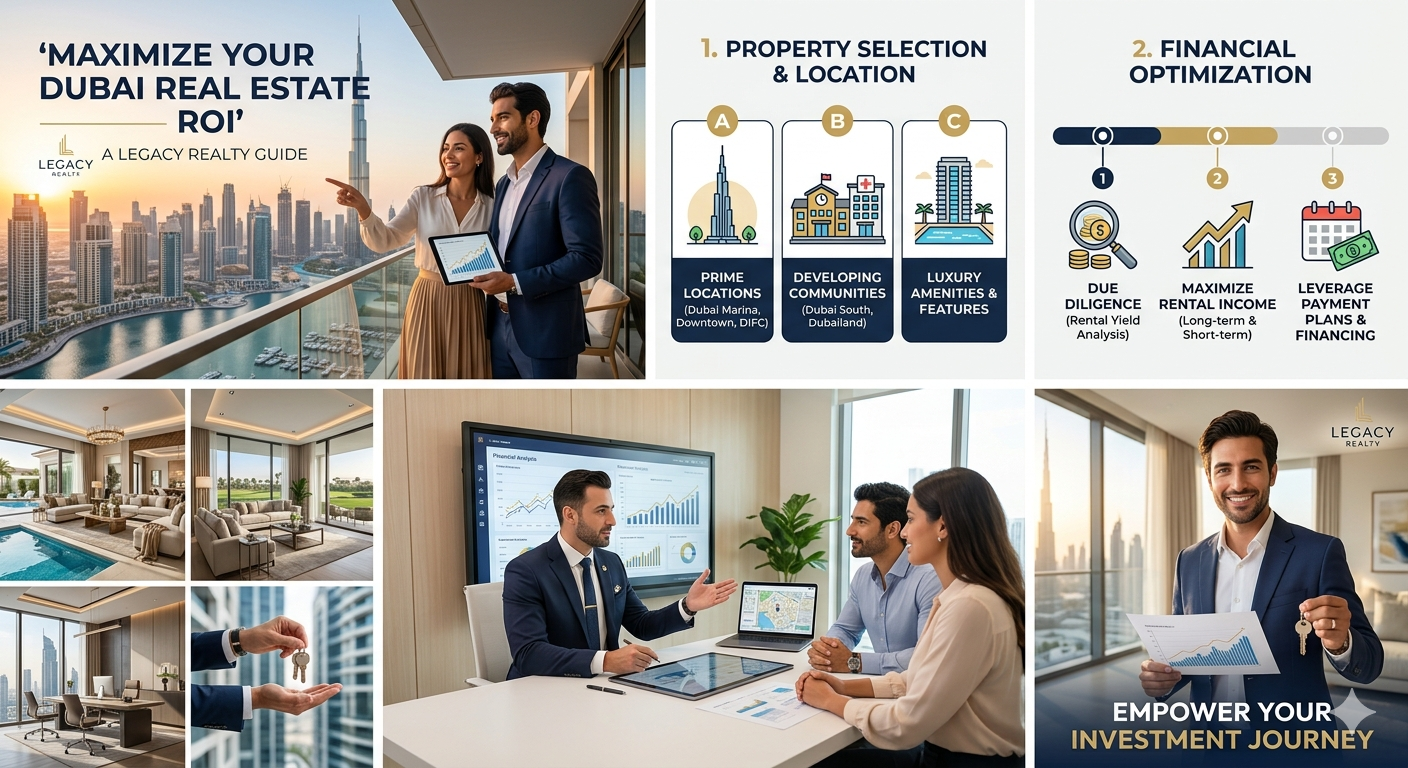
Investment
May 14, 2026

Rules for Short-Term Rentals in Dubai (What Property Owners Must Know)

Dubai’s short-term rental market continues to attract investors, landlords, and holiday home operators looking to capitalize on the city’s booming tourism industry. However, running a holiday home in Dubai is not as simple as listing a property on Airbnb or Booking.com.Property owners must comply with strict short term rental laws Dubai authorities enforce through the Department of Economy and Tourism (DET), formerly known as DTCM (Department of Tourism and Commerce Marketing).From licensing and permits to guest registration and tourism fees, Dubai has established a clear regulatory framework for holiday homes. Failing to comply can result in heavy fines, listing removals, and operational restrictions.This guide explains everything property owners need to know about Dubai short-term rental regulations, including licensing requirements, DET permits, compliance obligations, and legal considerations.  Understanding Short-Term Rental Laws in DubaiShort-term rentals in Dubai are legally classified as “Holiday Homes.” These properties can be rented out for short stays through platforms such as Airbnb, Booking.com, and Vrbo.Dubai’s holiday home sector is regulated by the Dubai Department of Economy and Tourism (DET). The authority oversees:Holiday home permitsProperty classificationsGuest registration requirementsTourism fee collectionSafety and quality standardsAdvertising and listing complianceUnder current short term rental laws Dubai property owners cannot legally rent out a residential unit for short stays without an approved holiday home permit.This applies to:ApartmentsVillasTownhousesFurnished residencesEntire homes listed on booking platformsWhether you own one apartment or manage multiple units, compliance is mandatory.  Who Can Operate a Short-Term Rental in Dubai?Property OwnersIndividual property owners can legally operate a short-term rental in Dubai if they obtain the appropriate holiday home permit from DET.Owners must provide:Passport or Emirates IDProof of ownershipTitle deedUtility detailsProperty informationTenantsTenants may also operate a holiday home rental under certain conditions.However, they must obtain:Written landlord approvalA No Objection Certificate (NOC)Permission aligned with tenancy termsWithout landlord consent, subletting a property for short stays may violate tenancy regulations.Holiday Home OperatorsProfessional holiday home companies can manage multiple properties under a licensed operator structure.These operators typically handle:Guest communicationCleaning and maintenancePricing optimizationCheck-in servicesRegulatory compliancePermit renewals  What Is the DTCM Holiday Home Permit?The DTCM Holiday Home Permit, now administered by DET, is the official license required to legally rent a property for short stays in Dubai.The permit confirms that the property complies with Dubai tourism regulations and operational standards.Without a valid permit, owners cannot legally advertise or host paying guests.Why the Permit MattersThe permit ensures:Guest safety standards are metTourism fees are collected properlyProperty information is verifiedHoliday homes operate legallyBooking platforms display compliant listingsMost booking platforms now require Dubai listings to display a valid permit number.  Step-by-Step Guide to Getting a Holiday Home Permit in DubaiStep 1: Register With the DET Holiday Homes PortalProperty owners must first register through the official DET holiday homes system.The application process includes identity verification and property registration.Step 2: Submit Required DocumentsCommonly required documents include:Emirates ID or passport copyTitle deedDEWA billProperty photosNOC (if applicable)Tenancy contract (for tenant operators)Step 3: Property Inspection and ClassificationDubai authorities may inspect the property to confirm it meets holiday home standards.Properties are often classified as:StandardDeluxeThe classification can influence pricing potential and guest expectations.Step 4: Pay Permit FeesPermit fees vary depending on the size and type of property.Annual licensing costs may include:Permit feesTourism feesAdministrative chargesService feesStep 5: Receive Permit ApprovalOnce approved, the property receives a holiday home permit number.Owners can then legally advertise the property on booking platforms.  Key Compliance Rules Property Owners Must FollowUnderstanding short term rental laws Dubai investors often overlook is essential for long-term profitability.Here are the most important compliance obligations.Register All GuestsDubai requires holiday home operators to maintain guest records and comply with tourism reporting obligations.Guest registration requirements typically include:Passport detailsCheck-in informationStay durationNationality recordsCollect Tourism Dirham FeesHoliday home operators must collect Tourism Dirham fees from guests.These fees are charged per room per night and submitted to authorities.Failure to collect or remit tourism fees can trigger penalties.Maintain Property StandardsAll holiday homes must meet minimum hospitality standards.Properties should include:Functional utilitiesClean furnishingsSafety equipmentFire safety complianceAdequate maintenancePoorly maintained properties may face complaints, inspections, or permit suspension.Display Accurate ListingsAdvertising regulations prohibit misleading property listings.Operators should ensure:Photos are accurateAmenities are correctly describedPermit numbers are displayedPricing is transparentRenew Licenses AnnuallyHoliday home permits require annual renewal.Owners who fail to renew on time may lose operating rights and face fines.  Dubai Short-Term Rental Fees and CostsRunning a legal holiday home in Dubai involves several operational costs.Typical Costs Include:Expense TypeEstimated CostHoliday home permitAnnual feeTourism DirhamCharged per guest stayCleaning servicesPer bookingProperty managementPercentage of revenueVAT obligationsDepending on structureMaintenance and utilitiesOngoing operational costProperty owners should budget carefully before entering the short-term rental market.  Penalties for Violating Short Term Rental Laws DubaiDubai actively enforces holiday home regulations.Operating without proper authorization can result in:Financial penaltiesListing removalsProperty blacklistingSuspension of permitsLegal enforcement actionFines for non-compliance may escalate for repeated violations.Common violations include:Operating without a permitFailing to register guestsMisleading advertisingIgnoring tourism fee obligationsViolating building regulations  Building Rules and Community RestrictionsEven if Dubai regulations allow holiday home operations, individual buildings or communities may impose additional restrictions.Some developments have:Owners association rulesSecurity protocolsGuest access limitationsCommunity restrictions on short staysBefore purchasing a property for Airbnb or holiday home use, investors should confirm whether the building permits short-term rentals.This is especially important in:Dubai MarinaDowntown DubaiPalm JumeirahJBRBusiness Bay  Tax Considerations for Dubai Holiday HomesDubai remains attractive for property investors because there is no personal income tax on rental income.However, operators may still need to consider:VAT obligationsTourism feesCorporate structuresBusiness licensing requirementsProfessional accounting advice is recommended for operators managing multiple units.  Short-Term Rental vs Long-Term Rental in DubaiMany investors compare short-term and long-term rental strategies before entering the market.Advantages of Short-Term RentalsHigher earning potentialFlexible pricingSeasonal demand opportunitiesPersonal use flexibilityHigher occupancy during tourism peaksChallenges of Short-Term RentalsHigher management workloadIncreased maintenance costsLicensing obligationsSeasonal vacancy risksCompliance requirementsLong-term rentals may provide more predictable income with lower operational complexity.  Best Areas for Short-Term Rentals in DubaiSome Dubai communities consistently perform well for holiday home investments.Dubai MarinaDubai Marina remains one of the most popular locations for tourists and business travelers.Downtown DubaiDowntown properties benefit from proximity to:Burj KhalifaDubai MallDIFCBusiness districtsPalm JumeirahLuxury travelers often prefer beachfront properties on Palm Jumeirah.Business BayBusiness Bay attracts corporate travelers and long-stay visitors.JBR (Jumeirah Beach Residence)JBR combines beachfront access with entertainment and hospitality demand.  Tips for Staying Compliant With Dubai Holiday Home Regulations1. Keep Documentation UpdatedEnsure permits, IDs, utility records, and ownership documents remain current.2. Use Professional Property ManagementExperienced holiday home operators understand DET compliance requirements and can reduce operational risks.3. Monitor Regulatory UpdatesDubai regulations evolve regularly.Owners should stay informed about:Permit changesFee adjustmentsTourism regulationsPlatform compliance rules4. Maintain Strong Guest CommunicationClear guest instructions and support reduce complaints and operational issues.5. Prioritize Safety StandardsInstall smoke detectors, fire extinguishers, and emergency information where required.  Frequently Asked Questions About Short Term Rental Laws DubaiIs Airbnb legal in Dubai?Yes. Airbnb is legal in Dubai if the property has a valid holiday home permit from DET.Do I need a license for short-term rentals in Dubai?Yes. Any property rented for short stays requires a holiday home permit.Can tenants operate Airbnb properties in Dubai?Yes, but only with landlord approval and the necessary documentation.What happens if I rent without a permit?Operators may face fines, delisting, and legal penalties.Are holiday home permits renewed annually?Yes. Dubai holiday home permits typically require annual renewal.  Final ThoughtsDubai offers one of the world’s most attractive markets for short-term rental investments, but compliance is essential.Understanding short term rental laws Dubai authorities enforce can help property owners avoid costly penalties while building a profitable holiday home business.From obtaining a DET permit to managing tourism fees and guest registration, successful operators treat compliance as a core part of their business strategy.Before launching a holiday home in Dubai, property owners should carefully evaluate:Licensing obligationsBuilding restrictionsOperational costsManagement requirementsLong-term investment goalsWith the right setup and full regulatory compliance, Dubai’s holiday home market can provide strong returns and long-term growth opportunities.
Read Full Article

Investment
May 12, 2026

Is Airbnb Profitable in Dubai? A Complete Investor Guide

Dubai has become one of the world’s hottest destinations for real estate investors. With year-round tourism, tax-free rental income, luxury developments, and a growing remote-work economy, many investors are now asking the same question: Is Airbnb investment Dubai actually profitable in 2026?The short answer is yes — but profitability depends heavily on property location, occupancy rate, property management strategy, and whether short-term rentals outperform traditional leasing in your target area.This guide breaks down:How Airbnb investment Dubai worksShort-term vs long-term rental ROIReal income examples from popular communitiesCosts, regulations, and risksBest areas for Airbnb in DubaiTips to maximize profitabilityIf you are considering buying property in Dubai for rental income, this investor-focused guide will help you make an informed decision.  Why Dubai Is a Strong Market for Airbnb InvestmentsDubai’s tourism sector continues to expand rapidly, creating consistent demand for short-term accommodations. Unlike many global cities with strict Airbnb restrictions, Dubai has established a legal framework that supports holiday home operators.Key Reasons Airbnb Investment Dubai Is GrowingHigh Tourist VolumeDubai attracts millions of visitors annually for:TourismBusiness travelInternational eventsLuxury shoppingMedical tourismDigital nomad staysThis steady flow of visitors creates strong demand for furnished short-term rentals.Tax-Free Rental IncomeOne of Dubai’s biggest advantages is the absence of personal income tax on rental earnings. Investors can retain a larger share of their profits compared to many Western markets.Strong Average Daily Rates (ADR)Luxury tourism allows Airbnb hosts in premium areas to charge significantly higher nightly rates than many global cities.Flexible Ownership Rules for Foreign InvestorsInternational investors can purchase freehold properties in designated areas, making Dubai highly accessible for overseas buyers.Growing Remote Work and Extended StaysMany travelers now book apartments for weeks or months instead of hotels, especially in business-friendly districts.  How Airbnb Investment Dubai WorksBefore comparing returns, it is important to understand how Dubai regulates short-term rentals.Holiday Home Licensing RequirementsTo legally operate an Airbnb property in Dubai, owners typically need:A holiday home permitRegistration with Dubai’s tourism authorityCompliance with safety and furnishing standardsMany investors hire professional Airbnb management companies to handle:Guest communicationCheck-insCleaningPricing optimizationMaintenanceLicensing supportThis makes Airbnb investment Dubai more passive for overseas investors.  Short-Term vs Long-Term Rental Income in DubaiThe biggest investor debate is whether short-term rentals outperform traditional annual leasing.The answer depends on occupancy rates, management quality, and location.Short-Term Rental Model (Airbnb)With Airbnb, guests pay per night.Advantages of Short-Term RentalsHigher earning potentialFlexible pricing during peak seasonsAbility to use the property personallyBetter cash flow in tourist-heavy areasIncreased profitability during events and holidaysDisadvantages of Short-Term RentalsHigher management costsVariable occupancyMore operational workSeasonal fluctuationsFurnishing and utility expenses  Long-Term Rental ModelLong-term rentals involve leasing the property annually to a tenant.Advantages of Long-Term RentalsStable monthly incomeLower operational workloadReduced vacancy riskFewer maintenance cyclesLower utility expensesDisadvantages of Long-Term RentalsLower annual income potentialLess pricing flexibilityLimited ability to increase rents quicklyTenant-related risks  Airbnb Investment Dubai: Real ROI ComparisonsBelow are realistic examples comparing short-term and long-term rental income in Dubai.Example 1: Dubai Marina Studio ApartmentProperty DetailsPurchase Price: AED 900,000Size: Studio ApartmentLocation: Dubai MarinaAirbnb Income ScenarioEstimated PerformanceAverage Nightly Rate: AED 420Occupancy Rate: 75%Monthly Revenue: Approximately AED 9,450Annual Revenue: Approximately AED 113,400Estimated Annual CostsService ChargesAirbnb Management FeesUtilities and InternetCleaning and MaintenanceLicensing FeesEstimated Net Annual ProfitApproximately AED 72,000–78,000Estimated ROIApproximately 8%–8.6%  Long-Term Rental ScenarioEstimated Annual RentAnnual Rental Income: AED 68,000–72,000Estimated Net Annual ProfitApproximately AED 55,000–60,000Estimated ROIApproximately 6%–6.5%Key InsightIn tourist-heavy areas like Dubai Marina, Airbnb investment Dubai often outperforms long-term rentals.  Example 2: Downtown Dubai One-Bedroom ApartmentAirbnb Rental ScenarioEstimated PerformanceAverage Nightly Rate: AED 750Occupancy Rate: 70%Annual Gross Revenue: Approximately AED 191,000Estimated Net ROIApproximately 7.5%–9%  Long-Term Rental ScenarioEstimated Annual RentApproximately AED 110,000–125,000Estimated Net ROIApproximately 5.5%–6.5%Key InsightLuxury areas with strong tourist demand usually favor short-term rental strategies.  Best Areas for Airbnb Investment DubaiNot every area performs equally well for short-term rentals.1. Dubai MarinaDubai Marina remains one of the strongest Airbnb markets because of:Waterfront lifestyleTourist attractionsBeach accessRestaurants and nightlifeStrong occupancy ratesIdeal Property TypesStudiosOne-bedroom apartmentsServiced apartments  2. Downtown DubaiDowntown attracts premium travelers due to its proximity to:Burj KhalifaDubai MallBusiness hubsLuxury tourismBest forLuxury Airbnb listingsHigh nightly ratesCorporate travelers  3. Palm JumeirahPalm Jumeirah performs exceptionally well for luxury short-term rentals.AdvantagesUltra-premium nightly ratesVacation demandBeachfront appealLuxury traveler marketConsiderationHigher purchase prices reduce entry affordability.  4. Business BayBusiness Bay benefits from both tourism and corporate travel.Why Investors Like ItCentral locationGrowing infrastructureLower prices than DowntownStrong rental demand  5. Jumeirah Village Circle (JVC)JVC has emerged as a high-yield area for investors seeking lower entry prices.Key BenefitsAffordable apartmentsHigh rental yieldsGrowing community demandPopular among long-stay guests  Factors That Affect Airbnb Profitability in DubaiSuccessful Airbnb investment Dubai strategies depend on several critical factors.Occupancy RateOccupancy directly impacts annual returns.Typical Occupancy BenchmarksPrime Areas: 70%–85%Mid-Tier Areas: 60%–75%Emerging Areas: 50%–65%High occupancy usually depends on:Competitive pricingStrong reviewsProfessional photographyGood guest communicationExcellent property condition  Property Management QualityProfessional management can significantly improve:OccupancyGuest ratingsRepeat bookingsRevenue optimizationMany investors lose profitability due to poor operations rather than weak market demand.  SeasonalityDubai experiences tourism peaks during:Winter monthsNew Year celebrationsMajor conferencesShopping festivalsInternational exhibitionsNightly rates often increase substantially during peak periods.  Furnishing StandardsModern interiors strongly influence Airbnb performance.High-Performing Listings Usually IncludeContemporary furnitureFast Wi-FiSmart TVsHotel-style linensFully equipped kitchensSelf-check-in systems  Costs Investors Must ConsiderMany beginners overestimate Airbnb profits because they ignore operating costs.Common Airbnb Expenses in DubaiInitial CostsDown paymentRegistration feesFurnishing costsLicensing feesOngoing CostsService chargesCleaning feesUtilitiesInternet and TVAirbnb commissionManagement feesMaintenanceInsuranceThese expenses can reduce gross income significantly.  Is Airbnb Better Than Hotels in Dubai?Many travelers now prefer Airbnb properties because they offer:More spaceKitchen facilitiesBetter privacyLower cost for familiesFlexible stay optionsThis shift continues to strengthen Airbnb investment Dubai opportunities.However, hotels still dominate the luxury hospitality market, meaning Airbnb investors must focus heavily on guest experience.  Risks of Airbnb Investment DubaiDespite strong earning potential, investors should also understand the risks.Regulatory ChangesGovernment regulations can evolve over time.Occupancy FluctuationsEconomic slowdowns or travel disruptions may reduce bookings.Oversupply in Certain AreasSome communities experience increased competition from new developments.Operational ComplexityManaging guests, cleaning, and maintenance requires active oversight.  Tips to Maximize Airbnb ROI in DubaiChoose Tourist-Friendly LocationsFocus on areas with:Metro accessTourist attractionsBeach proximityBusiness hubs  Invest in Interior DesignHigh-quality interiors can dramatically improve nightly rates.  Use Dynamic PricingProfessional pricing tools help maximize occupancy and revenue.  Optimize Your Airbnb ListingStrong listings typically include:Professional photographySEO-friendly titlesDetailed descriptionsPositive guest reviewsInstant booking options  Hire Professional ManagementThis is especially useful for overseas investors seeking passive income.  Who Should Invest in Airbnb Properties in Dubai?Airbnb investment Dubai is particularly attractive for:International investorsDigital nomadsReal estate portfolio buildersInvestors seeking tax-efficient incomeBuyers targeting high rental yieldsHowever, investors looking for completely passive income may prefer long-term rentals.  Short-Term vs Long-Term Rentals: Final ComparisonFactorShort-Term Rental (Airbnb)Long-Term RentalIncome PotentialHigherModerateOccupancy StabilityVariableStableManagement EffortHighLowFlexibilityHighLowFurnishing RequirementsHighModerateUtility CostsOwner PaysUsually Tenant PaysROI Potential7%–10%5%–7%  Is Airbnb Investment Dubai Worth It in 2026?For many investors, the answer is yes.Dubai remains one of the most attractive global markets for short-term rental investments due to:Strong tourism demandTax-free rental incomeHigh occupancy potentialPremium nightly ratesInvestor-friendly regulationsIn prime locations, Airbnb properties can outperform traditional rentals in terms of cash flow and ROI.However, profitability depends heavily on:Property selectionProfessional managementOccupancy optimizationCost controlInvestors who treat Airbnb as a professional hospitality business rather than a passive side income usually achieve the strongest returns.  Frequently Asked QuestionsIs Airbnb legal in Dubai?Yes. Short-term rentals are legal in Dubai when property owners obtain the required holiday home permits and comply with local regulations.  What is the average Airbnb ROI in Dubai?Average Airbnb ROI in Dubai typically ranges between 7% and 10% in strong-performing areas.  Which area is best for Airbnb investment Dubai?Popular areas include:Dubai MarinaDowntown DubaiPalm JumeirahBusiness BayJVC  Is Airbnb more profitable than long-term renting in Dubai?In many prime tourist areas, Airbnb generates higher returns than annual leasing, although operating costs are also higher.  Can foreigners buy Airbnb properties in Dubai?Yes. Foreign investors can purchase freehold properties in designated areas across Dubai.  ConclusionAirbnb investment Dubai continues to attract global investors seeking high rental yields and tax-efficient income.While short-term rentals require more management and operational oversight, they often deliver stronger ROI than traditional long-term leasing in premium locations.For investors willing to focus on guest experience, strategic location selection, and professional management, Dubai remains one of the most profitable Airbnb markets in the world.If you are evaluating Dubai real estate opportunities in 2026, comparing Airbnb vs long-term rental strategies should be a key part of your investment analysis.
Read Full Article
Investment
May 11, 2026

Risks of Buying Off-Plan Property in Dubai (And How to Avoid Them)

Dubai’s real estate market continues to attract global investors due to its tax advantages, modern infrastructure, and strong rental demand. Among the most attractive opportunities are off-plan properties, which often come with lower launch prices, flexible payment plans, and high appreciation potential.However, investors should understand that buying an off-plan property is not without challenges. While the rewards can be significant, there are also important risks that can impact your finances, timeline, and overall investment experience.In this guide, we’ll explore the most common off plan property Dubai risks, how to identify warning signs, and the practical steps investors can take to minimize exposure.  What Is an Off-Plan Property?An off-plan property is a real estate unit purchased directly from a developer before construction is completed. In some cases, the project may still be in the planning phase when investors make their purchase.Buyers typically rely on:Project brochuresFloor plans3D renderingsSample apartmentsDeveloper promisesWhile this model can offer lower entry prices and attractive payment structures, it also introduces uncertainty because the finished property does not yet exist.  Why Investors Choose Off-Plan Properties in DubaiBefore discussing the risks, it’s important to understand why off-plan investments remain popular in Dubai.Lower Purchase PricesDevelopers often launch projects at prices below completed market value to attract early buyers.Flexible Payment PlansMany projects offer post-handover payment options and installment schedules spread over several years.Potential Capital AppreciationIf the market performs well during construction, investors may benefit from significant property appreciation before completion.Access to New CommunitiesOff-plan developments are commonly located in emerging neighborhoods with modern amenities and future growth potential.Although these benefits are attractive, buyers must balance them against the possible downsides.  Major Off Plan Property Dubai RisksUnderstanding the risks is the first step toward making a smarter investment decision.  1. Project DelaysWhy Delays HappenConstruction delays are among the most common off plan property Dubai risks. Projects may be delayed due to:Labor shortagesRising material costsRegulatory approvalsEconomic slowdownsCash flow issuesContractor disputesEven reputable developers can face timeline disruptions.How Delays Affect BuyersProject delays can create serious financial and personal challenges, including:Delayed rental incomeExtended temporary housing costsMortgage planning complicationsReduced investment liquidityMissed market opportunitiesSome projects may be delayed for months or even years.How to Avoid Delay RisksTo reduce exposure to delays:Research the Developer’s Track RecordReview previous projects and evaluate whether the developer completed them on time.Check Construction ProgressRequest regular construction updates and verify milestones independently.Review Delivery Clauses CarefullyEnsure the Sale and Purchase Agreement (SPA) clearly defines:Expected completion datesGrace periodsCompensation policiesBuyer cancellation rightsChoose Established DevelopersLarge developers with proven financial stability generally carry lower completion risk.  2. Developer Reliability IssuesThe Importance of Developer ReputationNot all developers operate with the same level of transparency or financial strength. Choosing the wrong developer is one of the most serious off plan property Dubai risks investors face.Common Warning SignsBe cautious if a developer:Has limited project historyFrequently changes delivery timelinesReceives poor investor feedbackLacks transparencyOffers unrealistic guaranteesUses aggressive sales tacticsRisks of Working With Unreliable DevelopersPotential consequences include:Construction delaysPoor build qualityContract disputesFinancial lossesProject cancellationHow to Verify Developer ReliabilityCheck RERA RegistrationEnsure the developer and project are registered with Dubai’s Real Estate Regulatory Agency (RERA).Review Past ProjectsVisit completed developments if possible.Evaluate:Construction qualityMaintenance standardsCommunity managementTimely handover historyRead Investor ReviewsOnline reviews and investor forums can reveal recurring complaints or legal issues.Analyze Financial StrengthEstablished developers with strong funding are generally more capable of completing projects during market fluctuations.  3. Hidden Contract ClausesWhy Contracts MatterMany investors focus heavily on price and payment plans but overlook the legal details inside the Sale and Purchase Agreement.This can become one of the most expensive off plan property Dubai risks later.Common Problematic ClausesBroad Delay Grace PeriodsSome contracts allow developers extended delays without penalties.Limited Refund RightsCertain agreements make refunds difficult if buyers decide to exit.Unclear SpecificationsThe delivered property may differ from marketing materials if specifications are vague.Developer Modification RightsSome contracts permit changes to layouts, amenities, or finishes.High Penalties for Buyer DefaultsMissing payments may trigger significant penalties or cancellation.How to Protect YourselfHire a Real Estate LawyerA qualified property lawyer can identify unfair clauses and explain legal obligations.Read Every Section CarefullyNever rely solely on verbal promises from sales representatives.Clarify Exit TermsUnderstand:Refund eligibilityCancellation proceduresTransfer restrictionsResale conditionsConfirm Project SpecificationsRequest detailed written documentation covering:Unit sizeFinishesAmenitiesParking allocationCompletion standards  4. Market Fluctuation RiskProperty Values Can ChangeDubai’s property market is dynamic. Prices can rise significantly, but they can also decline during market corrections.If the market weakens before handover, buyers may face:Reduced resale valueLower rental yieldsDifficulty exiting the investmentNegative equity concernsHow to Reduce Market RiskFocus on Prime LocationsProperties in high-demand areas often perform better during market downturns.Analyze Supply and DemandAvoid oversupplied areas with excessive new inventory.Invest for the Long TermShort-term speculation carries greater risk in volatile markets.Study Market CyclesUnderstanding Dubai’s real estate trends can help investors make more informed entry decisions.  5. Construction Quality ConcernsExpectations vs RealityOne challenge with off-plan investments is that buyers often rely on marketing materials rather than a finished product.In some cases, delivered units may not meet buyer expectations.Common Quality ProblemsIssues may include:Inferior materialsPoor finishingIncomplete amenitiesStructural defectsLayout inconsistenciesHow to Minimize Quality RisksInspect Previous ProjectsCompleted projects reveal the developer’s actual quality standards.Request Material SpecificationsObtain detailed documentation on:FlooringKitchen fittingsAppliancesBathroom fixturesSmart home featuresConduct a Snagging InspectionBefore accepting handover, hire a professional inspection company to identify defects.  6. Financing and Mortgage RisksMortgage Approval ChallengesFinancing off-plan properties can be more complex than buying completed units.Banks may:Require higher down paymentsRestrict financing percentagesDelay approvalsChange lending criteriaInterest Rate UncertaintyIf interest rates rise before completion, mortgage repayments may become more expensive.How to Protect YourselfSecure Pre-Approval EarlyUnderstand your financing limits before committing.Prepare Emergency FundsUnexpected costs may arise during the project timeline.Monitor Payment SchedulesEnsure installment obligations align with your cash flow.  7. Project Cancellation RiskCan Off-Plan Projects Be Cancelled?Although regulations in Dubai have improved significantly, project cancellations can still happen under certain conditions.Reasons may include:Financial instabilityInsufficient fundingRegulatory issuesMarket downturnsImpact on InvestorsCancellation may result in:Long refund delaysLegal disputesOpportunity costsCapital being tied up for extended periodsHow to Reduce Cancellation RiskVerify Escrow AccountsEnsure buyer payments are deposited into regulated escrow accounts.Choose Well-Funded DevelopersFinancially stable developers are less likely to abandon projects.Avoid Unrealistically Cheap DealsPrices significantly below market averages may indicate underlying project risks.  Due Diligence Checklist for Off-Plan BuyersConducting proper due diligence is the best defense against off plan property Dubai risks.Essential Due Diligence StepsVerify Developer CredentialsCheck:RERA registrationPrevious projectsFinancial historyCustomer reviewsReview Legal DocumentsCarefully examine:Sale and Purchase AgreementPayment schedulesHandover clausesRefund policiesEvaluate Location PotentialStudy:Infrastructure developmentRental demandTransportation accessNearby amenitiesUnderstand All CostsInclude:Dubai Land Department feesService chargesRegistration feesMaintenance costsMortgage expensesWork With ProfessionalsConsider hiring:Real estate lawyersProperty consultantsMortgage advisorsInspection specialists  How Dubai Regulations Protect Off-Plan BuyersDubai has introduced several regulations designed to improve investor protection.RERA OversightThe Real Estate Regulatory Agency monitors developers and project compliance.Escrow Account RequirementsDevelopers must place buyer funds into regulated escrow accounts linked to construction progress.Project Registration RulesProjects must meet legal requirements before developers can begin selling units.Construction MonitoringAuthorities monitor project progress and developer obligations.Although regulations improve transparency, investors should still conduct independent research.  Is Buying Off-Plan Property in Dubai Worth the Risk?Off-plan properties can offer strong investment opportunities when approached strategically.The key is understanding that every investment carries risk.For disciplined investors who perform proper due diligence, off-plan projects may provide:Competitive pricingLong-term appreciation potentialAttractive rental returnsFlexible payment structuresHowever, buyers who rush decisions or ignore warning signs may face avoidable financial setbacks.  Final Thoughts on Off Plan Property Dubai RisksUnderstanding off plan property Dubai risks is essential before committing to any real estate investment.While Dubai’s off-plan market offers exciting opportunities, buyers should carefully evaluate:Developer reputationProject timelinesContract termsMarket conditionsConstruction qualityFinancial commitmentsThe safest approach is to combine market research, legal review, and professional guidance before signing any agreement.A well-researched off-plan investment can become a profitable long-term asset, but only when investors prioritize due diligence and risk management.  Frequently Asked Questions (FAQs)Are off-plan properties in Dubai safe to buy?Off-plan properties can be safe if investors choose reputable developers, verify RERA registration, and carefully review all legal documents.What is the biggest risk of buying off-plan property in Dubai?Project delays are considered one of the most common risks, though developer reliability and contract terms are also major concerns.Can I sell an off-plan property before handover?In many cases, yes. However, resale rules vary by developer and project, so buyers should review transfer conditions carefully.How do I verify a Dubai developer?Investors should review RERA registration, completed projects, customer feedback, and financial stability before purchasing.What happens if an off-plan project gets cancelled?Depending on the situation, buyers may receive refunds through escrow protections, though the process can take time.
Read Full Article
Investment
May 06, 2026

Why Off-Plan Properties in Dubai Are Booming Right Now

IntroductionDubai’s real estate market is once again capturing global attention, and one segment stands out above the rest—off-plan properties. Investors, first-time buyers, and international buyers are increasingly turning toward this option for its affordability, flexibility, and high return potential.In this article, we’ll break down the off plan property Dubai benefits, explore current market trends, and explain why demand is surging right now.  What Is an Off-Plan Property?An off-plan property is a real estate unit that is purchased directly from a developer before construction is completed—or sometimes even before it begins.Key Characteristics:Bought at pre-construction pricesPaid in installments over timeDelivered upon project completionThis model has become extremely popular in Dubai due to its investor-friendly structure.  Why Off-Plan Properties in Dubai Are Booming1. Attractive Pricing and Lower Entry CostsOne of the biggest off plan property Dubai benefits is the lower price compared to ready properties.Developers offer below-market rates at launchBuyers can secure prime locations at reduced pricesCapital appreciation begins even before completionThis makes off-plan investments especially appealing for those entering the market with limited capital.  2. Flexible Payment PlansDubai developers are known for offering highly flexible payment structures, which is a major driver behind the boom.Common Payment Options:60/40 or 70/30 plans (during and after construction)Post-handover payment optionsLow initial down payments (as low as 10%)These plans reduce financial pressure and make property ownership more accessible.  3. High Return on Investment (ROI)Investors are drawn to off-plan properties because of their strong ROI potential.Prices often rise significantly by completionRental yields in Dubai remain competitive globallyEarly investors benefit the most from appreciationThis makes off-plan properties ideal for both short-term flipping and long-term holding strategies.  4. Growing Demand from International InvestorsDubai continues to attract global investors due to:Tax-free property ownershipStrong economic stabilityInvestor-friendly regulationsOff-plan projects, in particular, appeal to overseas buyers because of their affordability and structured payment plans.  5. Rapid Urban Development and Infrastructure GrowthDubai is constantly expanding with new communities, transport systems, and lifestyle hubs.Key Growth Drivers:Mega infrastructure projectsExpansion of residential communitiesIntegration of smart city technologiesBuying off-plan allows investors to enter these emerging areas early—often before prices peak.  6. Modern Designs and Smart Living FeaturesNew off-plan developments in Dubai come with cutting-edge features:Smart home technologySustainable building practicesLuxury amenities (pools, gyms, co-working spaces)This aligns with the preferences of modern buyers and tenants, increasing demand and rental potential.  Market Trends Fueling the GrowthRising Property PricesAs demand increases, property prices in Dubai are trending upward—making early investment in off-plan projects even more attractive.  Limited Supply of Ready PropertiesA shortage of ready-to-move-in units has pushed buyers toward off-plan options, where availability is higher.  Developer CompetitionDevelopers are competing aggressively by offering:Better pricingEnhanced amenitiesMore flexible payment plansThis competition directly benefits buyers.  Potential Risks to ConsiderWhile the off plan property Dubai benefits are significant, investors should also be aware of potential risks:Construction DelaysProjects may take longer than expected to complete.Market FluctuationsProperty values can change due to economic conditions.Developer ReliabilityChoosing a reputable developer is crucial.  Tips for Investing in Off-Plan PropertiesDo Your ResearchEvaluate the developer’s track record and past projects.Choose Strategic LocationsLook for areas with upcoming infrastructure and growth potential.Understand the Payment PlanEnsure it aligns with your financial capacity.Work with Real Estate ExpertsProfessional guidance can help you avoid costly mistakes.  ConclusionThe surge in off-plan property investments is no coincidence. With lower entry costs, flexible payment options, and strong ROI potential, it’s clear why buyers are increasingly drawn to this segment.Understanding the off plan property Dubai benefits can help you make smarter investment decisions and capitalize on one of the fastest-growing real estate markets in the world.
Read Full Article
Investment
April 29, 2026

Affordable Areas to Buy Property in Dubai for First-Time Buyers (2026 Guide)

If you are exploring affordable property Dubai, the city offers several budget-friendly communities that combine reasonable entry prices, strong rental demand, and long-term growth potential. For first-time buyers, the key is choosing areas with low per-square-foot rates, good infrastructure, and developer payment plans.Below are the most affordable areas in Dubai where you can buy property without overspending.  International City – Cheapest Entry Point in DubaiDubai International City remains one of the most cost-effective areas for first-time buyers.Average Prices:Studio: AED 250,000 – 350,0001 Bedroom: AED 350,000 – 500,000Why it’s affordable:Lowest property prices in DubaiHigh rental demand from working professionalsClose to Dragon Mart and key highwaysBest for: Ultra-budget investors and rental income seekers  Dubai Silicon Oasis – Affordable & Modern LivingA popular free-zone residential community designed for tech professionals and families.Average Prices:Studio: AED 350,000 – 500,0001 Bedroom: AED 500,000 – 750,000Why it stands out:Modern infrastructure and smart city planningStrong rental demand from IT professionalsFamily-friendly environment with schools and parksBest for: Long-term residents and stable rental income  Jumeirah Village Circle (JVC) – Best Value for MoneyJVC is one of the most searched areas for affordable property Dubai due to its balance of price and lifestyle.Average Prices:Studio: AED 400,000 – 600,0001 Bedroom: AED 600,000 – 900,000Why buyers choose it:High rental yields (6%–8%)Continuous new residential developmentsCentral location with easy city accessBest for: Investors seeking ROI and lifestyle balance  Dubai South – Future Growth Investment ZoneLocated near the expanding aviation and logistics hub, Dubai South is a long-term investment hotspot.Average Prices:Studio: AED 300,000 – 500,0001 Bedroom: AED 500,000 – 800,000Why it’s attractive:Close to Al Maktoum International AirportPlanned mega infrastructure projectsStrong future capital appreciation potentialBest for: Long-term investors focused on growth  Al Furjan – Affordable Family-Friendly CommunityAl Furjan is a growing residential area offering a mix of apartments and villas.Average Prices:Studio: AED 450,000 – 650,0001 Bedroom: AED 650,000 – 950,000Why it’s popular:Developed by reputable buildersMetro connectivity improving accessibilityQuiet, family-oriented lifestyleBest for: Families and mid-budget buyers  Dubai Land Residence Complex (DLRC) – Hidden Budget GemDLRC is gaining popularity among first-time investors looking for cheap apartments in Dubai.Average Prices:Studio: AED 350,000 – 550,0001 Bedroom: AED 550,000 – 800,000Why consider it:Lower entry prices compared to central DubaiUpcoming infrastructure developmentIncreasing rental demandBest for: Entry-level investors seeking affordability  Final Thoughts on Affordable Property DubaiFor first-time buyers searching for affordable property Dubai, choosing the right community depends on your budget and investment goals.Lowest prices: International City, Dubai SouthBest rental yield: JVCFamily living: Dubai Silicon Oasis, Al FurjanFuture growth: Dubai South, DLRCIf your goal is affordability with long-term value, these communities offer the best starting point in Dubai’s real estate market.
Read Full Article
Investment
April 24, 2026

Common Real Estate Investment Mistakes in Dubai (And How to Avoid Them)

Preparing for a visa interview can feel overwhelming, but with the right strategy, you can approach it with confidence and clarity. This comprehensive guide on visa interview preparation walks you through everything you need to know—from required documents to confidence tips, dress code, and common mistakes to avoid.  Why Visa Interview Preparation MattersA visa interview is often the final and most critical step in your application process. No matter how strong your paperwork is, your performance during the interview can determine the outcome.Proper visa interview preparation helps you:Communicate clearly and confidentlyAvoid unnecessary delays or rejectionsPresent yourself as a genuine and credible applicant  Step-by-Step Visa Interview Preparation Guide1. Understand the Purpose of the InterviewBefore anything else, understand what the visa officer is evaluating:Your intent to travelFinancial stabilityTies to your home countryAuthenticity of your documentsBeing aware of these factors helps you tailor your answers effectively.  2. Gather All Required DocumentsOne of the most important aspects of visa interview preparation is organizing your documents.Essential Documents Checklist:Valid passportVisa application confirmationAppointment letterPhotographs (as per specifications)Financial documents (bank statements, tax returns)Employment or business proofInvitation letter (if applicable)Travel itineraryPro Tip:Arrange your documents neatly in a folder for easy access during the interview.  3. Practice Common Interview QuestionsPreparation builds confidence. Practice answering common visa interview questions such as:Why are you traveling to this country?How long will you stay?Who will sponsor your trip?What do you do for a living?Do you plan to return to your home country?Best Practice:Keep your answers:HonestClearConciseAvoid memorized or robotic responses.  4. Dress ProfessionallyYour appearance creates the first impression. While there’s no strict dress code, dressing appropriately is a key part of visa interview preparation.Recommended Attire:Formal or business casual clothingNeutral colorsClean and well-ironed outfitAvoid:Overly flashy clothingCasual wear like t-shirts or ripped jeans  5. Build Confidence Before the InterviewConfidence plays a major role in how your answers are perceived.Confidence Tips:Maintain eye contactSpeak clearly and at a steady paceStay calm and composedListen carefully before answeringQuick Trick:Practice mock interviews with a friend or in front of a mirror.  6. Be Honest and TransparentHonesty is non-negotiable in a visa interview. Providing false information can lead to immediate rejection or future bans.Answer only what is askedDo not provide unnecessary detailsAdmit if you don’t know something instead of guessing  7. Arrive Early and Stay OrganizedPunctuality reflects seriousness.Arrive at least 30 minutes earlyKeep all documents readyFollow embassy or consulate guidelines  Common Visa Interview Mistakes to AvoidEven well-prepared applicants can make simple mistakes. Avoid these pitfalls:Giving Inconsistent AnswersContradictions between your application and answers raise red flags.Lack of PreparationNot knowing basic details about your trip or documents can hurt your credibility.Overconfidence or ArroganceConfidence is good—overconfidence is not.Poor Communication SkillsMumbling or unclear responses can create confusion.Incomplete DocumentationMissing documents can delay or reject your application.  Bonus Tips for Successful Visa Interview PreparationResearch the country you’re visitingUnderstand your visa type requirementsKeep copies of all documentsStay polite and respectful throughout  Final ThoughtsMastering visa interview preparation is all about clarity, confidence, and organization. By following this step-by-step guide, you significantly improve your chances of success.Remember: the goal is not to impress—but to present your genuine intent clearly and confidently.  FAQs About Visa Interview PreparationHow long does a visa interview last?Most interviews last between 2 to 10 minutes.Can I reschedule my visa interview?Yes, depending on the embassy’s policy.What if I get nervous during the interview?Take a deep breath, pause briefly, and continue speaking calmly.
Read Full Article
Investment
April 22, 2026

Rental Yield vs Capital Appreciation in Dubai: What Should You Focus On?

Rental Yield vs Capital Appreciation in Dubai: What Should You Focus On?When investing in Dubai real estate, one of the most important strategic decisions you’ll face is choosing between rental yield and capital appreciation. Both approaches can be profitable—but they serve different financial goals.In this guide, we’ll break down rental yield vs capital appreciation in Dubai, compare real-world scenarios, and help you decide which strategy aligns with your investment objectives.  What Is Rental Yield?Rental yield measures the annual rental income you earn from a property relative to its purchase price. It’s a key metric for investors seeking steady cash flow.How to Calculate Rental YieldGross Rental Yield= (Annual Rent ÷ Property Price) × 100Net Rental Yield= (Annual Rent – Expenses) ÷ Property Price × 100Example: Rental Yield in DubaiProperty Price: AED 800,000Annual Rent: AED 64,000Gross Yield = 8%Dubai is globally attractive because rental yields often range between 5% to 9%, significantly higher than many mature markets.  What Is Capital Appreciation?Capital appreciation refers to the increase in property value over time. Instead of immediate income, this strategy focuses on long-term gains when you sell the property.Example: Capital Appreciation in DubaiPurchase Price: AED 1,200,000Value After 5 Years: AED 1,600,000Profit = AED 400,000 (≈33% growth)This approach works best in high-growth areas or emerging communities.  Rental Yield vs Capital Appreciation Dubai: Key Differences1. Investment GoalRental Yield: Regular income streamCapital Appreciation: Long-term wealth building2. Risk LevelRental Yield: Lower risk, predictable returnsCapital Appreciation: Higher risk, market-dependent3. LiquidityRental Yield: Ongoing income improves liquidityCapital Appreciation: Profit locked until sale4. Ideal Investor ProfileRental Yield: Passive income seekers, retirees, expatsCapital Appreciation: Long-term investors, wealth builders  Best Areas in Dubai for Rental YieldCertain communities are known for strong rental returns:Jumeirah Village Circle (JVC) – Affordable entry, high tenant demandDubai Silicon Oasis – Popular among professionalsInternational City – Budget-friendly, high occupancy ratesTypical yields here range from 6% to 9%.  Best Areas in Dubai for Capital AppreciationIf your focus is long-term growth, consider:Dubai Hills Estate – Master-planned community with rising demandDowntown Dubai – Premium location with consistent value growthPalm Jumeirah – Luxury segment with strong appreciation potentialThese areas may offer lower yields but higher long-term upside.  Real-Life Scenario ComparisonScenario 1: Yield-Focused InvestorBuys studio in JVC for AED 500,000Earns AED 40,000/year rent5-year rental income: AED 200,000Outcome: Strong cash flow, moderate appreciation  Scenario 2: Appreciation-Focused InvestorBuys apartment in Dubai Hills for AED 1.5MProperty value grows to AED 2M in 5 yearsOutcome: AED 500,000 capital gain, lower rental income  Which Strategy Should You Choose?Choose Rental Yield If:You want monthly incomeYou prefer lower riskYou aim for quick ROIChoose Capital Appreciation If:You can hold long-term (5–10 years)You want larger profits at exitYou’re comfortable with market fluctuations  Can You Combine Both?Yes—and this is often the smartest strategy.Look for properties in emerging areas where:Rental demand is already strongInfrastructure development is ongoingPrices are still relatively affordableThis allows you to earn rental income now while benefiting from future appreciation.  Key Factors That Influence Both Strategies1. LocationPrime areas tend to appreciate faster, while affordable zones yield better rent.2. Market TimingBuying during a downturn can maximize both yield and appreciation.3. Property TypeStudios & 1-bed units → higher rental yieldVillas & luxury apartments → better appreciation4. Economic GrowthDubai’s tourism, business expansion, and population growth drive both metrics.  Rental Yield vs Capital Appreciation DubaiThere’s no one-size-fits-all answer.If your priority is cash flow → focus on rental yieldIf your goal is wealth accumulation → focus on capital appreciationIf you want balanced growth → aim for bothDubai’s real estate market uniquely allows investors to blend income and growth, making it one of the most versatile property markets globally.  Pro TipBefore investing, define your financial goal, time horizon, and risk tolerance. That clarity will make the decision between rental yield and capital appreciation much easier—and more profitable.
Read Full Article
Investment
April 20, 2026

How to Maximize ROI from Dubai Real Estate Investments

IntroductionDubai has become one of the most attractive real estate markets in the world, offering strong rental yields, tax-free income, and high capital appreciation potential. However, simply owning property isn’t enough—investors need a clear strategy to maximize ROI Dubai real estate opportunities.In this guide, we’ll break down proven methods to help you increase returns through smart location choices, property upgrades, and rental optimization techniques.  What Does ROI Mean in Dubai Real Estate?Understanding Return on InvestmentReturn on Investment (ROI) measures the profitability of your property relative to its cost. In Dubai real estate, ROI typically comes from:Rental income (short-term or long-term)Property value appreciationTax advantages (no property tax)Why Dubai Offers High ROI PotentialHigh rental yields (5–9% on average)No capital gains taxGrowing population and tourism sectorStrong infrastructure and global demand  Choosing the Right Location to Maximize ROIPrime vs Emerging AreasLocation is the single most important factor when aiming to maximize ROI Dubai real estate investments.Prime AreasDowntown districtsWaterfront propertiesBusiness hubsThese offer stability and consistent demand but come with higher entry costs.Emerging AreasDeveloping communitiesNew infrastructure zonesThese often provide:Lower purchase pricesHigher appreciation potentialProximity to Key AmenitiesProperties near the following typically yield better returns:Metro stationsSchools and universitiesShopping mallsBusiness districts  Selecting the Right Property TypeApartments vs VillasApartments: Higher rental demand, especially for expatsVillas: Better for long-term appreciation and family tenantsOff-Plan vs Ready PropertiesOff-Plan PropertiesLower initial pricesFlexible payment plansHigher appreciation potentialReady PropertiesImmediate rental incomeLower risk  Property Upgrades That Increase ROIInterior EnhancementsSimple upgrades can significantly boost rental value:Modern kitchensUpdated bathroomsSmart home featuresFurnishing for Higher ReturnsFurnished properties often command higher rents, especially in short-term markets.Energy Efficiency ImprovementsEco-friendly upgrades not only reduce costs but attract premium tenants.  Rental Optimization StrategiesShort-Term vs Long-Term RentalsShort-Term RentalsHigher income potentialIdeal for tourist-heavy areasRequires active managementLong-Term RentalsStable incomeLower maintenance effortLower vacancy riskSetting Competitive Rental PricesResearch comparable properties and adjust pricing based on:Market demandSeasonalityProperty featuresReducing Vacancy RatesProfessional property listingsHigh-quality photosResponsive tenant communication  Leveraging Property Management ServicesBenefits of Professional ManagementHiring a property management company can help:Handle tenant relationsMaintain property conditionOptimize rental pricingCost vs Return AnalysisWhile management fees apply, they often lead to:Higher occupancy ratesBetter tenant retentionIncreased overall ROI  Timing the Market for Maximum ReturnsBuying at the Right TimeLook for market dipsInvest during early development phasesSelling for ProfitMonitor price trendsSell during peak demand cycles  Legal and Financial ConsiderationsUnderstanding Ownership LawsForeign investors can own property in designated freehold areas.Financing OptionsMortgage availability for expatsDeveloper payment plansHidden Costs to ConsiderService chargesMaintenance feesRegistration costs  Common Mistakes to AvoidOverpaying for PropertyAlways compare market prices before purchasing.Ignoring Market TrendsStay updated with Dubai’s real estate reports and forecasts.Poor Tenant SelectionBad tenants can reduce profitability through damages or missed payments.  ConclusionTo truly maximize ROI Dubai real estate investments, you need a combination of smart location selection, strategic property upgrades, and effective rental management. Dubai offers incredible opportunities, but success depends on informed decision-making and ongoing optimization.By applying these strategies, investors can unlock higher rental yields, minimize risks, and build long-term wealth in one of the world’s most dynamic property markets.  FAQsWhat is the average ROI in Dubai real estate?Typically between 5% and 9%, depending on location and property type.Is short-term rental better than long-term?Short-term rentals can generate higher income but require more management.Can foreigners invest in Dubai real estate?Yes, foreigners can buy property in designated freehold areas.How can I increase rental income?Focus on upgrades, furnishing, and competitive pricing strategies.
Read Full Article
Investment
March 24, 2026

Hidden Costs of Buying Property in Dubai (What Buyers Must Know)

Buying real estate in Dubai is an exciting investment opportunity—but many buyers focus only on the property price and overlook the additional expenses. Understanding the cost of buying property in Dubai is essential to avoid surprises and plan your budget effectively.In this guide, we break down all the hidden costs involved so you can make a well-informed decision.Why You Must Consider Hidden CostsWhile Dubai offers tax-free property ownership and high rental yields, there are several upfront and ongoing costs that can add 6%–10% or more to your total investment.1. Dubai Land Department (DLD) FeeThe Dubai Land Department (DLD) charges a mandatory fee for property transactions.Cost:4% of the property valuePlus administrative fees (approx. AED 2,000–4,000)Tip to avoid surprises:Always include this in your upfront budget—it’s non-negotiable.2. Real Estate Agency CommissionIf you're using a property agent, you’ll need to pay a commission.Cost:Typically 2% of the property value (+ 5% VAT)Tip:Confirm commission rates in writing before signing any agreement.3. Property Registration FeeThis fee is required to officially register ownership.Cost:Around AED 2,000–4,000 depending on property priceTip:Usually paid alongside DLD fees during transfer.4. Mortgage Fees (If Applicable)If you’re financing your property through a bank, additional charges apply.Costs include:Mortgage arrangement fee: ~1% of loan amountProperty valuation fee: AED 2,500–3,500Mortgage registration fee: 0.25% of loan amount + AED 290Tip:Compare banks to find the best rates and fee structures.5. Sales Progression / Trustee FeesDubai requires transactions to go through authorized trustee offices.Cost:AED 2,000–4,000 depending on property valueTip:This fee is fixed and must be paid at the time of transfer.6. No Objection Certificate (NOC) FeeThe property developer must issue an NOC before ownership transfer.Cost:AED 500 to AED 5,000Tip:Confirm whether the buyer or seller will cover this cost.7. Maintenance and Service ChargesOngoing maintenance is a significant part of the cost of buying property in Dubai.Cost:AED 10–30 per sq. ft. annually (varies by property type and location)What it covers:SecurityCleaningBuilding maintenanceFacilities (gym, pool, etc.)8. Utility Connection FeesYou’ll need to activate utilities after purchasing the property.Costs include:Electricity & water (DEWA deposit):AED 2,000 (apartment)AED 4,000 (villa)Connection fees: AED 100–5009. Home InsuranceWhile optional, property insurance is highly recommended.Cost:AED 1,000–3,000 annually depending on coverageTip:Required if you’re taking a mortgage.10. Property Management FeesIf you plan to rent out your property, you may hire a management company.Cost:5%–10% of annual rental income11. VAT (Value Added Tax)VAT applies to certain services but not most residential property purchases.Where VAT applies:Agent commissionsLegal servicesProperty management 
Read Full Article
Investment
March 14, 2026

Can Foreigners Buy Property in Dubai? Complete Legal Guide

Dubai has become one of the world’s most attractive real estate markets for international investors. With tax-free income, world class infrastructure, and high rental yields, many overseas buyers are interested in foreigners buying property in Dubai. But is it actually allowed? What are the legal rules, costs, and procedures?This complete guide explains Dubai property ownership laws for foreigners, freehold areas, documents required, financing options, and the step-by-step process to buy property in Dubai as a foreigner.Can Foreigners Buy Property in Dubai?Yes. Foreigners can legally buy property in Dubai, but only in designated freehold areas approved by the government.In these zones, international buyers can:Own property 100% in their name Sell or lease the property Pass ownership to heirs Benefit from capital appreciation Dubai introduced foreign ownership laws in 2002, transforming the city into a global real estate investment hub. What Are Freehold Areas in Dubai?Freehold areas are designated zones where foreigners can fully own property.Some of the most popular freehold communities include:Dubai Marina Downtown Dubai Palm Jumeirah Business Bay Jumeirah Village Circle (JVC) Arabian Ranches Dubai Hills Estate These locations attract international investors due to luxury developments, high rental demand, and strong resale value. Types of Property Ownership AvailableWhen discussing foreigners buying property in Dubai, there are two main ownership structures.1. Freehold OwnershipThis gives buyers full ownership of both the property and the land.Benefits include:Complete ownership rights Ability to sell, rent, or transfer property No time limitations Most international buyers choose freehold properties. 2. Leasehold OwnershipLeasehold ownership allows foreigners to own property for a fixed period (usually 10–99 years).However, the land remains owned by the freeholder.Leasehold is less common among foreign investors compared to freehold.Legal Requirements for Foreign BuyersDubai has relatively simple rules for international investors.To buy property, foreigners must:Have a valid passport Purchase property within approved freehold zones Register ownership with the Dubai Land Department (DLD) There are no residency requirements to buy property in Dubai.Documents Required to Buy Property in DubaiForeign buyers typically need the following documents:Valid passport copy Signed sale agreement (Memorandum of Understanding – MOU) Proof of funds or mortgage approval No Objection Certificate (NOC) from the developer Title deed registration with the Dubai Land Department If purchasing through financing, additional documents such as bank statements and income proof may be required.Step by Step Process for Foreigners Buying Property in DubaiBuying property in Dubai is a straightforward process.Step 1: Choose the PropertySelect a property that fits your investment goals:Luxury apartmentsVillasTownhousesOff-plan developmentsWorking with a registered real estate agent can help simplify the search. Step 2: Sign the Memorandum of Understanding (MOU)Once you agree on the price with the seller, both parties sign an MOU (Form F) outlining the transaction terms.Buyers usually pay a 10% deposit at this stage. Step 3: Obtain a No Objection Certificate (NOC)The property developer must issue an NOC confirming there are no outstanding payments.This allows the ownership transfer to proceed.Step 4: Transfer OwnershipBoth buyer and seller visit the Dubai Land Department or trustee office to transfer ownership.At this stage:Remaining payment is made Ownership is registered Buyer receives the title deed Property Costs and Fees in DubaiBesides the property price, buyers should consider additional costs.Typical fees include:Dubai Land Department fee: 4% of property value Real estate agent commission: Around 2% Trustee office fee: Approximately AED 4,000 Mortgage registration fee: 0.25% (if financing) Total transaction costs typically range between 6%–8% of the property value.Can Foreigners Get a Mortgage in Dubai?Yes. Many UAE banks offer mortgages to international buyers.However, financing conditions differ for non-residents.Typical mortgage terms:Loan-to-value (LTV): 50–60% for non-residents Down payment: 40–50% Loan tenure: Up to 25 years Banks also assess income stability and credit history before approving mortgages.Property Investment Visa in DubaiOne of the biggest benefits of foreigners buying property in Dubai is eligibility for a UAE residency visa.Property investors may qualify for:2-Year Investor VisaRequirements:Property value of at least AED 750,000 Property must be completed (not off-plan) 10-Year Golden VisaRequirements:Property investment of AED 2 million or more This visa allows long-term residency in the UAE with family sponsorship.Benefits of Buying Property in DubaiDubai offers several advantages for international investors.1. No Property TaxesDubai has no annual property tax, which increases long-term profitability.2. High Rental YieldsRental returns often range between 5% and 9% annually, higher than many global cities.3. Strong Real Estate MarketDubai’s population growth and tourism industry continue to drive real estate demand.4. Safe Investment EnvironmentDubai provides transparent regulations and strong property laws protecting investors.Risks to ConsiderAlthough Dubai’s market is attractive, buyers should consider potential risks.Market fluctuations Service charges and maintenance fees Currency exchange risks for international buyers Conducting proper due diligence is essential before purchasing property.
Read Full Article
Investment
March 12, 2026

Best Areas to Invest in Dubai Property for High ROI

Best Areas to Invest in Dubai Property for High ROIDubai has established itself as one of the world’s most attractive destinations for property investment. With its tax-free environment, world-class infrastructure, and strong rental demand, the emirate continues to draw investors from across the globe.For international buyers and real estate investors, identifying the best areas to invest in Dubai property is key to achieving strong rental income and long-term capital appreciation. The Dubai property market offers a wide range of opportunities—from luxury waterfront apartments to affordable residential communities with high rental yields.In this guide, we will explore why Dubai real estate investment remains highly profitable in 2026, examine the top-performing locations, and share expert tips to help you make the right investment decision.Why Invest in Dubai Real Estate in 2026The Dubai property market continues to show strong resilience and growth, making it one of the most appealing real estate investment destinations worldwide.Here are the key reasons why investors are increasingly choosing to invest in Dubai real estate.1. High Rental YieldsDubai offers some of the highest rental returns compared to other major global cities.Typical rental yield in Dubai ranges between:5% to 9% annually Higher returns in affordable communities Stable occupancy rates due to population growth This makes Dubai particularly attractive for investors seeking consistent rental income.2. Zero Property TaxOne of the biggest advantages of Dubai real estate investment is its tax-friendly structure.Investors benefit from:No annual property tax No capital gains tax No tax on rental income This significantly increases Dubai property ROI compared to cities like London, New York, or Singapore.3. Growing Population and TourismDubai’s population continues to expand due to:Skilled professionals relocating for work Entrepreneurs launching businesses International investors seeking residency options At the same time, Dubai remains one of the most visited cities in the world, driving demand for:Short-term rentals Holiday apartments Luxury residences 4. Government Infrastructure InvestmentsDubai’s government continues to invest heavily in infrastructure and urban development, including:Smart city initiatives Transport expansion New residential communities Mega tourism projects These developments support long-term property value growth and strengthen investor confidence.Best Areas to Invest in Dubai Property for High ROIChoosing the best areas to invest in Dubai property can significantly influence your returns. Below are four of the most attractive locations for investors in 2026.1. Downtown Dubai – Premium Location with Strong AppreciationDowntown Dubai is one of the most iconic districts in the city and remains a prime choice for luxury real estate investors.Property TypesLuxury apartments High-end penthouses Serviced residences Branded residences Average Property PricesStudio apartments: AED 1M – AED 1.4M 1-bedroom apartments: AED 1.6M – AED 2.5M Luxury penthouses: AED 6M+ Average Rental Yield5% – 7% annuallyInvestment AdvantagesDowntown Dubai offers several benefits for investors:Global landmark destination Constant tourist demand Strong capital appreciation Premium short-term rental potential High liquidity in the resale market Investors seeking prestige and long-term value often consider Downtown among the best areas to invest in Dubai property.2. Dubai Marina – Waterfront Living with High Rental DemandDubai Marina is one of the most vibrant waterfront communities in the city and remains extremely popular with expatriates.Property TypesWaterfront apartments Luxury high-rise towers Serviced apartments Holiday rental units Average Property PricesStudio apartments: AED 750K – AED 1M 1-bedroom apartments: AED 1.1M – AED 1.6M Larger apartments: AED 2M+ Average Rental Yield6% – 8% annuallyInvestment AdvantagesDubai Marina continues to perform well in the Dubai property market due to:Prime waterfront lifestyle Strong expat tenant demand High occupancy rates Excellent short-term rental opportunities Restaurants, retail, and entertainment For investors looking for strong Dubai property ROI, Dubai Marina remains one of the most reliable options.3. Business Bay – Fast-Growing Investment HubBusiness Bay has rapidly evolved into one of Dubai’s most dynamic residential and commercial districts.Located next to Downtown Dubai, the area offers modern living spaces with excellent connectivity.Property TypesHigh-rise apartments Luxury branded residences Mixed-use developments Off-plan residential towers Average Property PricesStudio apartments: AED 850K – AED 1.2M 1-bedroom apartments: AED 1.2M – AED 1.8M Luxury residences: AED 3M+ Average Rental Yield6% – 7.5% annuallyInvestment AdvantagesBusiness Bay has become one of the best areas to invest in Dubai property because of:Proximity to Downtown Dubai Growing business district Modern infrastructure New residential developments High demand from professionals Many investors are attracted by the area's strong rental demand and future growth potential.4. Jumeirah Village Circle (JVC) – Affordable Entry with High Rental YieldsJumeirah Village Circle, commonly known as JVC, is one of the fastest-growing residential communities in Dubai.It has gained massive popularity among investors looking for affordable property with strong returns.Property TypesAffordable apartments Townhouses Low-rise residential buildings Family-friendly communities Average Property PricesStudio apartments: AED 450K – AED 650K 1-bedroom apartments: AED 650K – AED 900K Townhouses: AED 1.5M+ Average Rental Yield7% – 9% annuallyInvestment AdvantagesJVC stands out in the Dubai real estate investment landscape due to:Lower property prices High rental demand Family-friendly environment Strong rental yield potential Rapid community development For investors looking for high rental yield in Dubai, JVC is often considered one of the most profitable areas.Rental Yield Comparison TableBelow is a quick comparison of the best areas to invest in Dubai property based on price, yield, and investor demand.AreaAverage Property PriceAverage Rental YieldInvestor DemandDowntown DubaiAED 1.6M – AED 3M5% – 7%Very HighDubai MarinaAED 1.1M – AED 2M6% – 8%Very HighBusiness BayAED 1.2M – AED 2M6% – 7.5%HighJumeirah Village CircleAED 650K – AED 900K7% – 9%Very HighDubai Property Market TrendsUnderstanding current Dubai property market trends can help investors make better decisions.1. Rising Property PricesDubai property values have shown strong growth due to:Increasing international demand Limited supply in prime areas Luxury property boom Many analysts expect continued price growth in high-demand districts.2. Demand from International InvestorsDubai attracts buyers from:Europe Asia Middle East Africa Many investors are drawn by the city’s stability, strong infrastructure, and residency visa opportunities linked to property ownership.3. Expansion of New DevelopmentsThe city continues to launch new projects, including:Luxury waterfront developments Smart residential communities Branded residences Mixed-use urban districts These developments are further strengthening Dubai real estate investment opportunities.Tips for Investors Buying Property in DubaiIf you plan to invest in Dubai real estate, keep these important tips in mind.1. Off-Plan vs Ready PropertyOff-plan propertiesAdvantages:Lower initial prices Flexible payment plans High capital appreciation potential Ready propertiesAdvantages:Immediate rental income Lower risk Clear market valuation Both options can generate strong Dubai property ROI depending on the project and location.2. Choose Reputable DevelopersBefore purchasing property, always research the developer’s reputation.Look for:Established track record Completed projects Strong financial stability Good customer reviews Reliable developers reduce investment risk significantly.3. Understand Rental YieldsRental yield depends on several factors:Property location Building amenities Property management Market demand Areas with affordable property prices often generate higher rental yield in Dubai.4. Consider Short-Term Rental OpportunitiesDubai’s tourism industry creates strong demand for short-term rentals.Popular areas for holiday rentals include:Downtown Dubai Dubai Marina Palm Jumeirah Business Bay Short-term rentals can often generate higher returns than long-term leases.ConclusionDubai continues to rank among the world’s top destinations for property investment. With tax-free income, strong rental demand, and a rapidly growing economy, the emirate offers excellent opportunities for both new and experienced investors.Some of the best areas to invest in Dubai property include:Downtown Dubai for luxury and capital appreciation Dubai Marina for waterfront living and strong rental demand Business Bay for rapid development and business connectivity Jumeirah Village Circle for affordable entry and high rental yields By choosing the right location and understanding market trends, investors can achieve strong Dubai property ROI and long-term financial growth.Ready to Invest in Dubai Real Estate?If you're planning to explore the best areas to invest in Dubai property, now is the perfect time to enter the market. With rising demand and ongoing development, Dubai offers one of the most exciting real estate investment opportunities in the world.Start researching projects, compare rental yields, and connect with trusted property experts to begin your Dubai real estate investment journey today.
Read Full Article
Investment
March 10, 2026

Off Plan vs Ready Property Dubai: Which Investment Is Better?

Dubai is one of the world’s leading real estate investment destinations. With tax-free income, high rental yields, and strong infrastructure, property buyers from around the world are attracted to its market.A common question among investors is off plan vs ready property Dubai: which option is better? Both property types offer unique advantages depending on your investment goals, budget, and timeline.Off-plan properties typically offer lower prices and flexible payment plans, while ready properties provide immediate rental income and lower risk. Understanding the difference between off plan vs ready property Dubai can help investors make smarter decisions. What is Off-Plan Property in Dubai?Off-plan property refers to real estate purchased before the construction is completed. Buyers usually purchase these properties directly from developers during the early stages of development. Benefits of Off-Plan Property Lower purchase prices Flexible developer payment plans High potential for capital appreciation Brand-new property at completion Attractive developer incentives These benefits make off-plan properties appealing to investors seeking long-term growth. Risks of Off-Plan Property Construction delays Market changes before project completion Dependence on developer reliability No immediate rental income Investors should carefully research developers and project timelines before purchasing. What is Ready Property in Dubai?Ready property refers to completed properties that are available for immediate purchase and occupancy. Buyers can inspect the property and start using or renting it right away. Benefits of Ready PropertyImmediate rental incomeLower investment riskAbility to inspect the propertyEstablished communities and facilitiesInstant ownershipReady properties are often preferred by buyers seeking stable and predictable returns.Risks of Ready Property Higher upfront costLimited payment plan optionsPossible maintenance expensesLower appreciation compared to early off-plan investments Off Plan vs Ready Property Dubai (Comparison) Understanding the key differences helps investors choose the right option.FactorOff-Plan PropertyReady PropertyPriceLower launch priceHigher market pricePayment PlanFlexible installmentsMortgage or full paymentRental IncomeAfter completionImmediate incomeRisk LevelModerate to highLower riskAppreciationPotentially higherModerate growthThis comparison highlights the core differences in off plan vs ready property Dubai investments. Pricing Differences Price plays a major role when comparing off plan vs ready property Dubai.Off-plan properties are usually cheaper during the launch phase. Developers offer competitive prices to attract early investors, and values often increase as construction progresses.Ready properties reflect the current market value. Buyers pay a higher price but gain immediate access to the property. Payment Plan Comparison Payment structure is another important factor.Off-Plan Payment Plans Developers often offer flexible options such as:10–20% down paymentInstallments during constructionPost-handover payment plansThese plans make off-plan investments accessible to many buyers. Ready Property PaymentReady properties usually require:Full cash payment, orBank mortgage financingMortgage buyers typically pay a 20–25% down payment with monthly installments. Investment Potential & ROIBoth options offer strong investment opportunities in Dubai.Off-Plan ROIOff-plan properties generate returns mainly through capital appreciation. Early investors often benefit from price increases before project completion.Ready Property ROIReady properties generate rental income immediately. Dubai rental yields typically range between 5% and 8% annually, depending on location. Risks Investors Should KnowInvestors should evaluate potential risks before making a purchase.Off-Plan RisksProject delaysMarket price changesDeveloper reliability issues Ready Property RisksMarket fluctuationsMaintenance costsVacancy periods between tenants Proper research and professional guidance can reduce these risks. Which Option is Best for Investors vs End-Users?Choosing between off plan vs ready property Dubai depends on your objectives.Best for InvestorsOff-plan properties are suitable for investors who:Want long-term capital growthPrefer flexible payment plansCan wait for project completion Best for End-UsersReady properties are ideal for buyers who:Want immediate occupancyPrefer lower riskNeed instant rental income Tips Before Buying Property in DubaiBefore investing in Dubai real estate, consider these tips:Research the developer and project historyChoose high-demand locations with strong rental marketsUnderstand all fees, including registration and service chargesWork with licensed real estate agentsAnalyze rental demand and ROI potential Proper planning helps ensure a successful investment. ConclusionWhen comparing off plan vs ready property Dubai, both options offer strong advantages depending on your investment strategy.Off-plan properties provide lower prices, flexible payment plans, and strong appreciation potential, making them ideal for long-term investors.Ready properties offer immediate rental income, lower risk, and instant ownership, which suits buyers seeking stable returns.Ultimately, the best choice in off plan vs ready property Dubai depends on your financial goals, risk tolerance, and investment timeline. Careful research and market understanding will help you make the right decision.
Read Full Article
Investment
March 07, 2026

The Ultimate Guide to Invest in Dubai Real Estate in 2026

The Ultimate Guide to Invest in Dubai Real Estate in 2026IntroductionDubai is one of the fastest-growing property markets in the world. Investors are drawn to Dubai for its tax-free income, high rental yields, modern infrastructure, and safe investment environment. In 2026, the city continues to attract global buyers looking to invest in Dubai real estate for long-term growth and strong returns.Why Invest in Dubai Real Estate in 2026Dubai offers many advantages for investors: No property tax or capital gains tax, strong rental demand from professionals and tourists, investor-friendly policies allowing 100% foreign ownership, global business hub status, and growing tourism. These factors make Dubai real estate investment highly profitable.Dubai Property Market OverviewThe Dubai property market 2026 remains strong with rising property transactions, increasing demand for luxury and mid-market properties, and growth in off-plan property Dubai projects. Infrastructure developments, smart city projects, and new residential communities continue to drive property values.Benefits of Investing in Dubai PropertyInvesting in Dubai offers tax-free rental income, high rental yields (6–10%), Golden Visa opportunities, a stable currency (AED pegged to USD), and a secure investment environment with transparent property laws.Best Areas to Invest in Dubai PropertyDowntown Dubai: Luxury apartments, high tourist traffic, strong capital appreciation. Dubai Marina: Waterfront apartments, high rental demand, excellent yields. Business Bay: Proximity to financial hubs, growing investor interest, strong rentals. Jumeirah Village Circle (JVC): Affordable properties, high rental yields, ideal for first-time investors. Palm Jumeirah: Luxury villas, high demand, strong short-term rental potential.Step-by-Step Guide to InvestingChoose a high-demand location Select the property with a licensed agent Sign MoU and pay deposit (~10%) Complete ownership transfer through Dubai Land Department Register property and receive title deed Can Foreigners Invest in Dubai?Yes. Foreigners can buy in freehold areas, own 100%, sell or rent, and pass property to heirs. Popular zones include Dubai Marina, Downtown Dubai, Palm Jumeirah, Business Bay, and JVC. Residency visas may be available based on property value.Risks to ConsiderMarket fluctuations, developer reputation for off-plan projects, service charges, and property management costs. Research and professional guidance reduce risk.Expert TipsInvest in high-demand areas, work with licensed agents, analyze rental yields, consider off-plan opportunities for appreciation, and diversify your property portfolio.ConclusionDubai offers excellent opportunities to invest in Dubai real estate in 2026. With tax-free income, strong rental yields, safe investment laws, and growing demand, both off-plan and ready properties can provide profitable returns. Partnering with a trusted agency like Legacy Realty ensures you make the most of Dubai’s thriving property market. 
Read Full Article
Investment
January 30, 2026

Dubai Properties

Dubai Properties: A Smart Choice for Real Estate Investment in the UAEDubai properties continue to attract global investors, homebuyers, and entrepreneurs looking for strong returns and long-term growth. With a stable economy, investor-friendly laws, and world-class infrastructure, Dubai has become one of the most searched real estate markets in the world.Why Dubai Properties Are in High DemandDubai’s real estate market offers a unique combination of luxury, affordability, and high rental yields. Compared to other global cities, property prices in Dubai remain competitive while offering premium living standards. This balance makes Dubai properties ideal for both end users and real estate investors.Top Locations to Buy Property in DubaiSome of the most popular areas for property investment in Dubai include Downtown Dubai, Dubai Marina, Palm Jumeirah, Business Bay, Jumeirah Village Circle (JVC), and Dubai Hills Estate. These locations are known for strong rental demand, modern amenities, and long-term capital appreciation.High Rental Yields and ROIDubai properties are known for delivering some of the highest rental yields globally. Investors benefit from consistent rental income, tax-free returns, and increasing demand driven by tourism, expatriate growth, and long-term residency programs. This makes real estate investment in Dubai a profitable option.Freehold Property Ownership for Foreign InvestorsForeign buyers can purchase freehold properties in designated areas across Dubai. This allows full ownership rights with no restrictions, making Dubai one of the most attractive destinations for international property investment. Secure legal frameworks and transparent regulations further protect buyers.Off-Plan vs Ready Properties in DubaiDubai offers both off-plan properties with flexible payment plans and ready properties that provide immediate rental income. Off-plan projects are ideal for investors seeking lower entry prices, while ready properties suit buyers looking for instant returns or end-use living.Modern Amenities and Lifestyle BenefitsDubai properties are designed to support a high-quality lifestyle. Most developments include smart home features, gyms, swimming pools, green spaces, retail outlets, and easy access to schools, healthcare, and transport links. This lifestyle appeal continues to drive property demand.Future Growth of Dubai Real EstateWith ongoing infrastructure development, smart city initiatives, and economic diversification, the future of Dubai’s property market remains strong. Government reforms, long-term visas, and population growth are expected to further boost real estate demand.ConclusionDubai properties offer an excellent opportunity for real estate investment, combining strong returns, tax advantages, and long-term growth potential. Whether you are buying a home or investing for rental income, Dubai’s real estate market remains one of the most secure and rewarding in the UAE.
Read Full Article
Investment
January 30, 2026

Investment In Dubai

Why Dubai Is a Prime Destination for InvestmentDubai has rapidly evolved into one of the world’s most attractive investment hubs. With its strategic location, investor-friendly policies, and diversified economy, the city continues to draw entrepreneurs, high-net-worth individuals, and global corporations alike. Whether you’re considering real estate, business setup, or financial markets, Dubai offers a compelling case for long-term growth and stability.Strategic Global LocationDubai sits at the crossroads of Europe, Asia, and Africa, making it a natural gateway for international trade and commerce. Investors benefit from seamless access to major global markets, world-class ports, and one of the busiest international airports in the world. This connectivity makes Dubai especially attractive for logistics, trading, and export-oriented businesses.Tax-Friendly EnvironmentOne of Dubai’s biggest investment advantages is its favorable tax structure. The UAE offers no personal income tax, no capital gains tax on most investments, competitive corporate tax policies, and numerous double taxation avoidance agreements. These benefits allow investors to maximize returns while operating in a transparent and regulated environment.Strong and Diversified EconomyDubai has successfully reduced its dependence on oil, focusing instead on sectors such as real estate and construction, tourism and hospitality, technology and innovation, financial services, and logistics and trade. This diversification strengthens economic resilience and provides multiple avenues for investment across industries.Booming Real Estate MarketDubai’s real estate sector remains one of the most attractive globally. Investors enjoy high rental yields compared to major global cities, a wide range of residential and commercial options, freehold ownership for foreign investors in designated areas, and long-term residency visas linked to property investment. With ongoing infrastructure development and population growth, real estate continues to be a strong pillar of Dubai’s investment landscape.Investor-Friendly RegulationsThe UAE government has introduced progressive reforms to encourage foreign investment, including 100% foreign ownership in many sectors, simplified business setup procedures, long-term Golden Visas for investors and entrepreneurs, and strong legal frameworks protecting investor rights. These policies reflect Dubai’s commitment to creating a secure and welcoming environment for global investors.World-Class Infrastructure and LifestyleBeyond financial returns, Dubai offers an unmatched quality of life. Modern infrastructure, advanced healthcare, top-tier education, safety, and a vibrant multicultural lifestyle make it an ideal place to live and do business. This lifestyle advantage further enhances Dubai’s appeal for long-term investors.ConclusionInvestment in Dubai is more than just a financial decision—it’s a strategic move toward growth, security, and global exposure. With its stable economy, tax advantages, modern infrastructure, and forward-thinking leadership, Dubai continues to stand out as a top destination for investors seeking sustainable and profitable opportunities.
Read Full Article